dimanche 30 août 2026

My Teenage Son Mowed Our Lonely Neighbor’s Lawn for Free Every Saturday for 4 Years – at the Old Man’s Funeral, a Lawyer Handed Him an Envelope and Said, ‘He Left Very Specific Instructions for You’

by

For four years, my son Noah mowed our elderly neighbor’s lawn every Saturday without ever asking for money. Mr. Vance barely spoke to him, and I assumed their quiet routine was just Noah being kind. Then Mr. Vance died, and at the funeral, his lawyer came straight toward my son with an envelope.

Patio, Lawn & Garden

Raising Noah by myself taught me that there are some things you can explain to a child and other things they just learn by watching you.

His father left before Noah was born.

I worried about what growing up without a father might do to him.

There wasn’t some dramatic goodbye. No screaming fight in a driveway. No final speech about how he wasn’t ready to be a dad.

He just stopped answering.

By the time Noah was born, I had already accepted that every diaper, fever, school meeting, broken toy, and late-night panic was going to be mine.

I worried about what growing up without a father might do to him.

Noah became the kind of kid who noticed people.

Turns out I should have worried less.

Noah became the kind of kid who noticed people.

He just paid attention.

If an older woman dropped something at the grocery store, Noah picked it up.

And when he was fourteen, he noticed Mr. Vance.

Mr. Vance lived across the street from us.

Most days, Mr. Vance sat in an old wooden chair on his porch.

Sofas & Armchairs

His wife, Margaret, had died a few years earlier, and after that he seemed to fold into himself.

He had two grown children, Aaron and Claire, but I rarely saw them. I assumed they lived far away.

Most days, Mr. Vance sat in an old wooden chair on his porch with his hands resting over his stomach.

People waved.

Sometimes he waved back.

“Mr. Vance can’t get his mower started.”

Usually he didn’t.

One Saturday morning, Noah was looking out our front window when he said, “Mom.”

I was drinking coffee.

“What?”

“Mr. Vance can’t get his mower started.”

I glanced outside.

Noah kept watching.

Mr. Vance was standing halfway down his driveway, leaning heavily on the mower handle. He pulled the starter cord once, then stopped and pressed a hand against his lower back.

“He’ll probably figure it out,” I said.

Noah kept watching.

Then Mr. Vance tried to bend down and nearly lost his balance.

Noah put down his cereal spoon.

“He’ll say no.”

“I’m doing his yard.”

“You could ask first.”

“He’ll say no.”

“Probably.”

Noah disappeared into the garage.

Five minutes later, he pushed our mower across the street.

Patio, Lawn & Garden

I stood at the kitchen window expecting Mr. Vance to tell him to go home.

Then he pointed toward the side yard.

Instead, Mr. Vance watched Noah for several seconds.

Then he pointed toward the side yard.

Noah nodded.

That was it.

For the next four years, from spring through fall, every Saturday morning, Noah mowed Mr. Vance’s lawn.

He never got paid.

Noah looked offended.

I once told him he should at least let the man give him twenty dollars.

Noah looked offended.

“Why?”

“Because you’re doing work.”

“So?”

“So people usually get paid for work.”

He shrugged. “He can’t do it.”

Mr. Vance wasn’t much of a conversationalist.

Apparently, as far as Noah was concerned, that settled the matter.

Mr. Vance wasn’t much of a conversationalist.

Sometimes I would see Noah finish the lawn, wipe his forehead with his shirt, and stand by the porch.

Mr. Vance might say three words.

Noah might say two.

“What did you two talk about?”

Then Noah would come home.

“What did you two talk about?” I’d ask.

“Nothing.”

“You stood there for ten minutes.”

“Yeah.”

“What did he say?”

That was apparently an entire conversation between them.

“He said it’s hot.”

“And?”

“I said yeah.”

That was apparently an entire conversation between them.

Still, during mowing season, Noah never missed a Saturday unless we were out of town.

Even the morning after prom, when Noah looked like he hadn’t slept at all.

Summer heat.

Cold October mornings.

Light rain.

The week before finals.

Even the morning after prom, when Noah looked like he hadn’t slept at all.

I recognized him from a few holiday visits.

He went.

Two weeks ago, Mr. Vance died.

Aaron knocked on our door himself.

I recognized him from a few holiday visits.

He looked exhausted.

Noah came downstairs when he heard his name.

“I’m Aaron,” he said.

“I know.”

He glanced toward our garage.

“Is Noah home?”

Noah came downstairs when he heard his name.

Aaron swallowed.

Noah didn’t say anything at first.

“My dad passed last night.”

Noah didn’t say anything at first.

Then he asked, “Was he alone?”

“No. Claire and I were there.”

Noah nodded once.

I realized Mr. Vance had known more people than I thought.

“Okay.”

Aaron looked almost confused by his reaction.

Then Noah said, “When’s the funeral?”

We went three days later.

The church was crowded enough that I realized Mr. Vance had known more people than I thought.

Aaron and his sister, Claire, sat in front.

When the service ended, everyone stood.

Both of them cried through most of the service.

Noah insisted on sitting in the last row.

“This is family stuff,” he whispered.

“You mattered to him too.”

“Not like they did.”

When the service ended, everyone stood.

The man held out a thick envelope.

Aaron was hugging someone near the front when a man in a gray suit walked down the aisle toward us.

He stopped directly in front of Noah.

“Are you Noah?”

Noah glanced at me.

“Yeah.”

People nearby began turning to look.

The man held out a thick envelope.

“I’m Daniel. I handled Mr. Aaron’s estate.”

Noah stared at it.

“What is this?”

“Something he left for you.”

People nearby began turning to look.

Inside were four smaller envelopes.

Aaron noticed and walked over with Claire.

Daniel handed Noah the envelope.

“He left very specific instructions.”

Noah opened it.

Inside were four smaller envelopes.

“I’ve never seen those.”

Each one had handwriting across the front.

Saturday One.

Saturday Two.

Saturday Three.

Saturday Four.

“Your instructions are to open one each Saturday. In order.”

Claire blinked.

“I’ve never seen those.”

Neither had Aaron.

Noah looked at the lawyer.

“What’s in them?”

“I don’t know. Your instructions are to open one each Saturday. In order.”

Aaron studied the envelopes for another second before he almost smiled.

Noah gave a short laugh.

At a funeral.

I nudged him.

“Sorry,” he said. “It’s just… that’s him.”

Aaron studied the envelopes for another second before he almost smiled.

Aaron and Claire had both come over.

“Yeah. It is.”

The following Saturday, Noah opened the first envelope at our kitchen table.

Aaron and Claire had both come over.

Inside was an address and one sentence.

“Take Claire with you.”

Elderly Woman Dies in Motel After Reportedly Declining Medical Care: A Tragic Reminder About Vulnerability and Compassion

by

# **Elderly Woman Dies in Motel After Reportedly Declining Medical Care: A Tragic Reminder About Vulnerability and Compassion**

Trace Family History

Seniors & Retirement

A heartbreaking story circulating online has drawn attention to the circumstances surrounding the death of an elderly woman who was found unresponsive in a motel room after reportedly declining medical assistance.

The details available about the incident are limited, and the original viral headline is incomplete. A report published in April 2026 says emergency responders were eventually called to a motel after staff became concerned about the woman's welfare. She was found unresponsive inside the room and pronounced dead at the scene. The report also states that she had declined medical care earlier.

Because so little verified information is publicly available, it is important not to fill the gaps with speculation.

People & Society

What can be discussed, however, is the much larger human story behind an incident like this: the difficulty some older adults face when they become sick, the complicated decisions surrounding medical care, and the importance of noticing when someone may need help.

## A Quiet Tragedy

The image of an elderly person alone in a motel room is difficult to ignore.

Motels are temporary places. People arrive, stay for a short period, and eventually leave. Staff may see dozens of guests come and go without knowing anything about their lives.

Death & Tragedy

Book Grief Counseling

For someone who is elderly, ill, isolated, or without a strong support network, that temporary environment can become especially vulnerable.

The available report says motel staff eventually requested a welfare check after the woman stopped responding. Responders entered the room and found her unresponsive.

Those basic facts raise questions that extend far beyond one incident.

How many older people live without someone checking on them regularly?

How many are reluctant to ask for help?

Hotels & Accommodations

And how often do people decline medical attention because they are frightened, worried about costs, embarrassed, confused, or simply convinced that their symptoms will pass?

## Why Someone Might Refuse Medical Care

From the outside, refusing medical assistance can seem difficult to understand.

If someone is seriously ill, why wouldn't they accept help?

The reality can be much more complicated.

An older person may be worried about medical bills.

Health

They may have had unpleasant experiences with hospitals.

They may fear losing their independence.

They may not want to become a burden to family members.

They may underestimate how serious their symptoms are.

They may believe they can recover on their own.

They may also be experiencing confusion or cognitive difficulties that affect their ability to understand the situation.

Self-Help & Motivational

A decision that looks irrational from the outside may have an explanation that is deeply personal.

That doesn't mean refusing care is always safe.

It means that understanding the reasons behind a person's decision can be important.

## Independence Matters

Many older adults place enormous value on independence.

After decades of making their own decisions, managing their own homes, working, raising families, and solving problems, the prospect of suddenly depending on someone else can be frightening.

Seniors & Retirement

Accepting medical help can sometimes feel like admitting that independence is slipping away.

That fear can lead people to minimize symptoms.

They may say they are fine when they aren't.

They may refuse assistance because they don't want relatives or strangers to worry.

They may tell themselves that they will seek help tomorrow.

Unfortunately, some medical emergencies don't allow much time for tomorrow.

Aging & Geriatrics

## The Importance of Listening

When an older person says they don't want medical care, the response should not automatically be anger or confrontation.

Communication matters.

Instead of simply saying, “You need to go to the hospital,” someone might ask:

**“What are you worried about?”**

Perhaps the person is afraid of being admitted.

People Search

Perhaps they don't have transportation.

Perhaps they don't know how they will pay.

Perhaps they are worried about leaving their belongings behind.

Perhaps they are scared of being alone.

Understanding the barrier can sometimes make it easier to find a solution.

## When a Welfare Check Becomes Necessary

The motel staff's reported concern illustrates the importance of paying attention when something seems wrong.

People & Society

If someone suddenly stops answering calls, doesn't leave their room as expected, or behaves unusually, a welfare check may be appropriate depending on the circumstances.

This principle applies far beyond motels.

It applies to neighbors.

Friends.

Relatives.

Coworkers.

Caregivers.

Community members.

Health

A person doesn't have to be a close family member for someone to notice that something isn't right.

## The Danger of Social Isolation

Social isolation can affect people at any age, but older adults can be particularly vulnerable.

A person may lose a spouse.

Friends may move away.

Children may live in another city or country.

Health problems can make travel difficult.

Seniors & Retirement

Financial problems can limit social activities.

Eventually, someone who once had a large circle of relationships can find themselves spending most of their time alone.

When illness strikes, there may be nobody nearby to notice.

That is why simple contact can matter.

A phone call.

A visit.

Hotels & Accommodations

A knock on the door.

A message asking, “How are you feeling today?”

These actions may seem insignificant, but they can create a connection that becomes important when circumstances change.

## The Motel Staff's Role

Hotel and motel employees aren't healthcare professionals.

They cannot diagnose illnesses or determine whether a guest is experiencing a medical emergency.

People Search

But they can notice unusual behavior.

Someone may have stopped leaving their room.

They may not respond to repeated knocks.

They may appear confused in public areas.

They may tell staff they are feeling unwell.

Recognizing those warning signs and contacting appropriate emergency services can be an important part of protecting vulnerable guests.

In the reported case, staff became concerned enough to request a welfare check.

Aging & Geriatrics

That decision illustrates why awareness matters.

## We Should Avoid Blaming the Woman

One of the easiest reactions to a story like this is to ask why the woman refused help.

But assigning blame without knowing her circumstances would be unfair.

We don't know everything she was experiencing.

We don't know what medical symptoms she had.

We don't know why she declined care.

Child Care

We don't know what conversations took place beforehand.

And we don't know the complete medical circumstances surrounding her death.

The available report itself provides only limited information.

What we can say is that the story reminds us how complicated medical decisions can become when a person is vulnerable.

## A Lesson for Families

There is also a lesson here for families.

Health

If you have an older parent, grandparent, relative, or friend who lives alone, regular contact can be valuable.

Don't wait until there is an emergency to discover that something has changed.

Ask how they are feeling.

Make sure they know whom to call if they become sick.

Talk about emergency contacts.

Discuss transportation.

Hotels & Accommodations

Know where important medical information is kept.

If they have concerns about healthcare costs, help them explore available resources rather than allowing financial fear to prevent them from seeking necessary care.

Planning ahead can make a frightening situation easier to manage.

## Knowing When Symptoms Require Urgent Attention

Although individual medical situations vary, certain symptoms should never be casually dismissed.

People & Society

Severe difficulty breathing, chest pain or pressure, sudden weakness, sudden confusion, fainting, severe bleeding, signs of stroke, or rapidly worsening illness can require emergency medical attention.

If someone appears seriously ill or is unresponsive, emergency services should be contacted immediately.

People should not rely on internet articles to decide whether a genuine emergency is occurring.

Professional medical assessment is essential.

## Aging Should Not Mean Becoming Invisible

Perhaps the deepest message in stories like this is about visibility.

Death & Tragedy

Older adults should not become invisible simply because they live alone.

They remain people with histories, relationships, fears, hopes, and experiences.

Someone who appears to be simply “an elderly guest” in a motel may have spent decades building a life.

They may have raised children.

They may have worked for years.

They may have cared for other people.

People Search

They may have survived difficult periods that nobody around them knows about.

Every person deserves dignity, including during their most vulnerable moments.

## Compassion Can Be Practical

Compassion isn't only about feeling sympathy after something terrible happens.

It can involve practical action.

Checking on someone.

Health

Offering transportation.

Helping them make a medical appointment.

Listening without judgment.

Calling emergency services when necessary.

Making sure a person knows they aren't alone.

These are small actions, but they can have enormous significance.

## The Importance of Verified Information

Aging & Geriatrics

There is another lesson in this story: be careful with viral headlines.

The phrase “Elderly woman dies in motel after denying…” is designed to make readers curious about the missing information.

That is precisely why people should pause before sharing it.

The matching report I found provides a general account involving declined medical assistance and a subsequent welfare check, but it does not provide enough information to establish all the details that a dramatic social-media headline might imply.

Responsible reporting means acknowledging what is known and what remains unknown.

Seniors & Retirement

A tragic death does not become more meaningful by adding details that haven't been verified.

## Final Thoughts

The reported death of an elderly woman in a motel is a deeply sad reminder of how quickly a person's circumstances can become dangerous when illness and isolation collide.

The available account says that she had reportedly declined medical care before staff became concerned and requested a welfare check. Responders later found her unresponsive, and she was pronounced dead at the scene.

There are still many unanswered questions.

Hotels & Accommodations

But perhaps the most valuable lesson isn't about judging one woman's decision.

It is about what we can do for the vulnerable people around us.

Check in.

Listen.

Take unusual behavior seriously.

Respect people's independence while making sure they understand when professional help may be necessary.

Child Care

And remember that behind every headline about an elderly person is a human life that once contained decades of memories, relationships, achievements, disappointments, and dreams.

We may never know the complete story of this woman.

But we can allow her story to remind us of something important:

**Sometimes the smallest act of noticing can be the difference between someone feeling completely alone and knowing that somebody cares.**

Sad in Washington, D.C., Barack Obama was confirmed as…See more

by

 This heartfelt moment reminds us of the immense emotional weight carried by leaders like President Barack Obama. His ability to express genuine emotion during challenging times not only highlights his humanity but also underscores the gravity of the issues that marked his presidency. Whether addressing the nation after tragedies or delivering hopeful messages during times of division, Obama’s sincerity has always resonated deeply with audiences worldwide.

In this instance, his visible tears serve as a poignant reminder of the real, human side of leadership—an often-overlooked aspect in the high-pressure world of politics. While many leaders choose to mask their emotions to appear strong, Obama’s openness in moments of sadness created a sense of connection and solidarity with the public. It’s moments like these that continue to define his legacy as a compassionate and relatable leader.

As we reflect on this powerful display of emotion, it’s a call to remember the larger issues that provoke such heartfelt reactions. From mass shootings to social justice, Obama’s tears often symbolized a broader struggle for a better, safer, and more unified future. His leadership during times of crisis showcased the delicate balance between strength and vulnerability—qualities that many found inspiring.

If you haven’t already, make sure to watch the video linked above. Seeing Obama’s emotional response firsthand is a reminder of the human element behind the headlines, and it’s an opportunity to better understand the depth of his connection to the causes he championed. Let this serve as a moment of reflection for us all, as we continue to navigate a complex and often challenging world.

BREAKING NEWS Large Hurricane MELISSA CATEGORY 5 forming… See more

by

The Story Behind One of the Atlantic’s Most Powerful Hurricanes

When the words “Category 5 Hurricane Melissa” began appearing across social media and news feeds, many readers understandably wondered whether a new catastrophic hurricane was developing—or whether the dramatic headlines were recycling an older story.

News

The truth is both important and remarkable.

Hurricane Melissa was real. It did become a Category 5 hurricane. And it caused catastrophic destruction across parts of the Caribbean in October 2025.

However, if you are seeing posts in August 2026 presenting Melissa as though it is currently approaching the Caribbean or threatening the United States, those posts are misleading. The National Hurricane Center’s current Atlantic information does not list Melissa as an active storm. Melissa belongs to the 2025 Atlantic hurricane season, not the 2026 season.

That distinction matters because hurricane information can change quickly, and recycled videos, old photographs and sensational headlines can easily create the impression that a past disaster is happening right now.

So what really happened to Hurricane Melissa?

Melissa Was Not a Hoax

The first thing to make clear is that Hurricane Melissa was not an invented storm.

The National Hurricane Center officially tracked Melissa beginning in October 2025. The storm formed as a tropical cyclone on October 21 and strengthened significantly over the following days.

By October 27, the National Hurricane Center reported that Melissa had become a Category 5 hurricane. At one point, the storm had maximum sustained winds of approximately 185 mph (295 km/h).

Those numbers put Melissa among the most powerful Atlantic hurricanes ever observed.

The National Hurricane Center's final historical information records Melissa with maximum sustained winds of 165 knots, or about 190 mph, and a minimum central pressure of 892 millibars in its final report.

In other words, the basic claim behind the headline—that Melissa reached Category 5 intensity—is true.

The problem arises when old information is presented as if it were happening today.

What Does Category 5 Actually Mean?

A Category 5 hurricane is the highest category on the Saffir-Simpson Hurricane Wind Scale.

It means that a hurricane has maximum sustained winds of at least 157 mph.

At that intensity, catastrophic damage is possible. Roofs can be torn away, buildings can suffer severe structural damage, trees can be uprooted, electricity and communications can be disrupted, and communities can become inaccessible.

But the category system has an important limitation.

It is primarily based on maximum sustained wind speed. It does not directly describe every danger associated with a hurricane.

A Category 3 storm can produce devastating flooding. A Category 2 storm can cause deadly storm surge. A tropical storm can produce catastrophic rainfall in mountainous areas.

Therefore, seeing “Category 5” should never be interpreted as meaning that every location affected by the hurricane experienced Category 5 winds.

Melissa demonstrated exactly why this distinction matters.

Melissa's Path Through the Caribbean

Melissa developed over the Caribbean region after several days of gradual organization.

Instead of rapidly moving away, the system spent time in an environment that allowed it to strengthen dramatically.

Warm ocean water supplied energy to the developing cyclone, while atmospheric conditions allowed the storm to become increasingly organized.

The result was an extraordinary period of rapid intensification.

Melissa eventually approached Jamaica as one of the strongest hurricanes ever observed in the Atlantic basin.

On October 28, 2025, the hurricane made landfall in southwestern Jamaica.

The National Hurricane Center reported estimated maximum sustained winds of approximately 185 mph at landfall.

For Jamaica, this was not simply another tropical storm.

It was a historic disaster.

Jamaica Faced the Worst of Melissa

Jamaica was among the areas hit hardest by Melissa.

The hurricane's powerful winds, storm surge and torrential rainfall damaged homes, roads, agricultural land, electrical infrastructure, communications networks and other essential services.

Western and southern parts of the island experienced particularly severe impacts.

The storm also created major problems for emergency responders.

When powerful winds destroy roads and communication systems, even reaching people who need assistance can become extremely difficult.

In some communities, residents were left without electricity and communications for extended periods.

Agriculture suffered enormous losses, particularly in areas where farms were directly exposed to the strongest winds and flooding.

The long-term economic consequences were therefore much larger than the immediate physical destruction visible in photographs and videos.

Melissa Also Hit Cuba

After crossing Jamaica, Melissa moved toward Cuba.

The National Hurricane Center reported that Melissa made landfall in eastern Cuba near Chivirico on October 29, 2025.

Cuba experienced strong winds, heavy rainfall and flooding.

By this stage, Melissa had already weakened from its peak intensity, but the hurricane remained dangerous.

This is another reason why the phrase “Category 5 hurricane” can sometimes create confusion.

A hurricane does not remain Category 5 throughout its entire lifetime.

A storm can strengthen from a tropical depression into a tropical storm, become a hurricane, reach Category 5 intensity, weaken, and then continue affecting other countries as a Category 3, Category 2 or weaker system.

The storm's historical classification therefore refers to its peak intensity, not necessarily the intensity experienced by every community along its path.

Haiti Suffered Deadly Flooding

Melissa's effects were not limited to places where the center of the hurricane passed.

Haiti suffered deadly flooding and landslides associated with the storm's rainfall.

This is particularly important because rainfall disasters can occur well away from the exact center of a hurricane.

In Haiti, communities faced swollen rivers, flash flooding and landslides.

The human cost was severe.

Later reporting documented dozens of deaths in Haiti, including many in communities affected by flooding rather than a direct eyewall strike.

This illustrates one of the most important lessons from Melissa:

A hurricane does not have to make a direct landfall in a community to become deadly there.

Heavy rainfall can travel far from the center of a tropical cyclone.

How Strong Was Melissa Really?

The answer is: extraordinarily strong.

The National Hurricane Center's final seasonal records list Melissa with peak winds of approximately 165 knots and a minimum central pressure of 892 millibars.

The storm's low pressure and extremely high winds placed it among the most intense hurricanes ever observed in the Atlantic.

At its peak, Melissa was not simply a powerful hurricane by modern standards.

It was a historic storm.

Reports at the time compared its strength with some of the strongest hurricanes ever recorded.

The storm also became notable for its extreme intensity at Jamaican landfall.

That is one reason the hurricane continues to appear in articles, documentaries, social-media posts and retrospective discussions.

Why Are “Breaking News” Posts Appearing Again?

This is where things become especially important for readers.

Social-media algorithms frequently resurface older content.

A video published during the October 2025 disaster can suddenly receive thousands or millions of new views months later.

A dramatic photograph can be reposted without its original date.

A headline can be copied and changed slightly.

And an old hurricane warning can be presented without explaining that the warning was issued during a completely different period.

This can make an old disaster look like a new emergency.

For example, a headline saying:

“BREAKING: Category 5 Hurricane Melissa Is Coming!”

sounds like an immediate warning.

But if the article is actually discussing the October 2025 hurricane, the headline can be seriously misleading.

A more accurate headline would explain that the article is looking back at Hurricane Melissa of 2025.

Melissa Is Not an Active Hurricane in August 2026

This is the most important clarification for readers encountering current social-media posts.

As of August 12, 2026, Melissa is not an active Atlantic hurricane.

The National Hurricane Center's current Atlantic page reports no tropical cyclones in the Atlantic at this time.

That means a post claiming that “Hurricane Melissa is currently approaching Jamaica” or “Melissa is currently heading toward the United States” should not be treated as a current official hurricane warning.

Readers should check the latest information from the National Hurricane Center rather than relying on screenshots, Facebook posts or recycled videos.

The difference between historical information and a current emergency warning could literally save lives during hurricane season.

The Name Melissa Has Now Been Retired

There is another fascinating part of Melissa's story.

The name Melissa will not be used for another Atlantic hurricane.

Following the devastating impact of the 2025 hurricane, the World Meteorological Organization's hurricane committee retired the name.

It was replaced by Molly on the future Atlantic naming list.

This is not unusual after a particularly destructive storm.

When a hurricane causes exceptional loss of life, damage or social disruption, its name can be retired.

The purpose is practical as well as symbolic.

Retiring a name prevents a future storm from sharing the same name and avoids confusion when discussing the historical disaster.

Why Hurricane Names Matter

Hurricane names make communication easier.

Imagine meteorologists attempting to warn the public about “the storm currently located east of Jamaica moving west at 12 mph.”

A name provides an immediate reference.

The Atlantic naming system is maintained through an international process associated with the World Meteorological Organization.

Names are selected in advance.

When a storm becomes sufficiently strong to receive a name, meteorologists and emergency agencies can communicate about it more efficiently.

But naming also creates a potential problem in the age of social media.

A name can live on for years after the original storm has disappeared.

That is exactly what happened with Melissa.

Why the Category 5 Label Became So Powerful

The words “Category 5” immediately attract attention.

That is understandable.

Category 5 hurricanes are rare, and their potential consequences are enormous.

But dramatic headlines sometimes remove important context.

A headline may emphasize:

“Category 5 Melissa!”

while leaving out:

the year of the storm,

the location,

the date,

whether the storm is currently active,

the difference between peak intensity and landfall intensity,

and the difference between historical footage and live conditions.

This can turn accurate information into misleading information.

The best way to understand Melissa is therefore to put the hurricane into its proper historical context.

Was Melissa the Strongest Hurricane Ever?

This question requires careful wording.

Melissa was certainly among the strongest Atlantic hurricanes ever recorded.

Its peak wind speed was extraordinary, and its minimum central pressure was exceptionally low.

The National Hurricane Center's historical report records Melissa at 165 knots and 892 millibars.

But “strongest hurricane ever” can mean different things.

Meteorologists can rank storms by maximum sustained wind, minimum central pressure, landfall intensity, duration, size or damage.

Those measurements do not always produce the same ranking.

A hurricane with the lowest pressure is not necessarily the hurricane with the highest winds.

Similarly, the hurricane causing the greatest financial damage is not necessarily the most intense storm meteorologically.

This distinction is often lost in viral headlines.

The Human Cost Was Far More Important Than the Category

For people living through Melissa, the category number was only one part of the story.

The real story was about homes destroyed.

Families displaced.

Communities cut off.

Roads damaged.

Crops lost.

Electricity disrupted.

Communications interrupted.

And people trying to survive in the middle of an extremely dangerous natural disaster.

Reuters reported significant deaths across the Caribbean as Melissa moved through the region, while later official assessments recorded an even higher final death toll.

That is why historical reporting about Melissa should avoid treating the storm simply as a spectacular meteorological record.

Behind every statistic were people and communities.

The Climate Question

Melissa also renewed discussions about climate change and hurricane intensity.

Scientists have been studying whether warming oceans are contributing to stronger tropical cyclones and faster intensification.

Warmer ocean temperatures can provide more energy for tropical systems.

Researchers have also observed concerning trends in rapid intensification, although attributing the characteristics of one individual hurricane to climate change requires careful scientific analysis.

It is therefore better to avoid simplistic statements such as “climate change created Melissa.”

The reality is more complicated.

Climate change can influence the environmental conditions in which hurricanes develop, while atmospheric circulation, ocean temperatures, wind shear, moisture and other factors all interact to determine the behavior of an individual storm.

What Readers Should Do When They See a Hurricane Alert

The lesson from Melissa is not to ignore hurricane warnings.

It is the opposite.

Readers should take official warnings more seriously and viral posts less seriously.

When a dramatic hurricane headline appears, check:

1. What is the date?

An article from October 2025 is not a current August 2026 warning.

2. Where is the storm?

A hurricane affecting Jamaica is very different from one threatening Florida, Texas or another region.

3. Is the storm currently active?

Check the National Hurricane Center's current information.

4. Who published the information?

Official meteorological agencies are much more reliable than anonymous social-media accounts.

5. Is the image or video actually from this storm?

Older hurricane footage is frequently reused.

6. Is the headline exaggerating the situation?

Words such as “DEADLY,” “UNSTOPPABLE,” “ARMAGEDDON” and “THE WORST EVER” can be designed to generate clicks rather than provide useful information.

The Difference Between Viral Content and Verified Information

The internet rewards speed.

A dramatic headline can spread around the world in minutes.

Verification takes longer.

That creates a dangerous gap.

During a real hurricane emergency, inaccurate information can cause panic, encourage unnecessary travel, or distract people from official evacuation and safety instructions.

Melissa's history demonstrates why dates matter.

A genuine Category 5 hurricane can become the subject of false “breaking news” posts months later simply because an old video has become popular again.

The storm itself was real.

The historical devastation was real.

But that does not mean every current headline about Melissa is real.

The Final Truth About Hurricane Melissa

So, what is the truth behind the “Category 5 Hurricane Melissa” headlines?

The answer is straightforward.

Hurricane Melissa was a real and exceptionally powerful Category 5 Atlantic hurricane in 2025.

It intensified dramatically, reached peak winds of roughly 185 mph in operational advisories, and struck Jamaica on October 28, 2025, causing catastrophic destruction.

It subsequently affected Cuba and contributed to deadly flooding and landslides in Haiti and other parts of the Caribbean.

The National Hurricane Center's final historical record lists Melissa among the most intense storms of the 2025 Atlantic hurricane season, with peak winds of 165 knots and a minimum central pressure of 892 millibars.

The hurricane's impact was so severe that the name Melissa was later retired from future Atlantic hurricane naming lists.

But there is one critical point for anyone seeing the story today:

Melissa is not a new hurricane approaching the Caribbean in August 2026.

If a current social-media post makes it appear that Hurricane Melissa is active right now, readers should stop and verify the date.

Final Takeaway

Hurricane Melissa deserves to be remembered—not because of sensational headlines, but because of the extraordinary meteorological strength and devastating human consequences of the 2025 storm.

It was a genuine Category 5 hurricane.

It was one of the strongest Atlantic hurricanes ever recorded.

It devastated parts of Jamaica and affected communities across the Caribbean.

And its name has now been retired.

But history should not be confused with breaking news.

When an old hurricane story suddenly goes viral, the most important question is not simply:

“Is this true?”

The better question is:

“When did this happen?”

That single question can transform a confusing viral post into a clear understanding of what actually happened.

For reliable current hurricane information, readers should always consult official meteorological authorities, particularly the U.S. National Hurricane Center and the World Meteorological Organization.

The real story of Hurricane Melissa is already extraordinary enough.

It does not need a misleading headline to make it dramatic.

🚨JUST IN: Iran Stuns The World And Announces...See more

by

Iran Stuns the World: Rising Tensions Between Tehran and Washington Raise Global Concerns

The relationship between Iran and the United States has once again become one of the world's biggest geopolitical flashpoints. With military activity increasing across the Middle East and diplomatic efforts facing repeated setbacks, global leaders are closely monitoring every new development. Recent events have fueled speculation about what could happen next and how the ongoing tensions may affect international security, energy markets, and regional stability.

Arabs & Middle Easterners

Download Interactive Maps

A Long History of Rivalry

For decades, the United States and Iran have experienced a complicated and often hostile relationship. Disagreements over Iran's nuclear program, economic sanctions, regional influence, and military operations have repeatedly pushed both nations toward confrontation. Although periods of diplomacy have occasionally reduced tensions, lasting solutions have remained difficult to achieve.

Why the Situation Matters

The Middle East is home to some of the world's most important energy routes, including the Strait of Hormuz, through which a significant share of global oil shipments passes. Any disruption in this region can have immediate effects on fuel prices, international trade, and financial markets worldwide. Recent reports indicate that renewed tensions have once again placed this strategic waterway at the center of global attention.

Military Readiness and Diplomatic Pressure

Both Washington and Tehran continue to balance military preparedness with diplomatic messaging. While officials on each side have expressed their positions firmly, international mediators are working to prevent further escalation. Qatar and Oman have reportedly played important roles in facilitating discussions aimed at reducing hostilities.

Global Economic Impact

Financial markets often react quickly to uncertainty in the Middle East. Investors closely monitor developments because any increase in regional instability can influence oil prices, shipping costs, inflation, and global supply chains. Businesses and governments alike remain alert to potential economic consequences.

Economics

What Comes Next?

Experts believe several scenarios remain possible, ranging from renewed negotiations to continued military tensions. Much will depend on diplomatic progress, regional security developments, and the willingness of all parties to avoid a broader conflict. While headlines may appear dramatic, the situation continues to evolve rapidly, making verified information especially important

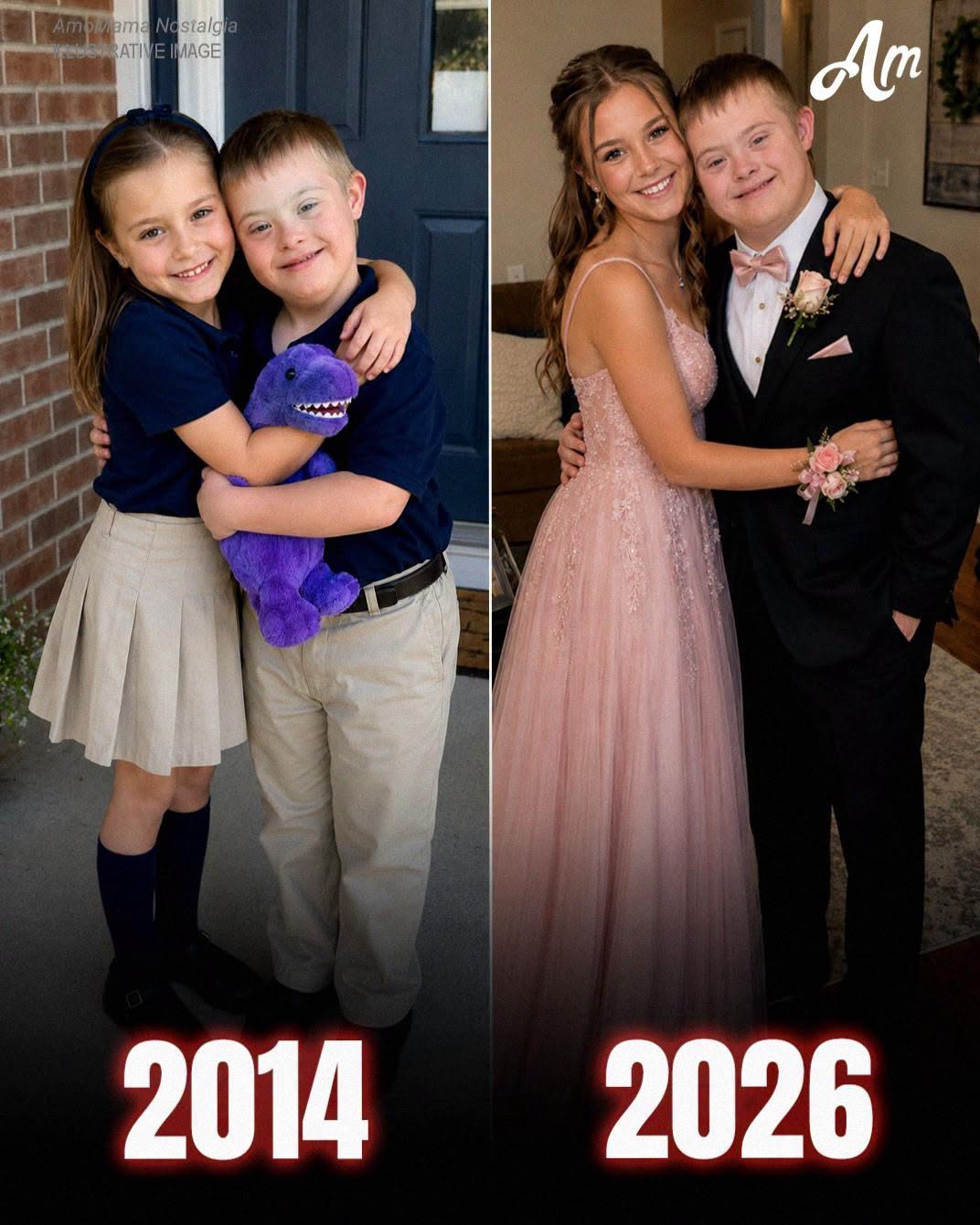
At 6, I Promised My Best Friend with Down Syndrome We’d Go to Prom Together – 12 Years Later, Mom Said I Could Go with Him Only on One Condition

by


steps while Mom repeatedly stepped the wrong direction.

Finally he sighed.

“Mrs. Jane, Chrissy dances better.”

“That’s why she’s your date.” Mom’s voice softened. “Thank you for staying.”

Exploring Maternity Wear

Noah frowned as though she’d thanked him for breathing.

“She stays too.”

“Thank you for staying.”

Mom closed her eyes.

That was the answer she’d needed for years.

***

At prom, when the first slow song began, Noah held out his hand.

“Chrissy… You owe me.”

“Twelve years?”

“Yes.”

He stepped on my shoe within five seconds.

“You’re terrible at this.”

“Your dress is badly designed.”

“Chrissy… You owe me.”

We laughed until people stared.

Nothing extraordinary happened.

Nobody applauded us.

We were simply two 18-year-olds dancing badly together.

***

Afterward, Mom waited outside.

Exploring Maternity Wear

Noah carried my heels because my feet hurt.

I carried his jacket because he was feeling hot.

At the car, he opened my door.

We were simply two 18-year-olds dancing badly together.

I climbed inside, leaned across the seat, and opened his.

Mom watched us in the mirror.

For years, she’d seen me beside Noah and thought one of us was

She finally understood.

Nobody was rescuing anybody.

Nobody was fulfilling an obligation.

Nobody was rescuing anybody.

We were just two people who had figured something out at six that adults sometimes spend their whole lives learning.

When somebody matters to you, you stay.

And sometimes, if you’re lucky, they stay too.

If You See Someone with a Three-Dot Tattoo, Run as Far as You Can

by


Skip to content

The warning spreads fast: “If you see a three-dot tattoo, run.” It sounds urgent, almost absolute, turning a tiny symbol into something dangerous. But what if that fear oversimplifies something far more human?A small cluster of three dots can carry many meanings. It isn’t a single story—it’s a collection of personal ones, shaped by the person wearing it.For some, it represents “mi vida loca,” or “my crazy life,” a phrase tied to surviving chaos and hardship. It can reflect resilience more than threat.

For others, the meaning is deeply personal. Three dots might stand for children, loved ones, or defining moments they want to carry with them forever.
Sometimes it’s about faith, balance, or life’s journey. Other times, it’s simply an aesthetic choice—something that felt right without needing explanation.
It’s true that in certain contexts, the symbol has been linked to gangs. But context matters, and not every person with this tattoo shares that connection.
Judging someone based on a single symbol removes their individuality. A tattoo doesn’t define actions, character, or intentions—people do.
When we replace curiosity with fear, we risk misunderstanding others. The real story is rarely visible at a glance.
Before assuming the worst, it’s worth remembering that symbols don’t carry meaning alone—people give them meaning through their lives and choices.