samedi 29 août 2026

I Gave Up 22 Years of My Life Raising My Triplet Nieces – What They Did at Their College Graduation Made Me Drop to My Knees

by


There were many nights when I wondered whether I had failed those girls.

People & Society

Had I worked too much?

Listened too little?

Said the wrong thing when they needed the right one?

Looking back now, I can trace our entire life to one ordinary October evening and a decision I made before I understood what it would cost.

The porch light outside my apartment was flickering when I came home from a double shift.

I smelled of sawdust, metal shavings, and machine oil from Finch & Nail Hardware, the small shop beneath the apartment where I lived in the fictional town of Bramblewick.

My keys were already in my hand.

I was thinking about cold leftovers and the futon that never opened properly.

Then I nearly tripped over three infant car seats.

Beside them sat one diaper bag.


On top of the bag was a note written on the back of a gas receipt.

For several seconds, my mind refused to understand what I was seeing.

I picked up the receipt first.

The handwriting tilted sharply to the right.

I recognized it immediately.

It belonged to my older brother, Callan.

I’m sorry, Reid. I can’t do this.

That was the entire message.

No telephone number.

No address.

No explanation of where he was going or whether he planned to return.

His wife, Elowen, had been laid to rest eleven days earlier.

Callan had survived less than two weeks without her.

I was twenty-seven years old, unmarried, and living in two rooms above a hardware store.

My checking account contained $346.

The kitchen table had one chair.

The futon stopped halfway whenever I tried to unfold it.

I had never changed a diaper.

Baby Care & Hygiene

One of the babies made a small hiccupping sound.

I looked down.

Two of the girls were asleep.

The smallest one was awake, staring at me with gray eyes that looked exactly like our mother’s.

“Hello,” I whispered.

She blinked.

Then the door beside mine opened.

My neighbor, Mrs. Fenwick, stepped into the hallway wearing a blue bathrobe and slippers shaped like sheep.


She had lived next door for six years and had never once considered privacy a virtue.

That night, it saved me.

“Reid, why are there babies on the porch?”

“They’re Callan’s.”

Her eyes widened.

“All three?”

I held up the note.

“He left them.”

“Left them where?”

“Here.”

“Where did he go?”

“I don’t know.”

Mrs. Fenwick snatched the receipt from my hand.

She read it twice.

Then she pressed one palm against her chest.

“Oh, that foolish man.”

Elowen had brought the triplets to visit twice during the summer.

Mrs. Fenwick had spent both visits leaning over their stroller, praising their eyelashes and demanding to know which girl was which.

Elowen had explained their names and birth weights with the seriousness of a military briefing.

Now Mrs. Fenwick knelt beside the car seats.

“You cannot raise three babies alone.”

“I know.”

“You don’t know the first thing about babies.”

“I know.”

“You once tried to warm soup in a metal bowl inside the microwave.”

“That happened one time.”

“It happened twice.”

The smallest baby began moving her hands.

One tiny fist opened and closed, searching.

I lowered myself onto the porch boards.

Her fingers closed around my index finger.

The grip was warm and surprisingly strong for a six-month-old child.

I stopped breathing.

“That one is Maisie,” Mrs. Fenwick said quietly. “Elowen said the smallest would always be Maisie.”

“Maisie.”


The baby continued holding my finger.

She did not know that I had no savings.

She did not know that her father had disappeared.

She did not know that I had never planned to become responsible for anyone except myself.

She only knew that someone was beside her.

Mrs. Fenwick rested a hand on my shoulder.

“We’ll call family services in the morning. There are couples waiting for children. People with nurseries, proper jobs, and experience.”

I opened my mouth to agree.

That was the sensible answer.

The girls deserved more than a cramped apartment above a shop.

They deserved two prepared parents, three proper cribs, and a bank account that did not frighten its owner.

“Okay,” I whispered.

But I was looking at Maisie.

Her fingers tightened.

“Okay,” I said again. “I’ve got you.”

Mrs. Fenwick became very still.

“You mean until morning?”

I looked at the three car seats.

“No.”

“Reid.”

“I can’t let strangers take them tonight.”

“Tonight is how it starts.”

“I know.”

“No, you don’t.”

She looked at me for a long moment.

Then she picked up the diaper bag.

“Fine. I’ll make bottles while you carry them inside.”

I brought the girls into my apartment one at a time.

Somewhere between the second trip and the third, I stopped thinking of them as Callan’s children.

I was still Uncle Reid.

But I had already begun becoming something else.

Mrs. Fenwick taught me how to warm a bottle.

She taught me to test the milk against my wrist and to support a baby’s head.

She changed the first diaper while I watched with the concentration of a man defusing an explosive.

The girls were named Liora, Carys, and Maisie.

Liora was the oldest by eleven minutes.

Carys arrived next.

Maisie was last and smallest.

At three in the morning, all three began crying at once.

Mrs. Fenwick stood in the middle of my apartment with one baby against her shoulder.

I held the other two badly.

“This is impossible,” I said.

“Yes.”

“I cannot do this.”

“Probably not.”

I stared at her.

“That isn’t helpful.”

“You don’t need reassurance. You need another bottle.”

By sunrise, my apartment looked as though a storm had passed through it.

Blankets covered the floor.

Three bottles stood beside the sink.

I had formula on my shirt.

Maisie was asleep against my chest.

Family services arrived that afternoon.

A caseworker named Marla Dane explained that Callan had abandoned his children and would be reported missing.

Temporary placement could be arranged immediately.

The triplets might be placed together if a suitable home could be found, but there were no guarantees.

“Together?” I asked.

“We would try.”

“Try?”


“Three infants are difficult to place.”

Liora began crying from Mrs. Fenwick’s arms.

Carys answered from the borrowed basket we had turned into a temporary bed.

Maisie woke against me.

All three cries filled the apartment.

The caseworker waited.

“What would I have to do to keep them here?”

Mrs. Fenwick looked at me sharply.

Marla studied my face.

“Temporarily?”

“For as long as they need.”

“You understand that this is not babysitting.”

“Yes.”

“You will need a larger place, background checks, home inspections, childcare arrangements, legal hearings—”

“What forms do I sign?”

Mrs. Fenwick closed her eyes.

Later, she told me that was the moment she realized arguing would be useless.

The next several months were a blur.

Finch & Nail Hardware belonged to an elderly man named Emmett Crow.

When I explained what had happened, he stared at me over his glasses.

“You intend to raise three babies above my shop?”

“I intend to try.”

“That ceiling is thin.”

“I know.”

He grumbled for several minutes.

Then he handed me the keys to the empty storage room behind my apartment.

“You can knock through the wall.”

“I can’t afford the rent.”

“I didn’t mention rent.”

Emmett never admitted that he had become attached to the girls.

He simply began leaving boxes of diapers near the stairs.

Mrs. Fenwick watched them while I worked.

At night, I repaired locks and sharpened tools for extra money.

The girls slept in three mismatched cribs donated by customers.

For their first birthday, I stayed awake after midnight writing in a notebook.

I had started it because I was afraid I would forget things.

The first time Liora stood.

The way Carys sneezed whenever she laughed too hard.

The way Maisie refused to sleep unless she could hear one of her sisters breathing nearby.

That night, I wrote:

To my three girls,

You are one year old today. I don’t know if you will ever read this. I don’t know if I am doing any of this correctly. I only know I am not going anywhere.

Then I closed the notebook and pushed it into the back of a kitchen drawer.

Twenty-two years passed the way a long shift does.

Slowly while you are living it.

All at once when you look back.

I packed school lunches using the wrong bread.

I burned pancakes and called them crispy.


I braided hair so badly that Mrs. Fenwick waited on the porch each morning with a brush.

“You are giving these children emotional damage,” she said once while undoing the knot I had created in Carys’s hair.

“I watched a tutorial.”

“You watched the wrong tutorial.”

“I’m trying.”

“I know. That is what worries me.”

I worked double shifts.

Sometimes triple shifts when one of the girls needed braces, new glasses, a school trip, or shoes because all three had somehow outgrown theirs in the same week.

There were fevers.

Science fairs.

Dance recitals.

Parent meetings.

Three separate heartbreaks during which I had no useful advice, so I made grilled cheese and sat nearby while they cried.

There were also years when all three seemed to dislike me at once.

Maisie was thirteen when she began slamming doors.

Carys was fifteen when she refused to speak to me for nearly a month because I would not let her attend an overnight party.

Liora was seventeen when she shouted:

“You don’t understand anything about us!”

She was right.

I did not understand everything.

But I stayed.

That was the one thing I knew how to do.

I missed things too.

A cousin’s wedding in the fictional city of Evermere because Carys developed the flu.

A fishing trip I had promised myself for ten years.

Promotions that required relocating away from Bramblewick.

And Seraphine.

Seraphine was the woman I loved.

She worked at the bakery across from Finch & Nail Hardware.

We met when the girls were seven.

For six years, she joined us for dinners, birthdays, and school plays.

She loved the triplets, but she also wanted a life that belonged partly to her.

One evening, she stood at my front door holding the sweater she had worn during dinner.

“I’m not asking you to choose between me and the girls,” she said.

“I know.”


“I’m asking whether there is room for me here.”

I looked toward the kitchen.

Three lunchboxes waited on the counter.

Permission slips lay beside the sink.

Carys had a fever.

Liora needed help with a project.

Maisie had fallen asleep on the couch after arguing with me.

“There isn’t,” I said.

Seraphine’s face changed.

“Not the kind of room you deserve.”

She nodded slowly.

“I thought that might be your answer.”

She left a green sweater behind.

I never returned it.

I stayed with the girls.

Not because they demanded it.

Because someone had to.

Callan appeared in fragments.

A birthday card arrived once without a return address.

Then a winter card with a stamp from a place I did not recognize.

He never included money.

Never asked whether the girls were healthy.

Never asked whether they remembered him.

When the triplets were twelve, he called.

I answered the shop telephone.

“Reid?”

I recognized his voice even after all those years.

“Where are you?”

“That’s complicated.”

“No, it isn’t. You are wherever you chose to be.”

He sighed.

“I want to reconnect.”

“With whom?”

“My daughters.”

My hand tightened around the receiver.

“They have names.”

“I know their names.”

“Say them.”

Silence.

“Callan, say their names.”

“I want to be their father.”

“You want to be their father?”

“I’ve been thinking.”


“Thinking about them does not make you a parent.”

“I made mistakes.”

“You left three six-month-old babies outside my door.”

“Elowen was gone. I wasn’t thinking clearly.”

“She was their mother. They lost her too.”

He said nothing.

“You want to be their father, get on a plane,” I told him. “Stand in front of them. Explain why you disappeared.”

“I need time.”

“You have already had twelve years.”

Callan never got on a plane.

The cards stopped after that.

The girls never mentioned them.

Sometimes I wondered whether they had noticed.

Of course they had.

Children always notice the empty spaces adults hope they can hide.

At night, I ran numbers through my head.

Not financial numbers.

The other kind.

Had I attended enough school events?

Had I told them I loved them often enough?

Did they remember the nights I read stories, or only the evenings I fell asleep at the table after work?

Did they see me as their parent?

Or only as the uncle who happened to stay?

Beneath every worry was one fear I never admitted aloud.

Perhaps some part of them was still waiting for their real father.

Perhaps I was the man who had raised them, but not the man they truly wanted.

I could not blame them for that.

I simply could not stop fearing it.

The morning of their college graduation, I sat in my truck for twenty minutes before finding the courage to step outside.

I was forty-nine.

My beard had turned gray in uneven patches.

My right knee still hurt from falling off a ladder two summers earlier.

A cheap camera rested in my lap.

I had purchased it because Maisie said phone photographs did not count as proper graduation pictures.

I did not know how to use half its settings.

Inside my wallet, behind an expired insurance card and an old food receipt, was Callan’s original note.

I had carried it for twenty-two years.

I’m sorry, Reid. I can’t do this.

The ink had faded.


The paper was soft along the folds.

I read it once more.

Then I thought about Callan.

Would the girls mention him during graduation?

Would they wish he were there?

Would seeing their classmates surrounded by parents remind them of everything they had lost?

I returned the note to my wallet and stepped into the heat.

The ceremony took place at Willowcrown College, a fictional campus on the edge of Bramblewick.

The auditorium smelled of floor polish, flowers, and perfume.

I sat in the seventh row with the camera balanced against my bad knee.

Twenty-two years had led to that morning.

Still, I felt as nervous as I had the first night I held three bottles and three crying babies.

The triplets crossed the stage one after another.

Liora was called first.

She began crying before the announcer finished saying her name.

She wiped her face on the sleeve of her gown and laughed at herself as she accepted the diploma.

Then came Carys.

She spotted me in the crowd and waved with both hands, exactly as she had from the school bus window when she was eight.

I waved back too enthusiastically and nearly struck the woman beside me with the camera.

Maisie came last.

She walked with the same quiet determination she had carried since childhood.

She did not smile until the diploma was in her hands.

I lifted the camera.

The shutter clicked.

I thought that was the end.

Then the dean returned to the microphone.

“We have one final presentation.”

I lowered the camera.

My three girls walked back onto the stage together.

They held hands like they had when they were five and crossing busy car parks.

Something tightened in my chest.

Maisie stepped toward the microphone.

“Our father could not be here today.”

My stomach dropped.

Callan.

yournews

by

Popular Posts

  •   This year, the Lord grants us, once again, a propitious time to prepare ourselves to celebrate with a renewed heart the great mystery of J...

  •   The hunters called the authorities. By nightfall, the property was surrounded by police, social workers, and a medical team from the count...

  •   For a man who built his career on unshakable composure, this was the moment everything cracked. The cameras rolled, the room stilled, and ...

  •   The Music Lives On: Why Reports About Bob Weir Have Sparked Global Reaction In the world of classic rock, few figures carry the same endur...

  •   30 minutes ago in Utah, it was officially confirmed that Charlie Kirk’s wife has been appointed to a prominent role in the state. The anno...

  •   Michael Jackson’s Daughter Breaks Her Silence at Last For years, Michael Jackson’s children have largely stayed out of the public eye, gro...

  •   This morning brought heartbreaking news as the world learned of the passing of a beloved singer, someone whose voice touched countless liv...

  •   This year, the Lord grants us, once again, a propitious time to prepare ourselves to celebrate with a renewed heart the great mystery of J...

  •   Iran Stuns the World: Rising Tensions Between Tehran and Washington Raise Global Concerns The relationship between Iran and the United St...

  •   The Hidden Reasons You Keep Getting Pimples on Your Chin Acne is frustrating at any age, but when pimples keep appearing in the same spot—...

Obama Family Sad Announcement...See more

by

The Power of Emotional Images: Why "Sad News" Posts Spread So Quickly

In today's digital world, images travel faster than facts. A single picture combined with a dramatic headline can be shared millions of times before anyone stops to ask a simple question: Is this true?

Try Photo Hosting

The image above is a perfect example. It combines emotional photographs, a television news anchor appearing distressed, the words "Breaking News," and "Sad News," along with well-known public figures. Without providing any evidence, source, or explanation, the image encourages viewers to assume that something tragic has happened.

News

Whether the implied event is real or not, this type of image demonstrates how emotional content influences our thinking, our behavior, and the way information spreads across social media.

Why Emotional Images Capture Attention

Human beings naturally respond to emotion. Long before social media existed, our brains evolved to notice danger, sadness, happiness, and surprise. Today, these instincts remain active whenever we scroll through online platforms.
When people encounter an image showing tears, sadness, or grief, they instinctively stop scrolling. Curiosity takes over.

Questions immediately come to mind:

  • What happened?
  • Is someone hurt?
  • Did someone die?
  • Is this breaking news?
  • Should I tell my friends?

Content creators understand this psychological response.

That is why many online posts combine emotional photographs with dramatic text such as:

  • Breaking News
  • Very Sad
  • Heartbreaking
  • We Lost Him
  • Tragic Announcement
  • Rest in Peace

These phrases generate clicks because they appeal directly to human emotion.

Download Reference Apps

The Use of Familiar Faces

Another reason images like this become popular is the inclusion of famous public figures.

Well-known individuals naturally attract attention because millions of people already recognize them.

When viewers see familiar faces alongside words like "Sad News," they immediately become emotionally invested before even reading any details.

News

Recognition creates trust—even when that trust may not be deserved.

The Problem With Missing Context

One of the biggest issues with images like this is that they often provide no context.

Questions remain unanswered:

  • What happened?
  • When did it happen?
  • Where did it happen?
  • Who reported it?
  • Is there an official source?

Without context, viewers begin filling in the blanks themselves.

Psychologists call this "making inferences."

Unfortunately, our assumptions are not always correct.

How Misinformation Spreads

False or misleading information often follows a predictable path.

Access Research Databases

Someone creates an emotional image.

Another person shares it without checking.

Friends see it and assume it must be true because someone they know posted it.

Soon thousands—or even millions—have seen the post.

By the time fact-checkers respond, the misinformation has already spread widely.

This cycle repeats every day across multiple social media platforms.

The Importance of Verification

Before believing dramatic claims online, consider asking a few simple questions:

  • Does the post cite a reliable news organization?
  • Is there a publication date?
  • Are multiple trusted outlets reporting the same story?
  • Does the headline match the actual article?
  • Could the image be old or taken out of context?

These questions can help separate verified information from speculation.

Emotional Manipulation Online

Not every emotional image is deceptive.

Many photographs genuinely document important events.

However, some content creators intentionally design posts to maximize emotional reactions.

Common techniques include:

  • Cropping images
  • Adding dramatic text
  • Using unrelated photographs
  • Editing expressions
  • Combining old images with new headlines
  • Removing important context

These techniques can create a misleading impression without making an explicit false statement.

Why People Share Without Checking

Many users do not intend to spread misinformation.

Instead, they often share posts because they want to:

  • Warn others
  • Express sympathy
  • Show concern
  • Start conversations
  • Support someone they admire

Good intentions do not always produce accurate information.

This is why verification remains important.

The Role of Algorithms

Social media platforms prioritize engagement.

Posts that receive many reactions, comments, and shares are often shown to more users.

Emotional content naturally generates engagement.

As a result, dramatic posts may spread much faster than calm, factual reporting.

Algorithms measure activity—not truth.

Recognizing Clickbait

Clickbait often includes characteristics such as:

  • Large bold text
  • Bright colors
  • Emotional wording
  • Shocking phrases
  • Limited details
  • No credible sources
  • Urgent language

These features encourage immediate reactions rather than careful reading.

Looking Beyond the Headline

Professional journalism typically provides:

  • Named sources
  • Dates
  • Locations
  • Quotes
  • Context
  • Supporting evidence

By contrast, misleading social media graphics often provide only emotion.

The absence of evidence should encourage caution.

Digital Literacy Matters

Digital literacy means understanding how online information works.

It includes:

  • Evaluating sources
  • Identifying manipulation
  • Recognizing bias
  • Verifying claims
  • Comparing reports
  • Thinking critically

These skills become increasingly important as online information continues to grow.

Respect for Public Figures

Images featuring public figures often attract significant attention.

However, sharing unverified claims about anyone—whether famous or not—can cause confusion and unnecessary distress.

Responsible communication means distinguishing between verified news and speculation.

How to Respond to Viral Claims

If you encounter a dramatic image online:

  1. Avoid sharing it immediately.
  2. Search for reports from established news organizations.
  3. Check whether the story appears on official channels.
  4. Look for multiple independent sources.
  5. Be cautious if the post lacks specifics.

These simple steps can reduce the spread of misinformation.

Why Critical Thinking Is Essential

Critical thinking involves slowing down long enough to ask:

  • What evidence supports this claim?
  • Who created this image?
  • What might be missing?
  • Is there another explanation?

These questions encourage informed decisions instead of emotional reactions.

Building Better Online Habits

Good online habits include:

  • Reading beyond headlines.
  • Checking publication dates.
  • Comparing multiple sources.
  • Avoiding sensational claims.
  • Correcting misinformation when appropriate.

Over time, these habits make online communities more reliable.

Conclusion

Images that combine emotional expressions, dramatic wording, and recognizable public figures can have a powerful impact on viewers. While they often attract attention and generate discussion, they do not necessarily provide accurate or complete information.

Warning: People vaccinated against COVID-19 may… See more

by

Faced with this alarming situation, COVID-19 vaccines were developed urgently. After almost five years of observation and analysis, we now know the side effects of the different vaccines we have received.

Covid-19

Health news

1/10 A review of    covid 19

In December 2019, a novel virus originating in China spread rapidly around the world, alarming the highest authorities, including the World Health Organization (WHO). A  highly contagious infectious disease   called COVID-19 emerged, along with an unprecedented pandemic.

Disease prevention

2/10 The first cases diagnosed in France

In France, the first cases were diagnosed at the end of January 2020 and the first deaths caused by this new virus were recorded about twenty days later.

3/10 The lockdown

A nationwide lockdown was imposed on March 17, 2020. It was lifted just under two months later, but mask-wearing became mandatory. Authorities, in collaboration with the   Pasteur Institute  , are considering a vaccination campaign .

Vaccines & Immunizations

Vaccines and immunizations

Clinical trials

4/10 Many questions

Several pharmaceutical companies (Pfizer, AstraZeneca, Moderna, Johnson & Johnson, etc.) designed and offered their  vaccines in record time. This was followed by numerous questions.

5/10 Confirmed side effects 

Drugs and medicines

After millions of vaccines administered and almost five years of retrospective analysis, medical specialists have been able to report on several adverse effects, such as high blood pressure, myocarditis/pericarditis, allergies, or heavy menstrual bleeding.


See more

Business news

Medical literature and bibliography

Health problems

6/10 Serious side effects?

To this day, many people, including scientists, disagree that the    COVID -19  vaccine    causes multiple    illnesses  . However, a study conducted a few months ago showed that the      COVID-19 vaccine can cause serious side effects.

Risks of vaccines

7/10 A study of more than 99 million people 

Searching for people

The study was conducted by the   Global Vaccine Data Network    with data from over 99 million people. Eight countries were at the center of this project (Argentina, Australia, Canada, France, Denmark, Finland, New Zealand, and Scotland), and the results were published in the journal   Vaccine  .

Vaccine efficacy

8/10 The researchers’ words

“Most of those vaccinated were between 20 and 59 years old, and   the largest number of doses were administered in France  ,” explained the researchers, who specified that the vaccines came from Pfizer, Moderna, and AstraZeneca. The results have not reassured healthcare professionals, and even less so patients.

Vaccine efficacy

9/10 Guillain-Barré syndrome and venous thrombosis 

Health problems

Researchers have observed an increase in cases of Guillain-Barré syndrome and cerebral venous thrombosis following the administration of the first dose of the AstraZeneca vaccine. Guillain-Barré syndrome is characterized primarily by muscle weakness, while venous thrombosis is the formation of a blood clot in a vein, obstructing blood flow throughout the body. French NBA star Victor Wembanyama suffered from the latter condition a few months ago, forcing him to end his season.

Vaccine efficacy

© iStock

10/10 More research is needed 

In addition, all the vaccines   significantly increased the risk of myocarditis and pericarditis (inflammation of the myocardium, the muscle responsible for heart contraction and blood circulation). “  Other concerns were identified that require further investigation  ,” the review states. The researchers emphasize that more research is needed to determine the relationship between the vaccine and these side effects.

Vaccines and immunizations

Vaccine efficacy

See more

vaccines

Health news

Vaccines and immunizations

May God comfort the whole family, he was found deαd inside the R... see more

by

A quiet town woke up to a nightmare that shattered the morning calm. A man who was a pillar of the community, known for his infectious laugh and his habit of staying late just to lend a helping hand, was discovered lifeless in the river. As sirens cut through the heavy air and flashing lights danced against the dark water, the town was left to grapple with a sudden, agonizing void. Was it a tragic accident, or something much darker

or something much darker? As investigators dig deeper, the truth emerging from the water is not what anyone expected. The shock has now settled into a heavy, aching stillness. In small, somber circles, neighbors and friends gather to share stories that have suddenly become sacred, holding onto the fragments of a life that was taken far too soon. Every memory, once casual and bright, now carries the weight of a final goodbye that no one was prepared to say.

For those who knew him, the lack of answers is a wound that refuses to close. They remember his quiet generosity and the way he moved through the world with a sense of purpose that made others feel seen. Now, those same people find themselves suspended in a state of limbo, waiting for the authorities to piece together the final hours of a man who was, until yesterday, an inseparable part of their daily lives.

Investigators are currently combing through every available lead, analyzing camera footage, scrutinizing timelines, and interviewing anyone who might have crossed his path in his final moments. While official reports remain cautious, offering only the standard refrain of “no conclusions yet,” the community is left to navigate a labyrinth of rumors and fear. In living rooms and at kitchen tables, the conversation always returns to the same haunting realization: it simply does not make sense.

Discover Mirrorless Cameras

The tragedy has forced the town to confront the fragility of existence. When a life is cut short, the ripples of that loss touch everyone, turning familiar streets into reminders of what has been stolen. Yet, even in the depths of their grief, there is a collective resolve. They are not merely waiting for a police report; they are holding onto the love he left behind, determined that his story will not be defined by the mystery of his death, but by the warmth he brought to the world while he was here.

As the investigation continues, the town remains united in its sorrow and its demand for clarity. They cling to the hope that the truth, however painful it may be, will eventually provide the closure they so desperately need. Until that day comes, they will continue to honor his memory, ensuring that the man who gave so much to others is not forgotten in the silence of the river.

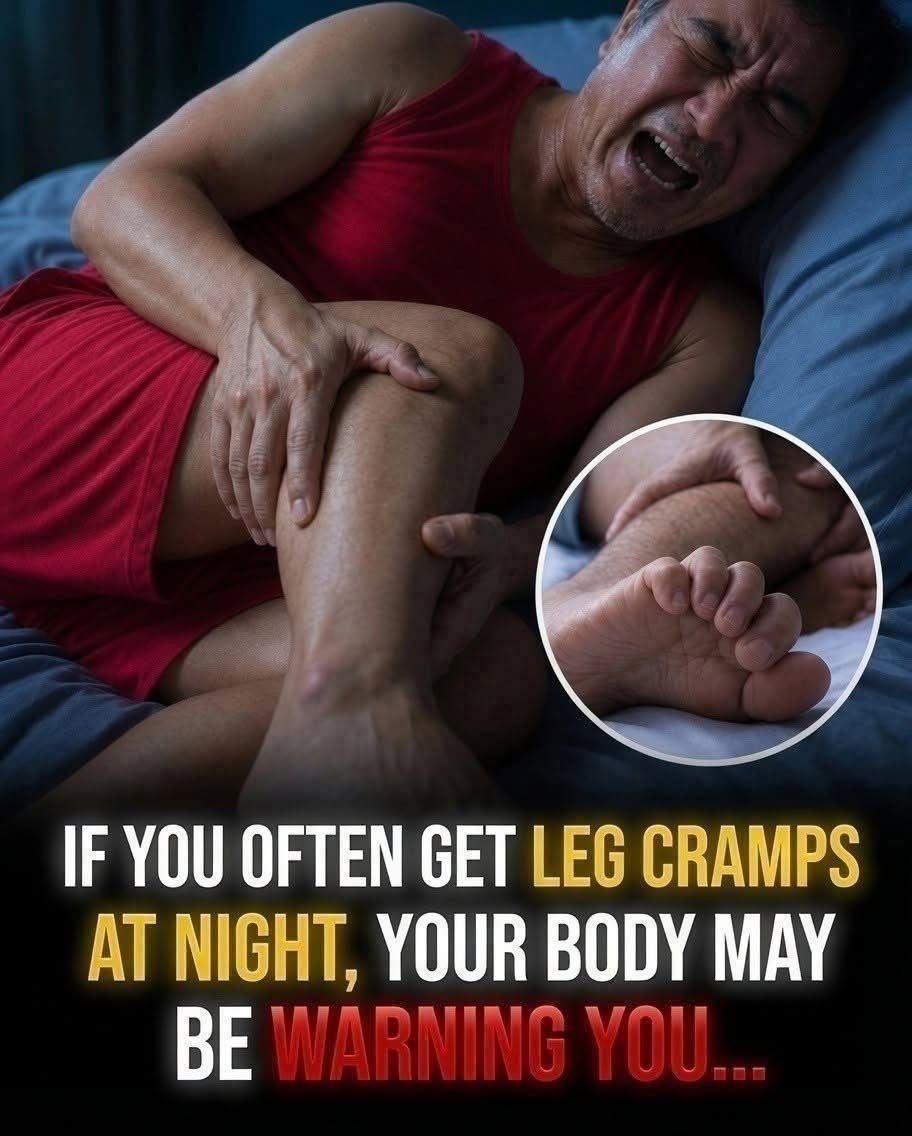
If You Often Get Leg Cramps at Night, Your Body May Be Sending a Warning Sign

by


Many people have experienced the sudden pain of a leg cramp in the middle of the night. The muscle tightens unexpectedly, often affecting the calf, foot, or thigh, causing intense discomfort that may last from a few seconds to several minutes. Although occasional cramps are usually harmless, frequent episodes should not be ignored because they may indicate that the body is trying to communicate an underlying issue hb.

Anatomy

One of the most common causes of nighttime leg cramps is dehydration. Muscles rely on adequate hydration to function properly. When the body lacks sufficient fluids, muscle contractions can become irregular, increasing the likelihood of painful spasms. People who exercise heavily, spend long hours in hot weather, or simply fail to drink enough water during the day may be at greater risk.

Another possible cause involves mineral imbalances. Electrolytes such as potassium, magnesium, calcium, and sodium play a crucial role in muscle function. Low levels of these nutrients can disrupt communication between nerves and muscles, resulting in involuntary contractions. Maintaining a balanced diet rich in fruits, vegetables, dairy products, nuts, and whole grains may help support healthy muscle activity.

Don’t Miss The Rest! Press Next Button Below To Continue Reading.

Many people have experienced the sudden pain of a leg cramp in the middle of the night. The muscle tightens unexpectedly, often affecting the calf, foot, or thigh, causing intense discomfort that may last from a few seconds to several minutes. Although occasional cramps are usually harmless, frequent episodes should not be ignored because they may indicate that the body is trying to communicate an underlying issue hb.

One of the most common causes of nighttime leg cramps is dehydration. Muscles rely on adequate hydration to function properly. When the body lacks sufficient fluids, muscle contractions can become irregular, increasing the likelihood of painful spasms. People who exercise heavily, spend long hours in hot weather, or simply fail to drink enough water during the day may be at greater risk.

Another possible cause involves mineral imbalances. Electrolytes such as potassium, magnesium, calcium, and sodium play a crucial role in muscle function. Low levels of these nutrients can disrupt communication between nerves and muscles, resulting in involuntary contractions. Maintaining a balanced diet rich in fruits, vegetables, dairy products, nuts, and whole grains may help support healthy muscle activity.

Anatomy

Poor circulation may also contribute to nighttime cramps. Conditions that reduce blood flow to the legs can limit the delivery of oxygen and nutrients to muscle tissues. Individuals with peripheral artery disease, diabetes, or cardiovascular problems may experience cramps more frequently than others.

In some cases, leg cramps are associated with nerve compression. Problems affecting the spine, such as lumbar stenosis or nerve irritation, can interfere with signals traveling between the brain and muscles. This may lead to muscle spasms, weakness, numbness, or tingling sensations in the legs.

Certain medications can also increase the risk of muscle cramps. Some blood pressure medications, diuretics, cholesterol-lowering drugs, and other treatments may affect fluid balance or electrolyte levels. Anyone experiencing frequent cramps after starting a new medication should discuss the issue with their healthcare provider.

Age is another important factor. Nighttime leg cramps become more common as people grow older. Muscle mass naturally decreases with age, and changes in circulation, hydration, and nerve function may increase susceptibility to cramps.

A Date to Remember: How One Act of Kindness Made a Lasting Impact

by

# A Date to Remember: How One Act of Kindness Made a Lasting Impact

Choosing Digital Time Management Apps

Some dates fade quietly into the past. They pass without ceremony, becoming little more than numbers on a calendar, eventually swallowed by routine and forgetfulness. Others, however, stay with us forever. They return uninvited in moments of reflection, triggered by a scent, a song, or a passing thought. These dates matter not because of grand events or public recognition, but because something small yet profound happened—something that altered the way we saw the world.

This is the story of one such date. A day that seemed ordinary at first. A day that did not promise significance. And yet, through a single, unplanned act of kindness, it became unforgettable—leaving a ripple effect that extended far beyond the moment itself.

---

## The Ordinary Beginning of an Extraordinary Day

It began like so many others do. The morning was unremarkable. No dramatic sunrise, no sense of anticipation humming in the air. People went about their routines: commuting, checking phones, sipping coffee, mentally rehearsing the day ahead.

There was nothing to suggest that this date would be different.

Choosing Digital Time Management Apps

The streets were familiar, the sounds predictable. Conversations blended into background noise. Everyone carried their own worries, their own deadlines, their own quiet battles. It was the kind of day that could easily pass unnoticed.

And that is precisely what made what happened next so powerful.

---

## A Small Moment at the Right Time

Kindness rarely announces itself. It doesn’t arrive with applause or expectation. More often, it appears quietly, almost shyly, in moments when someone is least prepared to receive it.

On this particular day, the act of kindness was simple. It did not involve money, grand gestures, or heroic sacrifice. It was a choice—a conscious decision to pause, to notice another human being, and to respond with empathy rather than indifference.

Perhaps it was someone offering help when they didn’t have to.

Perhaps it was a few words spoken gently when silence would have been easier.

Perhaps it was patience shown in a moment where frustration would have been understandable.

What mattered was not the size of the act, but its timing.

It happened when someone was struggling quietly.

When hope felt thin.

When the world seemed cold and hurried.

And in that moment, kindness landed exactly where it was needed.

Subscribing To Premium Digital Dictionaries

---

## The Person on the Receiving End

To understand the impact of that single act, we must look at the person who received it.

They were not visibly in crisis. To the outside world, they appeared fine—functioning, capable, moving through life as expected. But beneath the surface, they were carrying more than anyone knew.

There had been setbacks.

Disappointments.

Long nights filled with worry.

Questions without answers.

Like so many people, they had learned to keep going, to smile politely, to avoid burdening others with their struggles. They did not expect help. In fact, they had stopped looking for it.

Which is why the kindness caught them off guard.

It interrupted the internal narrative that said, *You’re on your own.*

It challenged the belief that no one notices.

It softened a day that had been heavy.

For the first time in a while, they felt seen.

---

## Why Kindness Hits Harder Than We Expect

Kindness has a way of disarming us.

We prepare ourselves for criticism.

We brace for rejection.

We expect impatience.

But when kindness appears unexpectedly, it bypasses our defenses. It reaches places that logic and reassurance cannot. It reminds us of something deeply human—that we are connected, even when it doesn’t feel like it.

This is why small acts often feel bigger than grand ones. They arrive without obligation. They feel genuine. They ask for nothing in return.

And because they are unexpected, they linger.

---

## The Moment That Changed Everything

For the person who received that kindness, the moment stretched far beyond its actual duration.

It replayed later that evening.

It returned during quiet moments.

It surfaced in conversations and reflections.

They didn’t just remember what happened—they remembered how it felt.

They remembered the warmth.

The relief.

The sense that maybe, just maybe, things were not as bleak as they had seemed.

That single interaction became a turning point—not because it solved all their problems, but because it shifted their perspective.

Sometimes, that’s enough.

---

## The Aftermath: Ripples You Can’t See

The most remarkable thing about kindness is what happens after the moment passes.

The person who received it found themselves standing a little straighter in the days that followed. They approached challenges with slightly more confidence. They were gentler with themselves.

And something else happened too.

They began to notice others more.

When you are reminded of kindness, you become more aware of opportunities to offer it. Pain narrows our vision; compassion expands it.

The act that once helped them now inspired them.

---

## Paying It Forward Without Realizing It

Not long after, the recipient of that kindness found themselves in a situation where they could help someone else.

They might not have recognized it at first. It didn’t feel significant. But they remembered how it felt to be on the receiving end—and they chose to act.

A conversation extended a little longer.

A hand was offered.

Patience replaced irritation.

And just like that, the ripple continued.

They never told the original person what their kindness had set in motion. They may never know. But the impact lived on quietly, passed from one moment to the next.

---

## Why We Underestimate Our Own Power

One of the most tragic misunderstandings of modern life is the belief that individual actions don’t matter.

People often think:

* “It’s too small to make a difference.”

* “Someone else will help.”

* “I don’t have time.”

But kindness doesn’t require perfection or abundance. It requires attention.

Most lasting impacts begin with someone choosing to care in a moment where they could have looked away.

The truth is, we rarely know what others are carrying. What seems like a small inconvenience to us may be the breaking point for someone else—or the lifeline they desperately need.

---

## The Date That Never Faded

As time passed, the date itself took on new meaning.

It wasn’t marked by a holiday or public event. No one else celebrated it. But for one person, it became a quiet anniversary—a reminder of the day something shifted.

On difficult days, they thought back to it.

On hopeful days, it grounded them.

On ordinary days, it reminded them that the extraordinary often hides in plain sight.

The calendar date became a symbol—not of what happened, but of what was possible.

---

## Kindness as a Catalyst for Healing

While kindness cannot erase pain, it can soften its edges.

It reminds us that we are not invisible.

That our struggles matter.

That the world is not entirely indifferent.

For some, a single act of kindness becomes the moment they decide to keep going. For others, it’s the first step toward healing, growth, or change.

The power of kindness lies not in its ability to fix everything, but in its ability to create space for hope.

---

## The Person Who Gave It

It’s important to remember the other side of the story—the person who gave the kindness.

They may not remember the moment clearly.

They may have thought nothing of it.

They may have simply acted on instinct.

That’s often how kindness works.

People who offer it freely rarely recognize its full impact. They don’t wait for gratitude or acknowledgment. They act because something inside them says, *This matters.*

And it does.

Even when they never see the results.

---

## Why Stories Like This Matter

In a world saturated with headlines about conflict, division, and cruelty, stories of kindness can feel insignificant or even naive.

But they matter precisely because they are quiet.

They remind us that goodness doesn’t always announce itself.

That humanity persists even when it feels overshadowed.

That one moment can shift an entire emotional landscape.

These stories are not about perfection. They are about possibility.

---

## Choosing Kindness in a Tired World

Modern life is exhausting. People are busy, stressed, and overwhelmed. Choosing kindness doesn’t always feel easy when patience is thin and energy is low.

But kindness does not require constant effort. It asks only that we remain open—to noticing, to responding, to caring.

Sometimes it’s as simple as:

* Listening without interrupting

* Offering reassurance without advice

* Treating someone gently when they least expect it

These choices shape the world more than we realize.

---

## A Legacy Built on a Single Choice

The date that once seemed ordinary became unforgettable not because of what was planned, but because of what was freely given.

One act.

One moment.

One decision to care.

That is how legacies begin—not with grand intentions, but with human connection.

---

## Final Thoughts: Making Today a Date to Remember

Every day holds the potential to become someone else’s “date to remember.”

Not through perfection.

Not through heroics.

But through kindness.

We may never know which moment will matter most to someone else. We may never see the ripple effects of our actions. But that uncertainty is not a reason to hold back—it is a reason to lean in.

Melania Trump slams ‘coward’ Jimmy Kimmel over ‘hateful’ joke and calls out ABC leaders

by


ADVERTISEMENT

Melania Trump is done staying silent. One late-night joke shattered the line between comedy and cruelty, and then, days later, gunfire ripped through a Washington night. A “roast” turned into a national flashpoint. A security scare turned fear into fury. As bullets flew and blame spread, America watched the line between entertai…

Melania 

Exploring Conservative Media

ADVERTISEMENT


ADVERTISEMENT

Trump’s decision to publicly condemn Jimmy Kimmel’s “expectant widow” joke marked a rare, raw moment from a usually reserved former First Lady. Coming so soon after gunfire near a security checkpoint at the White House Correspondents’ Dinner, her words carried the weight of someone who has watched politics turn into something far more personal and continue reading …


frightening. To her, the joke was not clever satire but a casual flirtation with the idea of her husband’s death, uttered in a country already on edge.

Kimmel, insisting it was only a jab at their age difference, framed the backlash as a misunderstanding of comedy’s role. That defense, however, only sharpened the divide. For some, his monologue was


ADVERTISEMENT

protected speech; for others, it symbolized a culture that laughs too easily at potential tragedy. In the uneasy silence after the gunfire and outrage, one truth lingered: words now land like sparks in a room already filled with gasoline.

yournews

by

Popular Posts

  •   This year, the Lord grants us, once again, a propitious time to prepare ourselves to celebrate with a renewed heart the great mystery of J...

  •   The hunters called the authorities. By nightfall, the property was surrounded by police, social workers, and a medical team from the count...

  •   For a man who built his career on unshakable composure, this was the moment everything cracked. The cameras rolled, the room stilled, and ...

  •   The Music Lives On: Why Reports About Bob Weir Have Sparked Global Reaction In the world of classic rock, few figures carry the same endur...

  •   30 minutes ago in Utah, it was officially confirmed that Charlie Kirk’s wife has been appointed to a prominent role in the state. The anno...

  •   Michael Jackson’s Daughter Breaks Her Silence at Last For years, Michael Jackson’s children have largely stayed out of the public eye, gro...

  •   This morning brought heartbreaking news as the world learned of the passing of a beloved singer, someone whose voice touched countless liv...

  •   This year, the Lord grants us, once again, a propitious time to prepare ourselves to celebrate with a renewed heart the great mystery of J...

  •   Iran Stuns the World: Rising Tensions Between Tehran and Washington Raise Global Concerns The relationship between Iran and the United St...

  •   The Hidden Reasons You Keep Getting Pimples on Your Chin Acne is frustrating at any age, but when pimples keep appearing in the same spot—...

Did you know that having visible veins means you are… See more

by


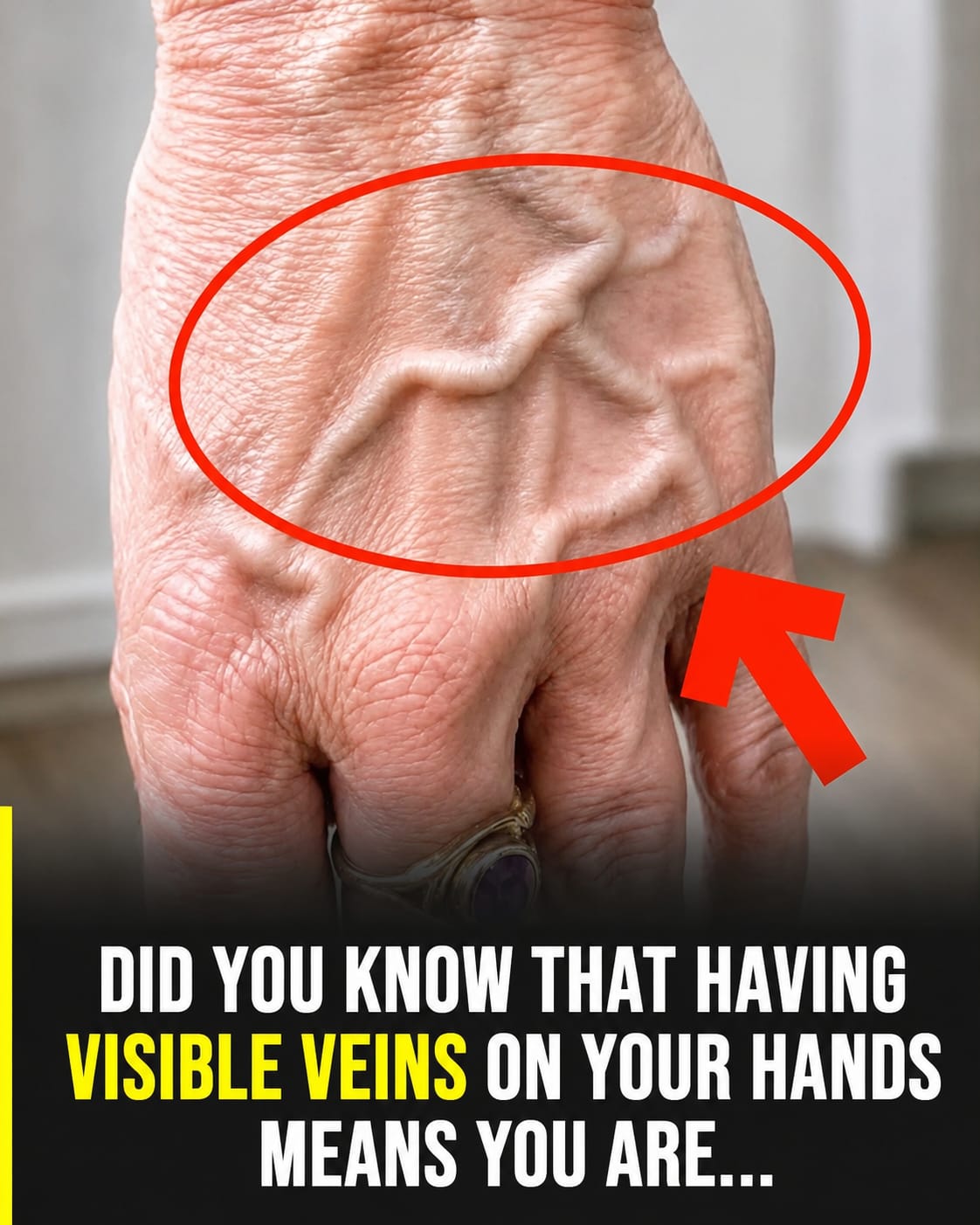
Why your veins look more prominent: body signals you should understand

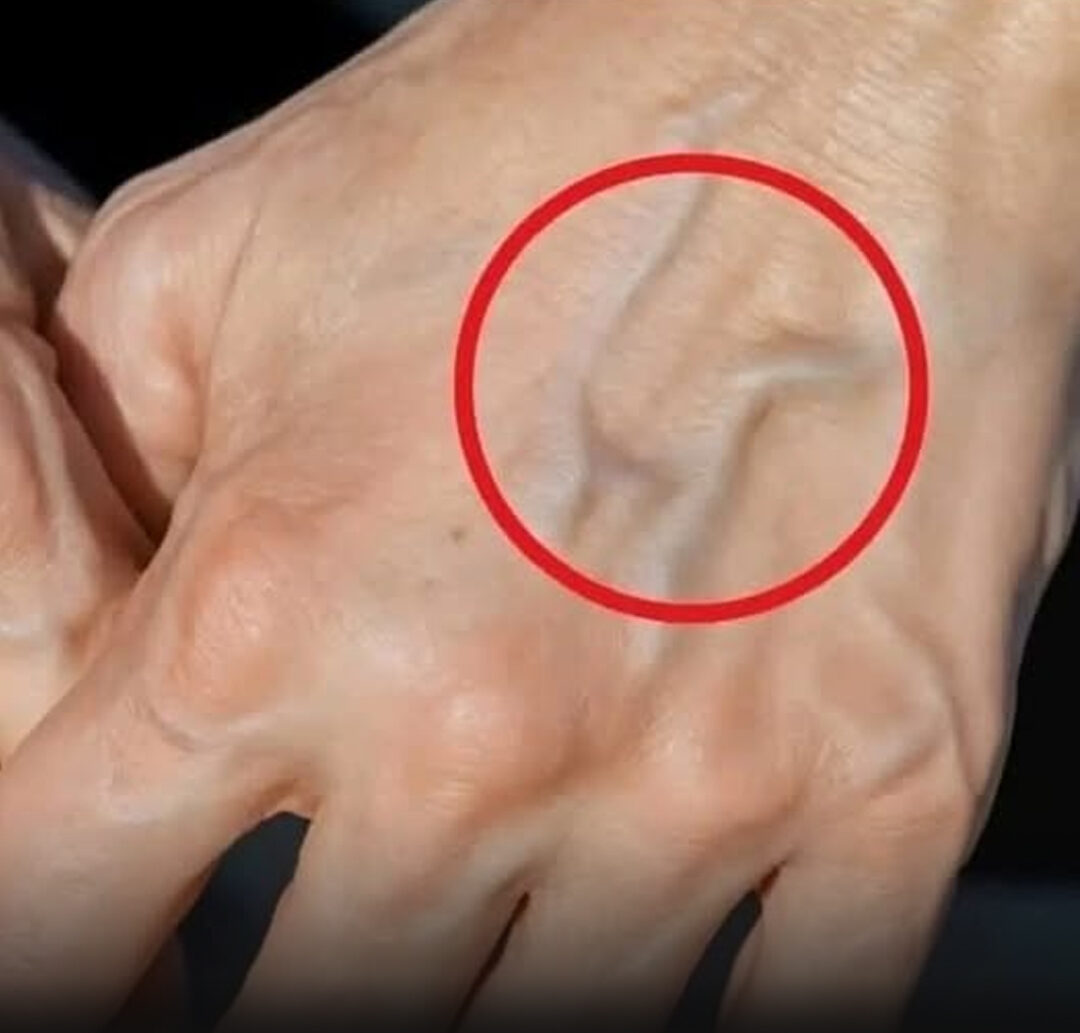
At some point, many people look at their hands or arms and notice that their  veins  appear more  visible  or prominent than usual. This often leads to concern and immediate questions about whether it’s a  health problem  or an abnormal change in the body. However, in most cases, the appearance of  prominent veins is due to completely normal factors and poses no risk. Even so, paying attention to this detail can help you better understand what your body is trying to tell you.

Health

Anatomy

One of the most frequent causes of  prominent veins  is  body fat percentage . People with a slim build or greater  muscle mass  tend to have a thinner layer of fat under the skin, making their veins more visible. This is common in those who exercise  regularly  , especially strength training or intense workouts. During exercise,  blood flow  increases to deliver oxygen to the muscles, causing the blood vessels to dilate temporarily and become more prominent.

Anatomy

Aging   is another key factor influencing this phenomenon. Over the years, skin loses  collagen  and  elasticity , two essential components for maintaining its firmness. As it becomes thinner and less resilient, it more easily reveals internal structures, such as veins. This process is often particularly noticeable on the  hands , an area where the skin is naturally more delicate and is constantly exposed to external factors like the sun and daily use.

Anatomy

High temperatures can   also explain why veins appear more prominent at certain times. When it’s hot, the body activates mechanisms to regulate its temperature, including the  dilation of blood vessels . This allows heat to be released through the skin, but at the same time, it causes the veins to expand and become more visible. That’s why it’s common to notice them more after a  hot bath , during the summer, or after prolonged sun exposure.

Anatomy

In most cases, these variations don’t indicate any medical problem. However, there are specific situations that warrant closer attention. If visible veins are accompanied by  pain ,  swelling , discoloration  , a feeling of  heaviness ,  or burning, it could be a circulatory disorder. Conditions such as  varicose veins ,  phlebitis  , or, less frequently,  thrombosis , require medical evaluation to rule out complications and receive appropriate treatment.

Dehydration   and a  poor diet  can also affect the appearance of veins. When the body doesn’t receive enough water or lacks certain  essential nutrients , the skin can become thinner and lose some of its protective capacity. This makes it more translucent and allows the veins to be more noticeable. Maintaining a balanced diet and adequate hydration is essential not only for the skin but also for the overall functioning of the body.

BiologicalSciences

There are simple habits that help improve both  vascular health  and skin appearance. Drinking enough  water  throughout the day helps keep skin hydrated and supple. Using  natural oils  or moisturizing creams with gentle massage can stimulate circulation and provide beneficial nutrients. In addition, maintaining a  moderate exercise routine , while avoiding extreme sedentary behavior, promotes venous return and overall well-being.

In conclusion, more visible veins than usual are a  common and natural condition , related to body type, age, climate, or activity level. In most cases, it’s not cause for alarm. However, carefully observing changes in your body allows you to detect important signs and know when to consult a professional. Understanding these manifestations helps you make informed decisions and take care of your health consciously, remembering that the body always finds ways to communicate.

🚨BREAKING🚨: 20 Minutes Ago — Trump ENDS It - Signs Order to... See more

by

 President Donald Trump signed an executive order Saturday that he said “directs the FDA to expedite their review of certain psychedelics already designated as breakthrough therapy drugs.”A primary objective of the order is to speed treatment for veterans. “The executive order I’m signing, we’re actually signing the executive order today, is really a moment,” Trump said. “These treatments are currently in the advanced stages of clinical trials to ensure that they’re both safe and effective for the American patients.” The president said the executive order would implement “historic reforms to dramatically accelerate access to new medical research and treatments based on psychedelic drugs.”

Citing the elevated veteran suicide rate, the president added: “In many cases, these experimental treatments have shown life-changing potential for those suffering from severe mental illness and depression, including our cherished veterans.” Research has been going on for quite some time. But, you know, usually with things like this, nothing ever happens, no matter how the research ends up, but we’re changing that. This order will clear away unnecessary bureaucratic hurdles, improve data sharing among the FDA and the Department of Veterans Affairs, and facilitate fast rescheduling of any psychedelic drugs that become FDA approved,” Trump continued.

The president said “in 2024, a study from Stanford University, 30 special operation veterans with traumatic brain injuries underwent – it’s called ibogaine treatment – ibogaine, remember the name,” noting that they “experienced an 80 to 90% reduction in symptoms of depression and anxiety within one month.” And today, the federal government is making a $50 million research investment in its own. And so that was just approved just last night,” Trump announced.

Psychedelic Breakthrough Therapy

President Trump announces a new Executive Order that directs the FDA to expedite reviews of psychedelics that have been designated as breakthrough therapy drugs: “If these turn out to be as good as people are saying, it’s going to have a tremendous impact on this… pic.twitter.com/Kut2RHohbQ – Conservative Brief (@ConservBrief) April 18, 2026 “We’re also opening a pathway for ibogaine to be administered to desperately ill patients under the right to try law,” Trump said. “Today’s order will ensure that people suffering from debilitating symptoms might finally have a chance to reclaim their lives and lead a happier life, just lead a happier life,” he added.

Two weeks ago, Trump signed a sweeping executive order aimed at tightening federal oversight of election integrity, directing multiple agencies to expand voter eligibility verification and impose new controls on mail-in ballots. At the core of the directive is a requirement that the Department of Homeland Security (DHS), working with the Social Security Administration (SSA), compile and transmit lists of individuals confirmed to be U.S. citizens to state election authorities. These “State Citizenship Lists” would be generated using federal databases, including immigration and Social Security records, and updated regularly ahead of federal elections.

According to the order, the lists are intended to help states verify voter eligibility, though inclusion on the list would not automatically register an individual to vote. State laws and procedures would still govern registration requirements. This includes cases involving the distribution of ballots to individuals deemed ineligible to vote, as well as any actors-public or private-who may be involved in producing or sending such ballots.

Election Integrity and Mail Voting

In a significant expansion of federal involvement in mail voting procedures, the directive instructs the U.S. Postal Service (USPS) to develop new rules governing the handling of mail-in and absentee ballots. Within 60 days, the Postmaster General is required to initiate a rulemaking process that would standardize ballot tracking and verification measures nationwide. Under the proposed framework, all mail-in ballots would be required to use specially marked envelopes designated as official election mail. These envelopes must include unique tracking barcodes and meet specific design standards set by USPS to ensure compatibility with automated processing systems.

For 20 years, an eagle equipped with GPS puzzled scientists: reco....See below⤵️

by

 Brownsville, Texas – In an astonishing event that has left experts and local residents amazed, a colossal giant eagle was recently captured near Brownsville, Texas.

This majestic bird, far exceeding the size of any known eagle species, has sent shockwaves through the ornithological community and sparked widespread interest among scientists and the public alike.

A Bird of Colossal Size

The eagle, measuring approximately 10 feet in wingspan, was first spotted by a group of hikers exploring a wooded area close to the U.S.-Mexico border. Witnesses reported the bird perched on a nearby tree, displaying an imposing presence and extraordinary strength in its talons and beak.

Capture and Conservation Efforts

After several days of tracking and coordination with local authorities and wildlife specialists, the eagle was successfully captured using specialized techniques designed to ensure its safety and well-being.

The bird is currently housed at a conservation center in Brownsville, where researchers are conducting detailed studies to understand its origin, diet, and behavior.

Scientific Implications

This discovery raises new questions about the biodiversity of the region and the potential existence of previously undocumented species in the Americas.

Experts speculate that the giant eagle may be an unknown subspecies or an exceptionally large specimen of a known species such as the golden eagle or bald eagle.

Community Reactions

The news has generated great excitement in Brownsville and surrounding areas, with residents and tourists eager to learn more about this unique bird. Local authorities have announced plans to establish a natural sanctuary to protect and study the species, while promoting responsible ecotourism in the region.

Subscribing To Digital Newspaper Outlets

Conclusion

The capture of the giant eagle in Brownsville represents an unprecedented discovery that could reshape our understanding of American wildlife. As scientists continue their research, the world watches with awe and hope for the future of this magnificent creature that now symbolizes the power and majesty of

She was considered missing for fifteen years… until her brother found her underwear hidden under their grandfather’s mattress… – Clear Mind

by


Every night, police lights flickered on Harold’s old house. Reporters came. More officers arrived. Then people from the state crime lab came. The shed became the focal point of everything the city had ignored for fifteen years.

Margaret did not speak.

She sat in Lily’s room, held the pink fabric in her hands, and repeatedly stroked the three small white flowers with her thumb.

The truth slowly came to light.

And each part of it broke her even more.

The fabric belonged to Lily.

Just like the other things that were found under the shed.

A bracelet.

A hair clip.

A school notebook.

A silver necklace that Margaret had given her for her sixteenth birthday.

But Harold’s notebook destroyed the family the most.

He had written everything down.

Not like a confession.

Not with guilt.

But like routine.

Data.

Times.

Short, cold sentences.

Detective Bennett cautiously told them what had happened, but there was no gentle way to say it.

On the day Lily disappeared, she had gone to Harold’s house.

He had called her and said he needed help carrying groceries. Lily went because she trusted him.

Because he was her grandfather.

Because family should be safe.

What happened next was no accident.

It was planned.

Hidden.

Buried.

For fifteen years, Harold sat at family dinners while Margaret wept for her missing daughter.

He watched as Daniel searched fields.

He listened to Noah’s questions.

He came to birthdays, Christmas mornings, and church services.

And he said nothing.

Nothing.

When Margaret heard the truth, she made a sound that Noah would never forget.

Daniel punched the wall until his hand bled.

Daniel punched the wall until his hand bled.

Noah went outside and vomited next to the fence.

All he could hear was Harold’s voice from years ago.

— She probably wanted a different life.

Now Noah understood.

It was never a guess.

It was a disguise.

Then memories returned.

Small things they had ignored.

The locked shed.

Harold’s anger whenever someone came near him.

The strange smell in the courtyard one summer.

The way he always watched Lily whenever she entered a room.

On the night Lily disappeared, Daniel remembered seeing Harold washing his truck in the rain.

Back then it meant nothing.

Now it meant everything.

The whole city changed.

People who had whispered that Lily had run away bowed their heads. Some came to Margaret’s house with food. Some apologized. Others couldn’t even look her in the eye.

Because for fifteen years they had buried Lily twice.

First in the earth.

Then in their judgment.

Months later, Lily was finally laid to rest.

The church was full.

Not out of curiosity.

But out of shame.

Noah stood beside the coffin, holding an old photograph of his sister. She was smiling in it. Forever sixteen. Dark hair over one shoulder. Three small white flowers embroidered on her sleeve.

Margaret walked forward with the pink fabric in her hands.

She placed it next to the flowers.

Then she bent down and whispered:

— I’m sorry, my baby. I should have known.

Noah wanted to tell her that it wasn’t her fault.

But grief does not listen to reason.

After the funeral, Harold’s house remained empty.

Nobody wanted it.

The windows were boarded up. The garden died. The shed was torn down. Nevertheless, people crossed the street instead of walking past this farm.

One evening, Noah returned alone.

The sky was grey. The grass had grown wild. Where the shed had once stood, there was only bare earth.

Noah had loved Harold for years.

He had sat next to him at Christmas.

He had accepted birthday money from his hand.

He had called him Grandpa.

That was the most gruesome part.

Evil had not looked like a monster.

It had looked like a family.

Noah stood there for a long time.

Then he whispered:

— We found you, Lily.

The wind rustled through the dead grass.

For the first time in fifteen years, the truth was no longer trapped beneath this house.

Time did not heal her completely.

But slowly, the form of the pain changed.

Margaret started sewing again.

First just small pieces of fabric. Then flowers.

Small white flowers.

One after the other.

Daniel planted a tree near Lily’s grave. Noah visited her every Sunday. Sometimes he brought flowers. Sometimes he brought nothing. He simply sat there and talked with her.

About his life.

About the years she had missed.

About the little brother who never stopped believing that she hadn’t left her voluntarily.

And every time he left, he touched her stone and said:

— You were never forgotten.

Years later, people in the city stopped calling her « the girl who disappeared ».

Finally, they said their names.

Lily Carter.

A daughter.

A sister.

A girl who trusted the wrong person.

A truth that had been hidden for fifteen years.

And a memory that no one could ever bury.

5 foods rich in estrogen

by

Estrogen is a vital hormone that plays a crucial role in skin  health, body shape, cardiovascular health, bones, joints, mood, and fertility. A lack of estrogen can lead to issues such as dry skin, wrinkles, dark spots, irregular menstruation, fatigue, insomnia, irritability, and an increased risk of osteoporosis.

Women's Health

Hormonebalance guide

To naturally boost estrogen levels, incorporate these five powerful  foods into your diet:

1. Beans, Especially Soybeans

Soybeans are rich in isoflavones, a type of phytoestrogen (plant-based estrogen) that mimics estrogen in the body. Regular consumption of soy-based foods can help:

Balance hormones
Improve skin health
Maintain a slim figure
Reduce the risk of osteoporosis

Additionally, soybeans can slow down menopause, alleviate insomnia, hot flashes, and vaginal dryness, and support cardiovascular health.

2. Flaxseeds

Flaxseeds contain lignans, another type of phytoestrogen that helps regulate estrogen levels. They are packed with benefits such as:

Reducing skin dryness
Enhancing skin elasticity
Balancing hormones
Lowering the risk of breast cancer

They are also high in fiber, which supports digestion, prevents constipation, stabilizes blood sugar levels, and aids in weight loss.

Grind flaxseeds before eating to improve nutrient absorption.
Mix them with  yogurt, smoothies, baked goods, or porridge.

Vitamins & Supplements

Dairy& Eggs

Note: Do not consume more than 2 tablespoons per day to avoid thyroid dysfunction.

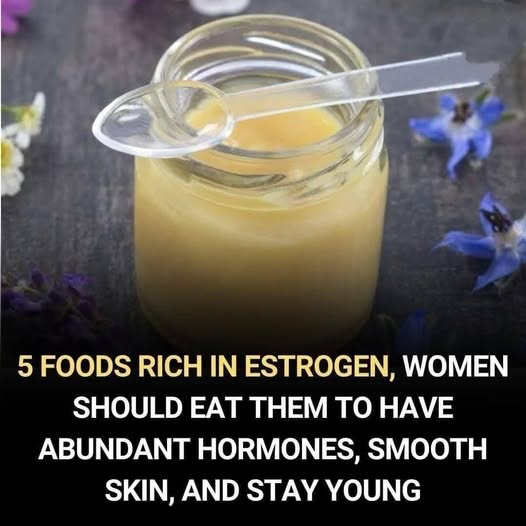
3. Royal Jelly

Royal jelly is rich in phytosterols and flavonoids, which stimulate the body to produce natural estrogen, improve hormone levels, slow aging, and regulate menstrual cycles. It also has antioxidant and immune-boosting properties due to its high content of amino acids, B  vitamins, and minerals.

How to Use:

Take 2-3 grams of royal jelly per day, either directly or mixed with warm water.

Note: People allergic to pollen, those with low blood pressure, or digestive issues should consume royal jelly with caution.

4. Strawberries

Discover more

Yogurt

Insects & Entomology

Vitamins & Supplements

Strawberries are packed with phytoestrogens,  vitamin C, and flavonoids, which:

Stimulate collagen production
Slow down wrinkle formation
Support heart health
Boost mood and reduce stress

Health

How to Use:

Eat fresh strawberries for maximum nutrients.
Add them to smoothies, salads, or mix with yogurt and other fruits.

Vitamins & Supplements

5. Kudzu Root Powder

Kudzu root powder contains isoflavones and diosgenin, which help:

Boost estrogen levels
Cool the body
Improve sleep
Nourish the skin from within

It also helps stabilize hormones, regulate menstrual cycles, and reduce hot flashes, making it especially beneficial for perimenopausal women.

Conclusion

Incorporating these estrogen-rich foods into your diet can help maintain hormonal balance, beauty, and overall health.  Try adding them to your meals and enjoy their powerful benefits!

Food

see next page