dimanche 30 août 2026

Manhattan Crash Leaves Investigators With Key Questions

by

A normal Manhattan afternoon exploded into chaos. Sirens, screams, and bodies on the pavement. Within minutes, one of New York’s busiest streets became a crime scene, a mystery, and a warning. A 61-year-old driver in handcuffs. Two dead. Three fighting for their lives. No clear motive. No confirmed cause. Just a car, a crowd, and a cit… Continues…

City & Local Guides

On a crowded Manhattan street, a momentary loss of control turned into irreversible tragedy. Two lives ended on the asphalt, three more were shattered, and a 61-year-old driver went from commuter to suspect in seconds. Police moved fast: securing the scene, pushing back stunned bystanders, and beginning the painstaking work of piecing together what happened and why.

Behind the flashing lights, investigators now sift through data and doubt. Was it a medical emergency, a mechanical failure, or a catastrophic human error? Vehicle records, surveillance footage, witness statements, and medical reports will all help reconstruct those crucial seconds before impact. Officials say they do not believe it was terrorism or an intentional attack, but that offers only limited comfort. For the victims’ families, for a city always on edge, this crash is a stark reminder of how fragile safety can feel when ordinary streets become sites of sudden, life-altering loss.

Giant Eagle Captured In Brownsville, Texas: A Stunning Discovery That Has Experts Baffled

by

In a discovery that has wildlife experts scratching their heads, a giant eagle was recently captured in Brownsville, Texas, leaving both locals and ornithologists in awe. The bird, far larger than any eagle normally seen in the region, has sparked curiosity, excitement, and a flurry of questions about its origin and species.


A Rare and Unexpected Find

Eagles are a familiar sight in North America, but reports of a bird of this size in Brownsville are virtually unheard of. Witnesses described the eagle as majestic and imposing, with a wingspan that appeared far beyond the average for local raptors.

Authorities were notified after the bird was spotted near a residential area, where it briefly startled locals before being safely captured by wildlife officials.


Experts Are Stumped

Wildlife biologists are intrigued—and baffled. The bird doesn’t perfectly match descriptions of typical North American species such as the Bald Eagle or Golden Eagle. Key features noted include:

  • Exceptional wingspan

  • Unique feather coloration

  • Unusual size and weight

Dr. Marissa Caldwell, an ornithologist consulted on the case, said, “It’s rare to encounter an eagle of this magnitude anywhere in the continental United States. We are running DNA tests to understand whether this is a known species, a hybrid, or perhaps an extraordinarily large specimen.”


Why This Discovery Matters

  • Scientific curiosity: If confirmed as a unique or hybrid species, this eagle could reshape understanding of local raptor populations.

  • Conservation awareness: Rare sightings like this highlight the importance of protecting habitats and wildlife corridors.

  • Community excitement: Local residents are thrilled by the chance to witness such an extraordinary bird in their own backyard.


Next Steps

Wildlife officials are taking careful measures to ensure the eagle’s health and safety. Plans include:

  • Comprehensive medical examination

  • DNA and species analysis

  • Potential relocation to a protected sanctuary or wildlife rehabilitation center

Officials are also documenting the sighting to update regional wildlife records, as it could be the first of its kind in Texas.


A Rare Glimpse into Nature’s Wonders

Encounters like the Brownsville eagle remind us how much there still is to learn about wildlife and nature’s surprises. For one lucky community, this giant raptor has become a living symbol of the unexpected and extraordinary in the natural world.

Whether it turns out to be a rare species, an oversized individual, or a hybrid, this stunning discovery will be remembered as one of Texas’s most remarkable wildlife moments.


Would you like me to add some tips on how residents can safely observe rare wildlife like this?

Only 600 girls have this name… See more

by

# **Only 600 Girls Have This Name… The Fascinating Story Behind One of the World's Rarest Baby Names**

People & Society

Every year, parents spend countless hours searching for the perfect baby name. Some choose names that have been passed down through generations, while others look for something fresh, meaningful, and unique. In today's world, where popular baby names can appear in nearly every classroom, many families dream of finding a name that truly stands out.

Parenting

That's why headlines like **"Only 600 Girls Have This Name…"** immediately grab our attention. The idea that a beautiful name could be so rare sparks curiosity. What makes it special? Why hasn't it become more popular? And could it be the perfect choice for a future generation?

The truth is that rare names are about much more than statistics. They tell stories of culture, history, language, family traditions, and personal identity. Let's explore why uncommon names continue to fascinate parents and what makes a rare name so memorable.

Dictionaries & Encyclopedias

## The Search for Individuality

Choosing a baby's name is one of the first important decisions many parents make.

A name becomes part of someone's identity for life. It appears on school certificates, passports, job applications, and countless introductions.

For that reason, parents often hope to find a name that feels both meaningful and timeless.

In recent years, many families have moved away from the most common choices in favor of names that are distinctive without being difficult to pronounce.

Babies & Toddlers

The goal isn't simply uniqueness—it's creating a name that feels personal.

## What Makes a Name Rare?

A name can be considered rare for several reasons.

Sometimes it belongs to an ancient language that is no longer widely spoken.

Other times it comes from a specific region or cultural tradition.

People & Society

Some names fade from popularity over the decades before quietly returning years later.

Parenting

In other cases, a name may simply never have reached mainstream attention despite having a beautiful meaning.

Popularity changes constantly, making today's uncommon name tomorrow's favorite.

## The Influence of Culture

Names reflect the cultures from which they originate.

Many carry meanings connected to:

* Nature

Books & Literature

* Family heritage

* Religious traditions

* Historical figures

* Literature

* Music

* Virtues such as hope, courage, or wisdom

As cultures interact more closely through travel and technology, parents increasingly discover names from around the world that resonate with them.

This diversity has expanded the range of naming possibilities like never before.

## Why Rare Names Feel Special

Baby & Pet Names

Demographics

Meeting someone with an unusual name is often memorable.

Unlike very common names, rare ones tend to stand out in conversation.

People may remember them more easily because they encounter them less frequently.

For many parents, that sense of individuality is appealing.

They want their child to have a name that feels distinctive while still carrying a meaningful story.

Family

## The Balance Between Unique and Practical

Choosing a rare name also requires careful thought.

Discover more

Economics

family

parents

People Search

baby names

Arts & Entertainment

Parent

Baby naming

Pregnancy & Maternity

Children

Parents often consider questions such as:

* Is it easy to pronounce?

* Will people know how to spell it?

* Does it have a positive meaning?

* Will it age well into adulthood?

* Does it fit different stages of life?

Finding the right balance between originality and practicality can make all the difference.

People & Society

## Trends Change Over Time

Baby naming trends evolve constantly.

Names that were common fifty years ago may now seem unusual.

Likewise, names that were once considered rare sometimes become incredibly popular.

Popular culture has played a major role in these shifts.

Television shows, books, movies, athletes, musicians, and public figures have all influenced naming trends across generations.

Dictionaries & Encyclopedias

A single successful film or bestselling novel can introduce a previously uncommon name to millions of people.

## Family Traditions Still Matter

Despite changing trends, many families continue honoring relatives through naming traditions.

Children may receive:

* A grandparent's name.

* A parent's middle name.

* A meaningful family surname.

Education

* A variation of a traditional name.

These choices connect generations while preserving family history.

Sometimes even a very rare name has been cherished within one family for centuries.

## The Emotional Power of Names

Names carry emotional significance.

Hearing your own name often creates an immediate sense of familiarity.

Parenting

Likewise, certain names may remind people of loved ones, childhood friends, favorite teachers, or inspiring historical figures.

These personal associations influence naming decisions more than popularity statistics alone.

A meaningful connection often outweighs trends.

## Rare Doesn't Always Mean New

Many uncommon names are actually quite old.

Some originated hundreds—or even thousands—of years ago.

Family Law

Over time they simply became less frequently used.

As interest in genealogy and family history has grown, some parents have rediscovered beautiful historical names that had nearly disappeared.

In this way, old traditions sometimes become modern again.

## The Internet Has Changed Everything

Years ago, parents relied primarily on baby-name books or family recommendations.

Books & Literature

Today they have access to an enormous range of resources.

They can explore names from countless cultures, learn pronunciation guides, discover meanings, and research historical origins within minutes.

Online communities also allow parents to exchange ideas and discuss names they may never have encountered otherwise.

This access has dramatically expanded naming possibilities.

## Choosing Meaning Over Popularity

Babies & Toddlers

One of the most important lessons many parents discover is that popularity should never be the only consideration.

A meaningful name can remain special regardless of how many other people share it.

Likewise, an extremely rare name may not feel right if it lacks personal significance.

The best names often reflect family values, cherished memories, cultural heritage, or hopes for the future.

Meaning lasts longer than trends.

People & Society

## Questions Parents Often Ask

When considering an uncommon name, parents frequently ask themselves:

* Does it have a beautiful meaning?

* Is it easy for others to pronounce?

* Will my child enjoy having this name?

* Does it reflect our family's story?

* Will it remain meaningful throughout life?

There are no universal right answers.

Demographics

Every family's priorities are different.

## Celebrating Individual Identity

Names are among the first gifts parents give their children.

They become part of every introduction, every achievement, and every milestone.

Whether common or rare, each name eventually gains its greatest meaning through the life of the person who carries it.

Dictionaries & Encyclopedias

Character, kindness, curiosity, determination, and compassion matter far more than popularity rankings.

In the end, people make names memorable—not the other way around.

## Looking Beyond the Numbers

Statistics can be interesting.

Learning that only a small number of people share a particular name naturally sparks curiosity.

But numbers alone don't determine a name's value.

Family

A name spoken with love becomes meaningful regardless of how often it appears on a list.

Some of the world's most recognizable names were once uncommon.

Others have remained rare for centuries while continuing to hold deep significance within families and communities.

Popularity is temporary.

Meaning endures.

Parenting

## Final Thoughts

The headline **"Only 600 Girls Have This Name…"** reminds us why names continue to captivate our imagination. Rare names spark curiosity because they suggest individuality, mystery, and a story waiting to be told. Yet the true beauty of any name lies not in how many people have it, but in the memories, relationships, and experiences attached to it.

Whether parents choose a timeless classic, a beloved family name, or a hidden gem that few others share, the most meaningful choice is one made with care and intention. A name becomes part of a person's journey, accompanying them through childhood, adulthood, achievements, challenges, and celebrations.

Books & Literature

Years from now, popularity charts will change, trends will come and go, and new favorites will emerge. But the names that matter most will always be those chosen with love. After all, the greatest legacy of a name isn't how rare it is—it's the remarkable life of the person who carries it.

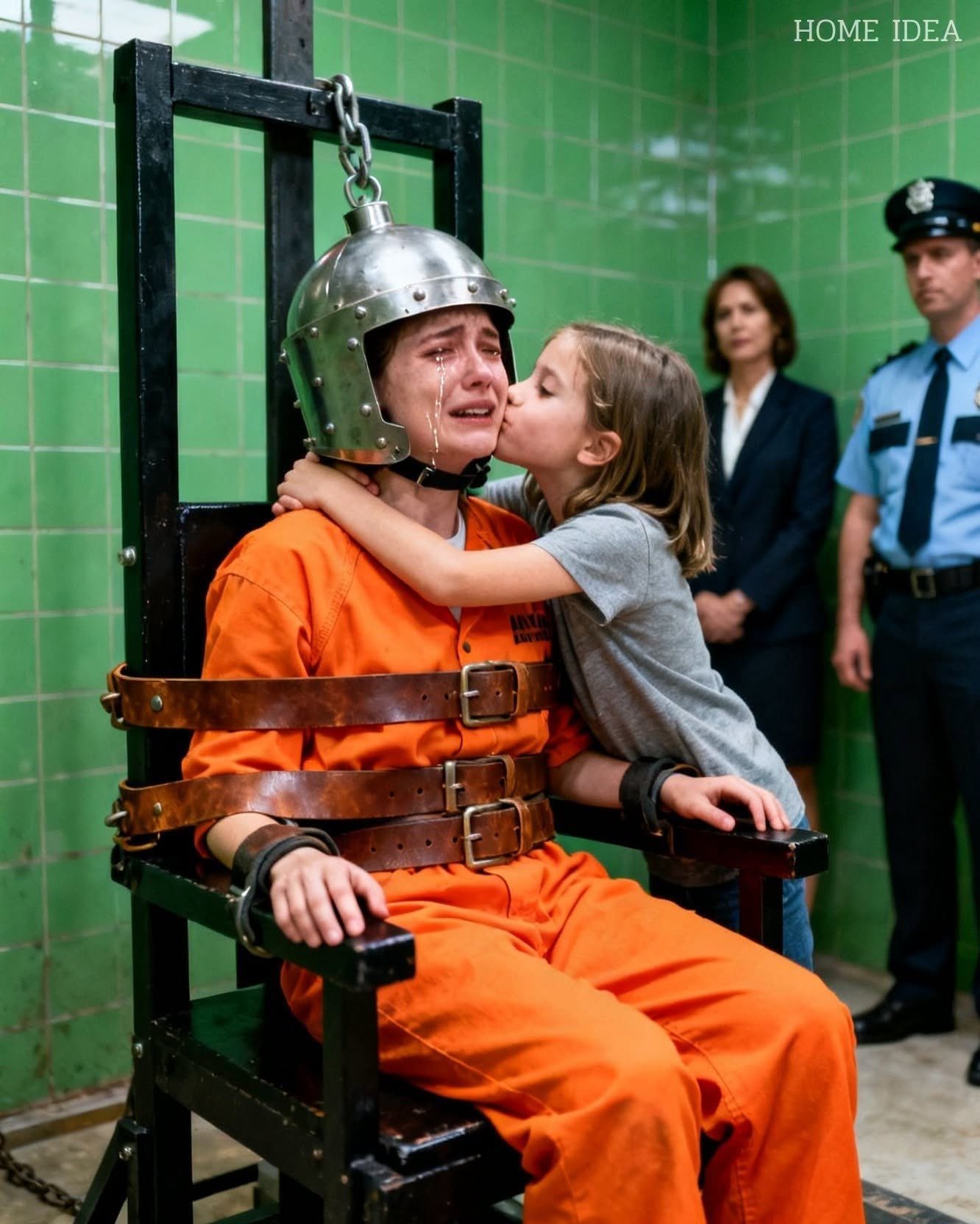
Ramira’s scream echoed against the cold concrete walls of the living room and touched something deep within everyone present.

by


Ramira’s cry echoed against the cold concrete walls of the visiting room and deeply moved everyone present, for it was not the cry of a desperate prisoner, but of someone who, after years of darkness, had suddenly seen the light.

The guards grabbed her arms and tried to push her back into the chair, but Ramira resisted with a strength that emanated from something deeper than anger, something closer to the truth that was finally coming to light.

Colonel Méndez, who was watching from the doorway, slowly stepped forward and raised his hand to signal to the guards to stop before the situation escalated into another violent incident that would be recorded in the prison’s logbook.

“Let her speak,” Méndez said calmly, in such an authoritative voice that the guards immediately froze in fear.

Ramira looked at him, her eyes burning, tears still streaming down her cheeks, but now those tears carried a strange mixture of pain, relief, and a fierce determination that hadn’t been there minutes before.

“My daughter knows something,” she said, breathing heavily. “Something no one has ever asked her before… something that could prove that everything they accused me of was a lie.”

The social worker frowned slightly, visibly uncomfortable, because the judicial system had closed Ramira Fuentes’ case a long time ago, and reopening it now seemed impossible.

“She’s still just a child,” the social worker said cautiously, as if trying to calm the situation, which could easily spiral out of control.

Salome slowly turned her head toward the woman and spoke with a calmness that seemed almost unsettling for someone her age.

‘But I remember things that adults forgot to ask,’ the girl replied softly.

Silence returned to fill the small room, heavier than before.

Colonel Méndez leaned slightly forward so that his eyes were at the same level as Salomé’s, and studied her face with the same instinct he had developed over decades of interrogating criminals.

What he saw there was not fear.

It was a certainty.

“What exactly did you say to your mother?” Méndez asked.

Salome looked first at Ramira, as if asking for permission, and her mother nodded immediately, gripping the edge of the table with trembling hands.

The girl took a deep breath.

‘The man who died that night… he wasn’t alone at home,’ she said softly.

The words fell into the room like a stone falling into calm waters.

Ramira closed her eyes for a moment, as if reliving the night that had destroyed her life.

‘I told them,’ she whispered. ‘But no one listened to me.’

Méndez stood up slowly, his thoughts already returning to the process that seemed so complete.

There was a witness who claimed to have seen Ramira leaving the house.

Fingerprints on the knife.

Blood on his clothes.

All the pieces fit together perfectly.

Perhaps even too perfect.

“Who else was there?” Méndez asked the girl cautiously.

Salome looked him straight in the eyes, and something in her gaze made the experienced officer feel unexpectedly uncomfortable.

‘My uncle Mateo,’ she said.

Ramira hapte naar adem.

The name seemed like a bolt from the blue, since Mateo was the younger brother of her husband, the man who had stated during the investigation that he had only arrived at the scene after the crime.

“No…” Ramira whispered, shaking her head slowly.

But Salome continued.

‘I saw him that night,’ the girl whispered. ‘He said I had to stay in my room and couldn’t go out because there were adults talking.’

The social worker straightened up immediately.

‘Salomé, you never mentioned this during the investigation,’ she said, her voice now tense.

Salome lowered her gaze slightly.

“Nobody asked me what I saw,” she replied curtly.

Those eight words made the air in the room feel heavier.

Mendez rubbed his chin slowly.

He remembered reading that the girl was asleep during the incident.

This assumption was accepted without question.

“What exactly did you see?” he asked again.

Salome took another deep breath.

“I woke up because they were arguing,” she said. “My father was yelling, and Uncle Mateo was yelling even louder.”

Ramira’s hands began to tremble again, but this time from shock instead of despair.

“What were they discussing?” Méndez asked.

“Money,” Salome replied. “And something my father called betrayal.”

The colonel felt a shiver run down his spine.

The official report stated that the victim, Ramira’s husband, was attacked suddenly and without warning.

No argument is mentioned.

It was never mentioned before that Mateo was present.

“What happened next?” Méndez asked slowly.

Salome’s voice became even softer.

“I heard something fall… something like a chair,” she said. “Then my father screamed again, and after that everything went silent again.”

Ramira covered her mouth with her hand; tears began to stream down her cheeks again.

‘Oh my God…’, she whispered.

Salome looked at her mother and continued speaking calmly.

“When I opened the door a little, I saw Uncle Mateo with the knife in his hand,” the girl said.

The room froze.

Even the guards held their breath for a moment.

“He saw me looking,” Salome continued. “He said that if I said anything, I would disappear forever.”

Ramira leaned back in her chair and began to tremble violently.

Five years.

For five years, she was convinced that her daughter had fallen asleep during the nightmare.

For five years, the child carried the truth with her alone, without knowing what had happened.

Méndez was already thinking about the legal consequences unfolding before him.

If the girl’s testimony is correct, the entire investigation was based on a manipulated timeline.

Mateo positioned Ramira at the crime scene while concealing his own presence.

And Ramira’s fingerprints on the knife suddenly acquired a chilling significance.

“He forced me to catch him,” Ramira whispered suddenly, remembering something she had buried under trauma for years. “He said that if I didn’t, he would do something to Salome.”

The expression on the colonel’s face became more tense.

Everything started to make sense.

Mateo had tampered with the crime scene before calling the police.

And the system accepted his version because it matched the evidence.

Evidence that he had orchestrated everything.

“Why are you telling me this now?” the social worker asked Salomé, who was still trying to understand what she was hearing.

The girl looked at her little hands for a moment.

“Because I saw him again yesterday,” she said softly.

All the adults in the room felt a shiver run down their spine.

“Where?” Méndez asked immediately.

“Outside the orphanage,” Salome replied. “He came by car and kept an eye on the gate.”

Ramira stood up abruptly once more, panic etched on her face.

“He’s killing me,” she screamed. “He wants the truth to remain hidden forever!”

The guards looked to Méndez for instructions.

The colonel remained silent for a few seconds, his eyes fixed on the girl sitting beside the table.

After thirty years in prison administration, he had learned one thing above all else.

Children rarely lie about being afraid.

And Salome wasn’t talking like a child making up a story.

She spoke as if she were finally revealing a secret that had become too heavy to bear alone.

A BIKER CAME TO MY WIFE’S GRAVE EVERY SINGLE WEEK, AND FOR MONTHS, I HAD NO IDEA WHO HE WAS P1

by


For six months, I watched him from inside my car.

Same day.

Same time.

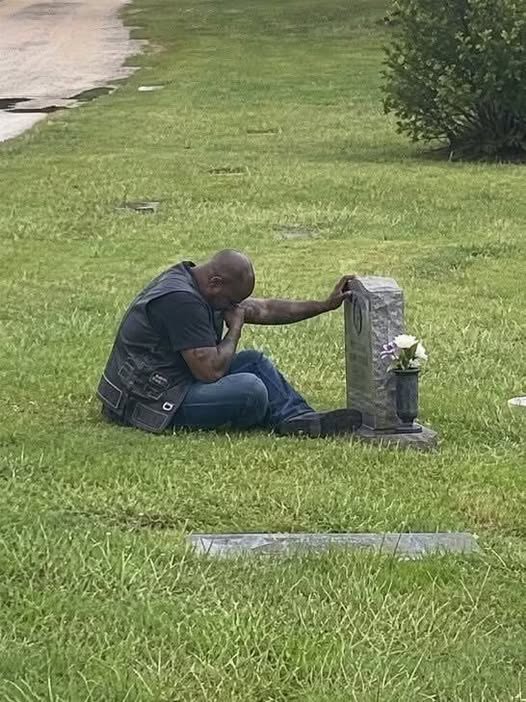
Every Saturday at exactly 2 PM, he would ride into the cemetery on his Harley, park near the old oak tree, and walk straight to Emily’s headstone.

Then he would sit beside her grave for one full hour.

He never brought flowers.

Never left a note.

Never spoke loud enough for me to hear.

He just sat cross-legged in the grass, head lowered, like he was carrying a pain too heavy to stand with.

The first time I saw him, I thought he had made a mistake.

It was a large cemetery. Graves could be easy to confuse.

But then he came back the next Saturday.

And the Saturday after that.

And again after that.

Week after week, this stranger mourned my wife like she had belonged to him too.

Time & Calendars

At first, I was confused.

Then I became angry.

Who was he?

How did he know Emily?

Why was this man showing up for her every week when some people in her own family barely came at all?

Emily had died fourteen months earlier from breast cancer.

She was only forty-three.

We had been married for twenty years.

Two children.

A quiet home.

A normal life.

At least, that was what I thought.

Nothing about my wife’s life made sense with this man.

Emily had been a pediatric nurse.

She volunteered at church.

PART2

She drove a silver minivan and packed snacks for every school event.

Her idea of breaking the rules was ordering dessert before dinner.

Dictionaries & Encyclopedias

But this biker grieved her like he had lost someone irreplaceable.

Sometimes, from my car, I saw his shoulders shake.

Sometimes, before he left, he placed one rough hand against her headstone and kept it there for several seconds.

Like he was saying goodbye all over again.

By the third month, I could not take it anymore.

That Saturday, I stepped out of my car and walked toward him.

He heard my footsteps but did not turn around.

His hand stayed pressed against Emily’s name.

“Excuse me,” I said, my voice sharper than I intended. “I’m Emily’s husband. I think it’s time you told me who you are.”

For a long moment, he said nothing.

Then he slowly stood, turned toward me, and looked like a man who had been waiting six months for this question.

Your wife was my…”……

“I’m sorry,” he said quietly. “I never meant to make you uncomfortable. I only came here because I needed to say thank you.”

I stared at him, confused.

“Thank you?” I asked. “For what?”

The biker looked down at Emily’s grave, and for the first time, I saw the tears standing in his eyes.

Motorcycles

“Your wife saved my daughter’s life.”

For a second, I forgot how to breathe.

“My wife?” I said. “Emily never mentioned you.”

He shook his head slowly.

“She didn’t know me,” he said. “At least, not really. She probably didn’t even remember my face. But I never forgot hers.”

Then he glanced at the grass beside the headstone.

“Can I tell you what happened?”

I should have said no.

I should have walked away.

But something in his voice stopped me.

So we sat there, on opposite sides of my wife’s grave — me, her husband of twenty years, and this stranger who somehow carried a piece of her story I had never known.

His name was Mike.

He was forty-seven, a mechanic, and a single father.

His daughter, Kaylee, had been diagnosed with leukemia when she was only nine years old. Insurance covered part of the treatment, but not nearly enough. He sold his house. Worked every hour his body could handle. His motorcycle club held fundraisers, passed helmets around at bars, organized charity rides.

Still, they were forty thousand dollars short.

“I was breaking,” Mike said, his voice rough. “I had a little girl fading in a hospital bed, and I couldn’t afford to save her.”

One afternoon, he had stepped into the hallway because he didn’t want Kaylee to see him cry.

That was when Emily found him.

“She wasn’t even assigned to my daughter’s ward,” he said. “She was just passing through. But she stopped anyway.”

Emily had asked him if he was okay.

And somehow, this big, tough-looking man in a leather vest had told her everything.

He told her he felt like a failure.

That his daughter was dying.

That no matter how hard he worked, he couldn’t catch up to the cost of keeping her alive.

Mike looked at Emily’s name on the stone and swallowed hard.

“She didn’t judge me,” he said. “She didn’t pity me either. She just listened. Like every word mattered.”

Then Emily had placed a hand on his shoulder and told him something he never forgot.

“Sometimes miracles happen,” she said. “Don’t give up hope.”

Two days later, the hospital called.

An anonymous donor had paid the remaining forty thousand dollars.

Every cent.

Kaylee finished her treatment. The cancer went into remission. Three years later, doctors declared her cancer-free.

Mike said he tried for years to find out who had done it.

He called the hospital.

Asked nurses

Wheel of Fortune’ Sparks Outrage Over Controversial Final Round Puzzle..check 1 comment👇😱

by

Wheel of Fortune' Final Puzzle Sparks Online Debate: Why One Round Left Fans Divided

Discover more

Photo & Image Sharing

Photo & Image Sharing

Pregnancy & Maternity

children

Family Law

For decades, Wheel of Fortune has been one of America's most beloved television game shows. Its familiar format, exciting word puzzles, and dramatic bonus rounds have entertained generations of viewers, making it a nightly tradition for millions of households.

Yet every so often, a single puzzle becomes the center of heated discussion—not because of a contestant's mistake, but because viewers question whether the puzzle itself was fair.

That was exactly what happened following a recent episode, when the show's final bonus-round puzzle quickly became one of the most talked-about moments on social media. Within minutes of the episode airing, fans flooded online platforms with opinions, debating whether the contestant had been given an impossible challenge or whether the puzzle simply required a different way of thinking.

Discover more

Parenting

hospital

Online Image Galleries

Photo & Image Sharing

As clips from the episode spread across the internet, the discussion grew far beyond the outcome of a single game. It reignited a long-running conversation about puzzle design, game-show fairness, and the delicate balance between creating an exciting challenge and frustrating both contestants and viewers.

A Television Tradition

Since its debut in the 1970s, Wheel of Fortune has built its reputation on a simple but captivating concept. Contestants spin the famous wheel, solve word puzzles, and compete for cash and prizes. While the early rounds allow players to guess letters and build momentum, the bonus round is where everything changes.

After selecting a category and receiving the standard letters—R, S, T, L, N, and E—the finalist chooses a few additional consonants and one vowel. With only seconds remaining on the clock, they must solve the puzzle based on the letters revealed.

Discover more

Beds

Food

wedding

The tension of those final moments has become one of the show's defining features. Sometimes contestants solve seemingly impossible phrases with ease. Other times, they fall just short, leaving substantial cash prizes unclaimed.

That unpredictability is part of what has kept audiences engaged for decades.

The Puzzle That Started the Conversation

In the episode that sparked widespread discussion, the contestant reached the bonus round after an impressive performance throughout the game. They had navigated challenging puzzles, avoided bankrupt wedges, and earned the opportunity to compete for a significant prize.

Everything came down to the final puzzle.

As the familiar countdown began, the contestant studied the partially revealed phrase, attempting to piece together the missing letters before time expired.

Discover more

Weddings

Classic Rock & Oldies

Mobility Equipment & Accessories

Despite several thoughtful guesses, the correct answer remained elusive.

When the solution was finally revealed, reactions were immediate.

Many viewers argued that the wording was unusually obscure and difficult to identify with the limited letters provided. Others believed the contestant had little realistic chance of solving it within the allotted time.

Social media platforms quickly filled with comments expressing surprise, disappointment, and frustration.

Fans React Online

One reason Wheel of Fortune remains so popular is that viewers enjoy solving the puzzles from home alongside the contestants. When a particularly challenging puzzle appears, audiences naturally compare their own experience with what they witnessed on television.

Following this episode, many viewers admitted they couldn't solve the puzzle either.

Some questioned whether the phrase was too uncommon for a bonus-round challenge.

Others felt the available letters left too many possible combinations, making success largely dependent on luck rather than deduction.

Meanwhile, another group of fans defended the show, arguing that difficult puzzles are an essential part of the competition. They pointed out that bonus rounds are intentionally designed to be challenging, and contestants understand the level of difficulty before stepping onto the stage.

As often happens with popular television moments, opinions quickly became divided.

The Challenge of Creating Fair Puzzles

Designing puzzles for a long-running game show is far more complicated than many viewers realize.

Producers must ensure that each puzzle meets several goals at once. It should be solvable, but not too easy. It should challenge contestants while still allowing viewers at home to participate. Most importantly, it should avoid ambiguity that could make multiple answers appear equally plausible.

Finding that balance is no small task.

After thousands of episodes and tens of thousands of puzzles, writers must continually develop fresh phrases while maintaining fairness and consistency.

Some puzzles become memorable because contestants solve them in spectacular fashion. Others become unforgettable because they prove unexpectedly difficult.

Why Certain Puzzles Feel Impossible

Not every difficult puzzle is unfair.

Several factors can influence how challenging a puzzle becomes:

The frequency of the remaining letters.

The number of possible word combinations.

Familiarity with the phrase.

Time pressure.

The contestant's ability to recognize patterns quickly.

Viewers watching from home often have advantages that contestants do not. They are usually seated comfortably, free from bright studio lights, television cameras, and the pressure of knowing that thousands—or even millions—of people are watching.

Contestants, by contrast, have only a few seconds to process incomplete information while adrenaline is running high.

Even simple phrases can become surprisingly difficult under those conditions.

Social Media Amplifies Every Moment

Years ago, discussions about controversial game-show moments were limited to conversations with friends or family. Today, social media allows viewers around the world to react instantly.

Within minutes of a notable episode airing, hashtags begin trending, clips are shared repeatedly, and thousands of comments appear across various platforms.

This immediate feedback has changed how audiences experience television. Individual puzzles that might once have been forgotten by the following week can now generate nationwide conversations lasting for days.

Some viewers appreciate this increased interaction, while others believe online reactions occasionally exaggerate isolated moments.

The Producers' Perspective

Television producers generally strive to create exciting competition rather than controversy.

An ideal puzzle should generate suspense without feeling impossible. If every contestant solved every bonus puzzle, much of the drama would disappear. On the other hand, if puzzles consistently proved unsolvable, viewers might become frustrated.

Maintaining that balance requires extensive testing and careful editorial review.

Although producers rarely comment on individual puzzles, game shows routinely evaluate audience feedback to understand how episodes are received.

A Long History of Memorable Moments

This isn't the first time a Wheel of Fortune puzzle has generated debate.

Over the years, several bonus-round puzzles have become famous because viewers believed they were unusually difficult or featured unexpected wording.

Likewise, there have been countless occasions when contestants solved remarkably challenging puzzles with only a handful of letters, astonishing both the audience and longtime fans.

These moments contribute to the show's enduring appeal.

They remind viewers that no two games are exactly alike.

Why People Care So Much

The emotional investment viewers have in Wheel of Fortune reflects the show's unique place in television history.

Many families have watched together for generations, turning puzzle-solving into a nightly tradition. Viewers naturally empathize with contestants who come close to winning life-changing prizes.

When someone narrowly misses a major prize because of a difficult puzzle, audiences often imagine how they might have performed under the same circumstances.

That connection keeps discussions lively long after the credits roll.

Entertainment, Skill, and Luck

Like many successful game shows, Wheel of Fortune combines knowledge, observation, strategy, and chance.

Contestants must make smart decisions throughout the game, but the outcome also depends on factors beyond their control, including wheel spins, letter placement, and puzzle selection.

This blend of skill and luck has helped the program remain entertaining for decades.

Final Thoughts

Whether viewers believed the controversial bonus puzzle was unfair or simply challenging, one thing became clear: Wheel of Fortune continues to capture the attention of audiences across the country.

The passionate discussion surrounding a single puzzle demonstrates how deeply invested fans remain after decades on the air. Every episode offers new opportunities for triumph, disappointment, surprise, and debate.

While opinions about individual puzzles will always differ, the conversations they inspire are part of what keeps the show fresh and engaging. Long after the final wheel stops spinning, viewers continue comparing answers, discussing strategies, and sharing memorable moments—proof that one well-designed puzzle can spark conversations far beyond the television screen

Warning for all McDonald’s lovers, McDonald’s will shut down all…

by

The doors are gone, and something feels wrong.
McDonald’s quiet experiment with doorless, always-open entrances has triggered a backlash nobody was ready for. Some call it progress. Others call it a warning. Is this convenience—or control? What happens to safety, privacy, and the right to simply shut the world out when even fast food never cl… Continues…

At first glance, a missing door seems trivial, even clever: no handles, no barriers, just a seamless path to fries at 3 a.m. But the design whispers something deeper about a culture that refuses to pause. An entrance that never closes suggests a life that never does either—no off switch, no boundary between public and private, rest and demand.

Supporters praise the move as radically welcoming, a physical promise that the brand is “always there” for anyone at any hour. Yet critics sense an unease beneath the glow of convenience. A building that cannot close feels like a life that cannot retreat. The doorless McDonald’s becomes a symbol of a world where access is constant, but safety, solitude, and the dignity of stepping away grow harder to defend.