
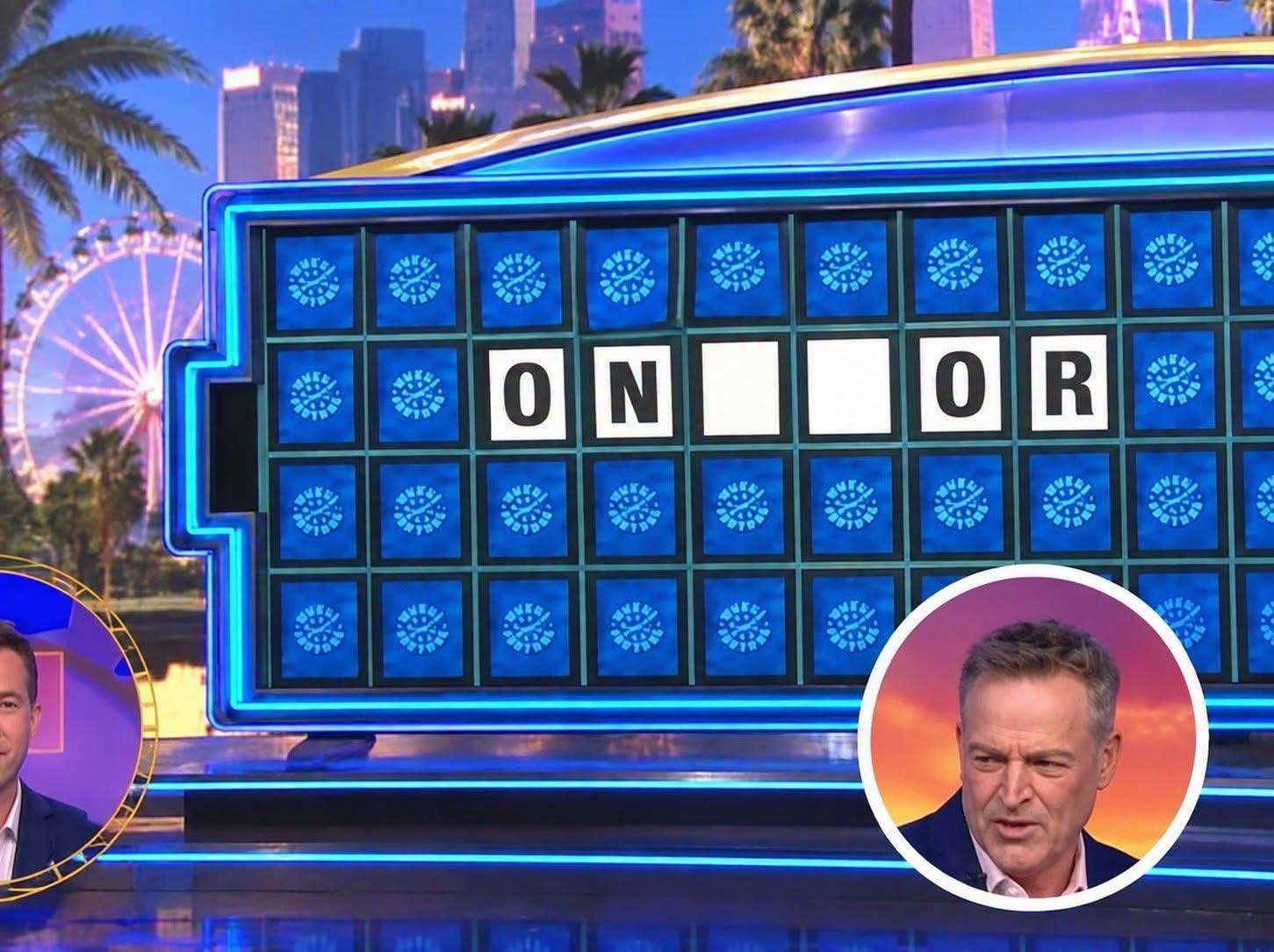
Stephen Sporer came close to adding another $40,000 to his impressive winnings, but one missed answer in the Bonus Round kept him from claiming the larger prize. Although he finished the game with a substantial $35,000, the final puzzle created a bittersweet ending to an otherwise strong performance.
Sporer successfully reached the Bonus Round and was given the phrase “ON OUR WAY” to solve. However, he could not identify the correct answer before time expired. As a result, the additional $40,000 remained out of reach, leaving him with a memorable but somewhat frustrating conclusion.
The episode also generated discussion among viewers because of an earlier puzzle, “Seeing the green flash.” Some fans criticized the clue online, describing it as unusually difficult or obscure. Their reactions added another layer of debate to an episode that had already given viewers plenty to discuss.
Despite the controversy and missed opportunity, Sporer still walked away with $35,000 after a strong showing. His performance demonstrated how quickly a successful game can become a mixture of excitement and disappointment, especially when a much larger prize is within reach. In the end, his appearance remained a significant achievement, even though the final moments left viewers wondering what might have happened with one more correct answer.
If you have noticed someone keeping one fingernail noticeably longer than the others, there are several possible reasons. The habit can be connected to cultural traditions, work, hobbies, practical uses, personal habits, or simply individual preference. There is no single explanation that applies to everyone, and a longer nail should not automatically be interpreted as having a particular meaning.
Historically, longer fingernails were sometimes associated with social status in parts of Asia because they could suggest that a person did not perform regular manual labor. Today, the practice can have more practical purposes. Some musicians who play string instruments keep certain nails longer because they can help with plucking strings and producing a preferred sound. The ideal length depends on the instrument, technique, and the individual’s comfort.
For others, a longer fingernail may simply be convenient for small tasks, such as separating stickers or opening packages. It can also be a matter of personal style or a habit that developed over time. However, longer nails can collect dirt and microorganisms more easily, making regular handwashing and cleaning important. Care should also be taken to avoid activities that could damage the nail.
A change in one fingernail can occasionally have another explanation. Persistent discoloration, thickening, separation, or unusual shape may result from injury or a nail condition and can be discussed with a healthcare professional if concerning. Most importantly, a single long fingernail should not be used to judge someone’s personality or lifestyle. For one person it may reflect tradition, music, convenience, or simply personal preference.
Lisa Rinna drew attention at the 2026 MTV Video Music Awards with a dramatic new appearance inspired by Madonna. The actress and television personality arrived in a sculptural white gown by designer label Seks and a short platinum-blonde hairstyle, creating a striking change from the brunette look she is often known for.
Rinna later explained that Madonna was the main inspiration behind the transformation. She wanted to celebrate the legendary performer while also exploring her own interest in fashion and beauty. The short blonde hairstyle helped reinforce the concept, recalling several periods of Madonna’s career without attempting to recreate one specific outfit.
The sculptural gown featured flowing elements that gave it a distinctive silhouette, while its simple white color kept attention on the design and Rinna’s new hairstyle. Her appearance also reflected the tradition of experimentation associated with the VMAs, where celebrities frequently use the red carpet to introduce creative and unexpected fashion choices. Reactions online varied, with some viewers appreciating the tribute and others preferring Rinna’s familiar style.
Ultimately, Rinna’s look combined personal creativity with admiration for Madonna’s influence on music, fashion, and entertainment. Madonna’s long history of reinvention made her an especially fitting source of inspiration for the occasion. Whether viewers preferred the transformation or her classic appearance, Rinna used the event to have fun with fashion while recognizing an artist whose visual style has remained influential for decades.
Occasional swelling around the feet and ankles can happen for everyday reasons, including sitting or standing for long periods, traveling, warm weather, or eating a salty meal. In many cases, the swelling improves after resting or changing position. However, swelling that persists, repeatedly returns, or occurs with skin changes deserves closer attention because it may have several possible causes.
When fluid does not move efficiently through the legs, it can collect around the ankles and lower legs. This may create feelings of heaviness, tightness, or discomfort, especially after spending many hours on your feet. Ongoing swelling can also be accompanied by changes in the skin, such as darker areas, dryness, thickening, or firmness. These changes can develop gradually and may be easy to overlook.
The pattern of swelling can provide useful information. Swelling in both legs may have different possible explanations from sudden swelling in only one leg. It is helpful to notice when the swelling begins, whether rest improves it, and whether pain, warmth, redness, or other symptoms occur. Persistent or worsening swelling, unexplained repeated episodes, or sores that do not heal normally should be evaluated by a healthcare professional.
Sudden leg swelling accompanied by chest discomfort, difficulty breathing, fainting, or severe weakness requires emergency medical attention. For less urgent symptoms, regular movement and avoiding long periods in the same position may support general leg comfort. However, these measures should not replace professional advice when symptoms continue. A qualified healthcare professional can consider your symptoms, medical history, and medications to determine the appropriate evaluation and next steps.
Visual puzzles can be an entertaining way to test observation skills, especially when familiar shapes are cleverly blended into a complicated pattern. In this challenge, a dense collection of blue branches hides three animals: a moose, a squirrel, and a bear. At first, the image may look like an ordinary tangle of branches, but closer inspection reveals outlines incorporated into the design.
The animals are difficult to spot because their shapes follow the curves, angles, and irregular patterns of the surrounding branches. Instead of having obvious boundaries, the figures appear to become part of the forest. One useful approach is to examine the image systematically, moving from the top toward the bottom and looking for unusual curves or areas where several lines create a recognizable shape.
It can also help to focus on the spaces between the branches rather than the lines themselves. The empty areas may reveal the outline of an animal’s body, head, or ears more clearly. If one section seems especially confusing, briefly look away and return to it with a fresh perspective. Finding one animal may also make it easier to understand how the others have been incorporated into the pattern.
The solution is a moose, a squirrel, and a bear. Before checking the answer, take another moment to search for all three independently. The puzzle is designed for entertainment rather than as a measure of intelligence or mental ability. Whether you find the animals quickly or need several minutes, the main goal is to enjoy recognizing patterns and discovering how the hidden figures fit into the surrounding branches.
When my daughter-in-law asked me to babysit my grandson Oliver for the weekend, I expected nothing more than quality time together. We spent the days building towers, preparing meals, cleaning up spills, reading bedtime stories, and helping him through nighttime fears. Although the weekend was tiring, it was also deeply rewarding. I left their home feeling grateful and never imagined that my time and care would later be treated as an expense.
The following morning, I received a photo of a handwritten bill left on their kitchen counter. It listed charges for eggs, water, electricity, detergent, and other small expenses from my stay. The total was modest, but the gesture hurt because it made something I had freely given feel transactional. Rather than respond in anger, I decided to write my own note, listing the patience, sleepless nights, meals, emotional support, and care I had provided.
The symbolic values on my list were never intended as a request for payment. Instead, they were meant to show that some things cannot truly be measured in money. I explained that family relationships should not be reduced to a ledger, because love and care are not services that come with a price.
The exchange eventually led to difficult but meaningful conversations about stress, expectations, and communication. Over time, we clarified boundaries, expressed appreciation more openly, and began rebuilding the relationship. Looking back, the experience became a reminder that respect and gratitude should be communicated rather than assumed, and that family should be built on care rather than transactions.
A striking house on a grassy hill has attracted attention with its unusual appearance and surprisingly low asking price of $65,000. The property includes three bedrooms, three bathrooms, and nearly 3,000 square feet of living space. With curved glass, rounded walls, and a tall cylindrical section, the structure looks more like an observatory or futuristic building than a conventional home.
Inside, however, the property requires significant work. Although the spacious rooms, natural light, and distinctive layout offer plenty of possibilities, the house is far from move-in ready. Its Art Deco-inspired architecture gives it a unique character, with geometric details and sweeping curves that reflect an ambitious original design. Years of neglect, however, have left the interior unfinished and in need of attention.
For the right buyer, the unusual architecture could provide an opportunity to create something genuinely distinctive. Instead of removing the original features, a renovation could preserve the curves, glass, and open spaces while introducing modern finishes, lighting, and updated systems. The result could combine the building’s original character with contemporary comfort.
The low purchase price, however, is only part of the financial picture. Structural repairs, permits, utilities, renovations, and ongoing maintenance could make the total investment considerably higher. That uncertainty is what makes the property so intriguing. It represents a choice between restoration and reinvention, with the potential for a remarkable home if the right buyer is willing to take on the project. For now, the unusual house remains a distinctive reminder of how unconventional architecture can create both challenges and possibilities.
A recent episode of Wheel of Fortune became memorable when contestant Delinda Rood, representing Rosemount, delivered a strong performance against players from Palo Alto and Chattanooga. The game began with fairly even progress, as contestants made careful spins, selected letters, and worked through several missed opportunities. At first, there was little indication that Rood would eventually become the focus of the episode.
Rood described herself as an ambivert, combining focused concentration with confidence when interacting with others. Her approach to the game reflected that balance. After solving an important toss-up puzzle, she gained momentum and continued making deliberate letter selections. Her efficient puzzle solving gradually created a significant lead and earned her a place in the Bonus Round.
The final challenge provided the episode’s biggest moment. After the standard letters and her selected consonants and vowel appeared on the board, Rood briefly studied the puzzle before quickly announcing the correct solution. Her fast response surprised the audience and prompted a reaction from host Ryan Seacrest. When the prize was revealed, her total winnings reached $65,650.
While the prize was significant, Rood’s calm approach under pressure also made her performance memorable. Game shows require contestants to combine knowledge, timing, and composure, and she demonstrated all three during the competition. Her Bonus Round success later drew attention online, with viewers discussing her quick solution and steady confidence. Her appearance showed how preparation and patience can turn a game-show appearance into a particularly memorable experience.
The sirens that morning were not responding to a disaster. They arrived after six-year-old Oliver decided to help an elderly neighbor named Adele. Once a familiar and caring presence in the community, Adele had spent years remembering birthdays, bringing soup to sick neighbors, and offering encouragement. As the neighborhood changed and people became busier, however, visits became less frequent, and she gradually became isolated.
Oliver noticed what many adults had overlooked. He wondered why Adele’s house was dark and why she was rarely seen outside. After learning that her electricity had been disconnected and that she was running low on food, he decided to help. He took his piggy bank and began gathering what he could, showing a determination that quickly attracted the attention of others.
His simple gesture encouraged neighbors to become involved. Donations, groceries, gift cards, and help with the utility situation soon followed. Former students and people who remembered Adele’s kindness also shared their memories. What began as an effort to help with basic needs became a broader realization that the community had unintentionally allowed someone important to become isolated.
When Adele’s electricity was restored, the neighborhood understood that the moment represented more than paying bills. It reminded people of the importance of checking on those around them and maintaining meaningful connections. Oliver’s willingness to help showed how a small act of compassion can inspire others to take action. His piggy bank became a symbol of how noticing someone in need can bring a community closer together.
After retiring at sixty-four, one man found his days unexpectedly quiet. With no spouse or children at home, he began visiting a small café each morning, more from habit than hunger. There, a young waitress greeted him warmly, remembered his usual order, and asked about his day. Her kindness gave his mornings a sense of purpose.
Over time, their conversations became an important part of his routine. She listened to his stories and encouraged him to explore new hobbies, while he developed a caring, fatherly affection for her. He never expressed it directly, but he began to see her as the daughter he had never had. Then, one morning, she was unexpectedly absent.
After several days, he asked the café manager whether he knew what had happened. He learned that she had taken time away for personal reasons. Concerned, he asked if he could leave her a note, and the manager eventually provided her address. When he visited her home, he found her outside, tired but calm. She explained that she had been caring for her sick mother and was emotionally exhausted.
He listened and offered his support. With tears in her eyes, she told him she had always wished for a father who cared in the way he did. The moment made them both realize how meaningful their connection had become. They had each been missing family in different ways, and their unexpected friendship gradually became a source of comfort, proving that meaningful family bonds can sometimes develop through simple acts of kindness.



0 commentaires:
Enregistrer un commentaire