samedi 29 août 2026

5 foods rich in estrogen

by

Estrogen is a vital hormone that plays a crucial role in skin  health, body shape, cardiovascular health, bones, joints, mood, and fertility. A lack of estrogen can lead to issues such as dry skin, wrinkles, dark spots, irregular menstruation, fatigue, insomnia, irritability, and an increased risk of osteoporosis.

Women's Health

Hormonebalance guide

To naturally boost estrogen levels, incorporate these five powerful  foods into your diet:

1. Beans, Especially Soybeans

Soybeans are rich in isoflavones, a type of phytoestrogen (plant-based estrogen) that mimics estrogen in the body. Regular consumption of soy-based foods can help:

Balance hormones
Improve skin health
Maintain a slim figure
Reduce the risk of osteoporosis

Additionally, soybeans can slow down menopause, alleviate insomnia, hot flashes, and vaginal dryness, and support cardiovascular health.

2. Flaxseeds

Flaxseeds contain lignans, another type of phytoestrogen that helps regulate estrogen levels. They are packed with benefits such as:

Reducing skin dryness
Enhancing skin elasticity
Balancing hormones
Lowering the risk of breast cancer

They are also high in fiber, which supports digestion, prevents constipation, stabilizes blood sugar levels, and aids in weight loss.

Grind flaxseeds before eating to improve nutrient absorption.
Mix them with  yogurt, smoothies, baked goods, or porridge.

Vitamins & Supplements

Dairy& Eggs

Note: Do not consume more than 2 tablespoons per day to avoid thyroid dysfunction.

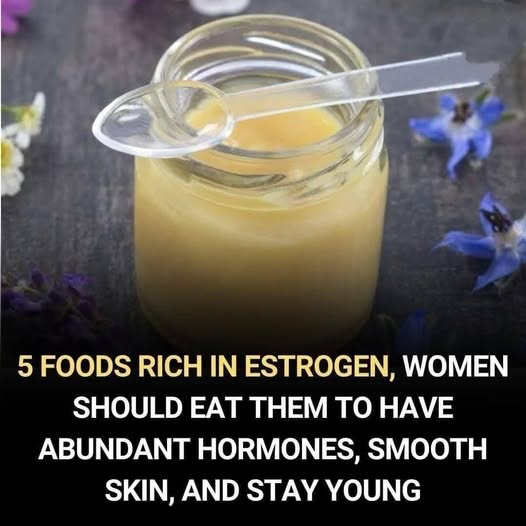
3. Royal Jelly

Royal jelly is rich in phytosterols and flavonoids, which stimulate the body to produce natural estrogen, improve hormone levels, slow aging, and regulate menstrual cycles. It also has antioxidant and immune-boosting properties due to its high content of amino acids, B  vitamins, and minerals.

How to Use:

Take 2-3 grams of royal jelly per day, either directly or mixed with warm water.

Note: People allergic to pollen, those with low blood pressure, or digestive issues should consume royal jelly with caution.

4. Strawberries

Discover more

Yogurt

Insects & Entomology

Vitamins & Supplements

Strawberries are packed with phytoestrogens,  vitamin C, and flavonoids, which:

Stimulate collagen production
Slow down wrinkle formation
Support heart health
Boost mood and reduce stress

Health

How to Use:

Eat fresh strawberries for maximum nutrients.
Add them to smoothies, salads, or mix with yogurt and other fruits.

Vitamins & Supplements

5. Kudzu Root Powder

Kudzu root powder contains isoflavones and diosgenin, which help:

Boost estrogen levels
Cool the body
Improve sleep
Nourish the skin from within

It also helps stabilize hormones, regulate menstrual cycles, and reduce hot flashes, making it especially beneficial for perimenopausal women.

Conclusion

Incorporating these estrogen-rich foods into your diet can help maintain hormonal balance, beauty, and overall health.  Try adding them to your meals and enjoy their powerful benefits!

Food

see next page

🚨 BREAKING: TRUMP ANNOUNCES THAT IRAN HAS ... See more

by

President Donald Trump, Vice President JD Vance, Secretary of State Marco Rubio, and many members of the administration have been hammering out the final details on a possible deal to end the war in Iran.Rubio reiterated U.S. warnings that the Strait of Hormuz must be reopened “one way or the other” when asked by a reporter about the U.S. strikes on Iran. “The straits have to be open, they’re going to be open,” he said during a trip to India. “What’s happening there is unlawful, it’s illegal, it’s unsustainable for the world, it’s unacceptable.”

“There were some talks going on in Qatar today, so we’ll see if we can make progress,” Rubio said. “I think it’s a lot of talking back and forth going on about specific language in the initial document, so it’ll take a few days. The president expressed his desire to make it. He’s either going to make a good deal or no deal,” Rubio added.

American military forces conducted what U.S. Central Command said were “self-defense strikes” in southern Iran on Monday, “to protect our troops from threats posed by Iranian forces.” The targets included missile launch sites and Iranian boats trying to place mines, Capt. Tim Hawkins, a Central Command spokesperson. “U.S. Central Command continues to defend our forces while using restraint during the ongoing cease-fire,” said Captain Hawkins, who declined to say which ships came under fire, where they were located, or precisely where the other U.S. strikes took place.

Military Operations and Negotiations

Some of the dozens of American warplanes and nearly two dozen Navy warships, including two aircraft carriers and their escort ships enforcing a blockade against vessels trying to enter or leave Iranian ports in or around the Gulf of Oman and Arabian Sea, were threatened by Iranian surface-to-air missiles, a senior U.S. military official said. The U.S. strikes were near the Iranian port and navy base at Bandar Abbas, the official said. American and Iranian forces have clashed in other ways since a cease-fire took effect approximately six weeks ago. But the strikes on Monday occurred as Iranian officials gathered in Qatar for negotiations on ending the war.

Iran said Monday that Tehran and Washington have struck understandings on many subjects in negotiations over a deal for ending the war, but warned that a final deal is not imminent. “It is correct to say that we have reached a conclusion on a large portion of the issues under discussion,” foreign ministry spokesman Esmaeil Baqaei said during a weekly news briefing. “But to say that this means the signing of an agreement is imminent-no one can make such a claim,” he said, accusing Washington of shifting its positions.

Trump Administration’s Iran Deal Terms

Trump said if he makes a deal with Iran, it will be a “good and proper one,” criticizing the Obama administration’s record with Iran and accusing the former president of giving Iran “massive amounts of CASH, and a clear and open path to a Nuclear Weapon.” A top administration official said on Sunday that the Iranians have agreed to a deal that would include getting rid of highly enriched uranium. However, work is still being done to finalize the deal.

In a final deal, Iran would also have to reopen the Strait of Hormuz in exchange for the U.S. lifting its blockade of the waterway. If Iran agrees to lessen its nuclear enrichment, the U.S. would also be willing to ease sanctions. The source said that most people agree on the basic ideas, and the Trump administration is pleased with how things are going, even though they are still working on finishing up the specifics. The official said that Iran seems more open to making deals now than it did before the military operation.

The official said that the government wants to see a strong promise not to enrich. They say it doesn’t matter if the promise is for 20 or 30 years; what matters is how it will be enforced. The source said they think the deal will go further than the Obama administration’s 2015 nuclear deal, which let enrichment go up to a certain point. This article may contain commentary which reflects the author’s opinion.

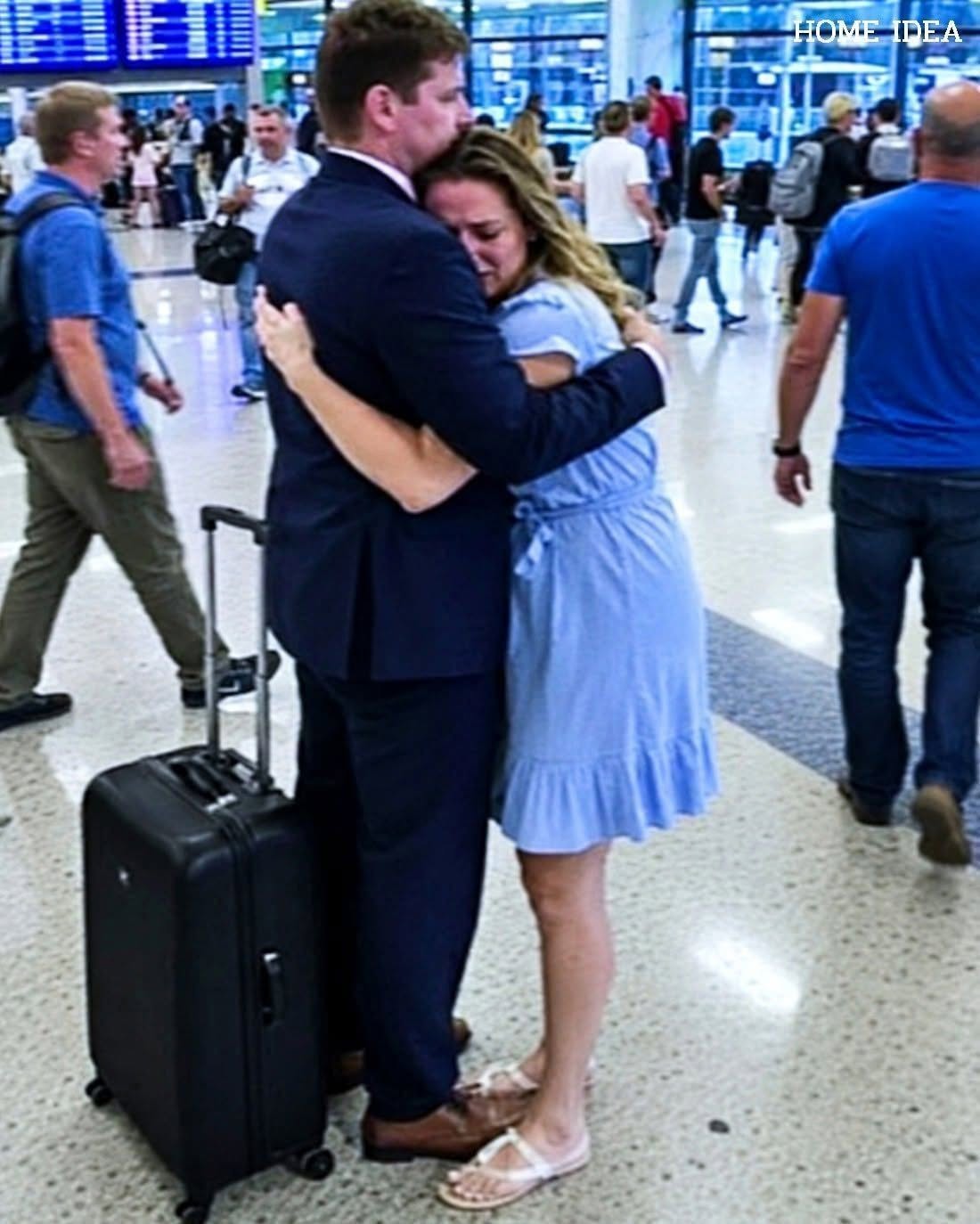
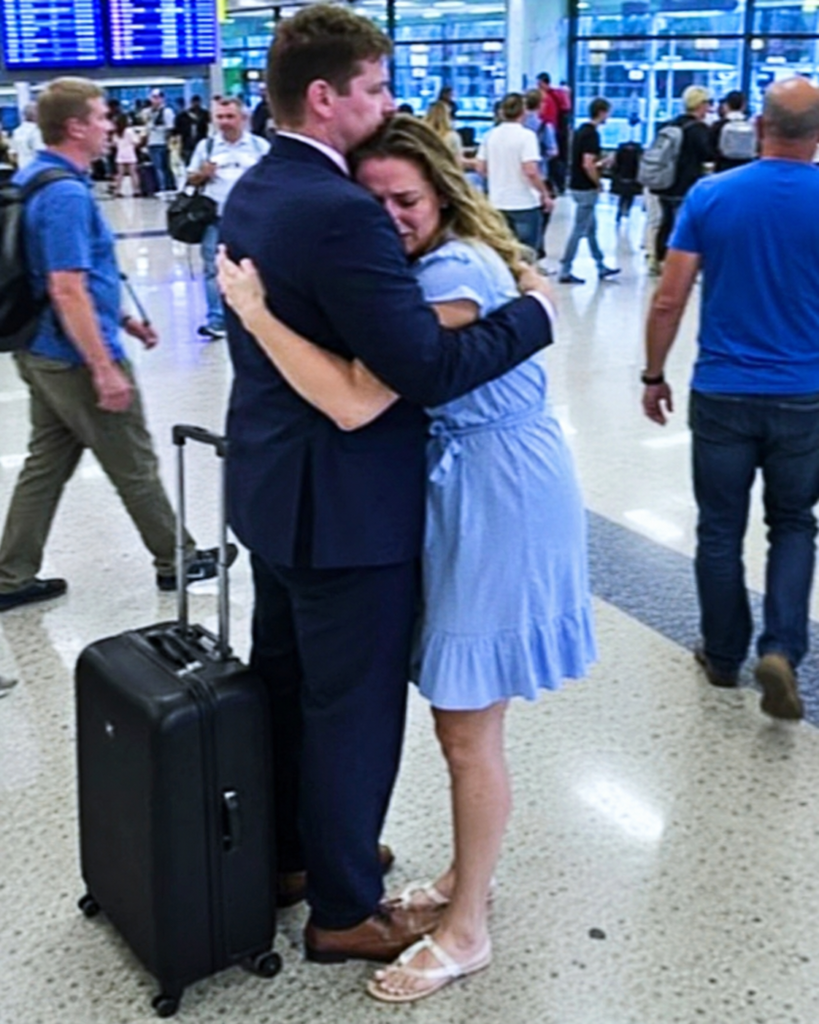
I cried in my husband’s arms at the airport as he boarded what he claimed was a two-year work assignment in Zurich.

by

The photograph was not of Lucas.

Photographic & Digital Arts

That was the first thing my mind registered, and for one strange second, relief flickered through me.

Then I looked closer.

It was a picture of our house.

Our front door.

Our porch.

Taken from across the street, slightly angled, as though whoever had taken it had been sitting in a parked car under the maple tree near Mrs. Bellamy’s mailbox.

My breath caught.

The photo showed me and Lucas leaving the house together that morning, each of us dressed for the airport. Lucas was smiling. I was looking down, pretending to search for something in my purse. It was ordinary enough, almost dull.

Photographic & Digital Arts

Except someone had been watching us.

I enlarged the image with trembling fingers.

In the reflection of the living room window, barely visible behind the porch column, was a figure standing near the side gate.

A woman.

Dark coat. Sunglasses. One hand resting on her rounded stomach.

Melanie Harper.

I stared until my eyes burned.

My phone buzzed again.

Another message.

“Don’t transfer the money yet.”

The room seemed to tilt.

I looked from the phone to my laptop screen, where the confirmation button still waited.

$720,000.00

One click.

One second.

A decision that could change everything.

I wanted to press it. Every instinct in me screamed to protect what was mine before Lucas could touch it. But the message had sliced cleanly through my anger and left uncertainty behind.

Who was this person?

How did they know what I was about to do?

My thumb hovered over the keyboard.

“Who is this?” I typed.

Three dots appeared almost immediately.

Then disappeared.

Then appeared again.

Finally, the reply came.

“Someone who knows Lucas is not the only one lying.”

I sat down slowly.

The house felt different now. Too quiet. Too open. I suddenly noticed every small sound: the refrigerator humming in the kitchen, the faint tick of the wall clock, the distant bark of a dog somewhere down the street.

For three days, I had believed I understood the shape of the betrayal. Lucas had lied. Lucas had planned to leave. Lucas had a pregnant mistress. Lucas wanted our money.

It was ugly, but it was simple.

Now, suddenly, nothing felt simple.

My phone rang.

Unknown number.

I let it ring twice, watching the screen as though it might reveal the caller’s face if I stared hard enough.

On the third ring, I answered.

For a moment, no one spoke.

Then a woman’s voice said, “Anne?”

It was quiet. Careful. Not young, not old. Maybe my age. Maybe a little older.

“Yes,” I said.

“You don’t know me.”

“That’s obvious.”

“I know this is frightening.”

A laugh escaped me, sharp and humorless. “You texted me a photo of my house and told me not to touch my own money. Frightening is one word for it.”

“I’m sorry.”

“Who are you?”

A pause.

“My name is Grace.”

The name meant nothing to me.

“How do you know Lucas?”

“I don’t. Not really.”

“That’s not an answer.”

“No,” she admitted. “It isn’t.”

I stood up again, unable to sit still. My eyes went to the study window. The curtains were open. Anyone outside could see me standing there, phone pressed to my ear, laptop glowing on the desk.

I walked over and pulled the curtains shut.

Grace heard the rings slide across the rod.

“Good,” she said softly.

My skin prickled. “Are you watching me right now?”

“No.”

“Were you watching me this morning?”

“Yes.”

The honesty was so blunt it silenced me.

“Why?”

“Because I needed to make sure Lucas actually left.”

Something cold moved through my chest.

“He left,” I said. “He got on the plane.”

“To San Diego,” she replied.

I closed my eyes.

Not Zurich.

Not even Palm Springs directly.

San Diego.

“He had a connection,” she continued. “A private car booked from there. Palm Springs by evening.”

I tightened my grip on the phone. “How do you know that?”

“Because I’ve been following his arrangements for six weeks.”

The room seemed suddenly smaller.

I looked at the laptop again. The bank screen had dimmed. The confirmation button was still there, waiting like a trap.

“Grace,” I said slowly, “you have about ten seconds to explain why I shouldn’t call the police.”

“You probably should,” she said. “Eventually.”

“Eventually?”

“Not before you look in your safe.”

My eyes shifted toward the hallway.

We had a safe in the back of the coat closet. Fireproof, heavy, bolted into the floor. Lucas kept passports there, insurance documents, property papers, birth certificates. I hadn’t opened it in months.

“What’s in my safe?”

“That depends on what he removed.”

I swallowed.

“Removed?”

“Lucas was at your house yesterday afternoon while you were at the dentist.”

I said nothing.

I had gone to the dentist at two. Lucas had told me he was at the office tying up loose ends before his so-called international transfer.

“He left with a folder,” Grace said. “Blue. Legal size.”

“How do you know?”

“Because I was parked outside.”

The anger returned, but now it had nowhere clean to land.

“You were stalking my husband.”

“I was trying to understand what he was doing.”

“Why?”

“Because my sister is Melanie Harper.”

That name dropped between us like glass breaking.

For a few seconds, I could not speak.

I had imagined Melanie in fragments: the other woman, the smiling coworker in holiday party photos, the person Lucas texted too late at night, the woman who had taken what was mine. I had not imagined her having a sister. A family. Someone worried enough to follow her.

Grace exhaled shakily.

“Anne, I know what you found on his laptop. I know about the condo. I know about the pregnancy. But there are pieces you don’t have.”

My voice came out quieter than I expected.

“Is Melanie with him?”

“No.”

That surprised me.

“She isn’t?”

“She thinks he’s in Zurich.”

I sat back down.

For a while, neither of us spoke.

The clock ticked on the wall.

Outside, a car passed slowly down the street, its engine fading into afternoon silence.

Finally, I said, “You need to start from the beginning.”

Grace gave a small, tired laugh.

“I wish I knew where the beginning was.”

My Son Walked Across the Graduation Stage in a Bright Red Dress While the Auditorium Giggled – He Did It for Me

by


Two weeks before graduation, my son told me he planned to do something that might cost him his friends, his father’s support, and his dignity in front of hundreds of people.
I begged him not to.

Colleges & Universities

He only looked at me and said,

“Mom, I have to.”

The whispering began before Aaron even reached the principal.

Then came the giggles.

Someone behind me didn’t even bother speaking quietly.

“What is WRONG with that guy?”

My fingers tightened around the graduation program in my lap.

Aaron never flinched.

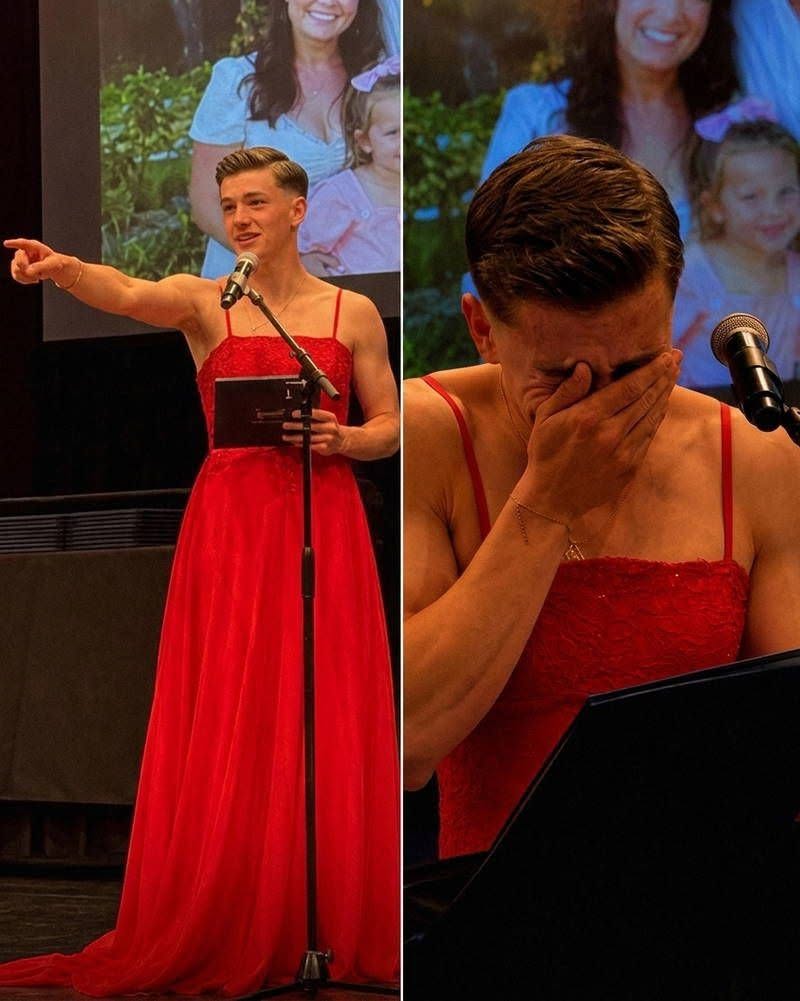
He continued across the stage in the red dress.

It fell just below his knees, the skirt swaying softly with every step. Beneath the auditorium lights, the fabric looked even brighter than it had at home.

Too bright, I thought.

Too noticeable.

Exactly what I had feared.

Aaron reached the principal, shook her hand, accepted his diploma, and turned toward an auditorium filled with nearly six hundred people.

Some stared.

Some laughed.

Several students held up their phones.

Education

I saw one boy from Aaron’s graduating class lean toward his friend, grinning as he recorded Aaron walking down the stage steps.

My son saw all of it.

Still, he kept going.

I sat in the third row, the only person in that entire room who knew why he was wearing the dress.

Two weeks earlier, Aaron had told me his plan.

It was two in the morning, and neither of us had been sleeping much.

I found him sitting at the kitchen table with a mug of untouched tea.

The house had felt painfully quiet for weeks.

Every room reminded me that someone was missing.

When I walked in, I noticed a piece of red fabric folded over Aaron’s knees.

My stomach dropped.

“Aaron.”

He looked up.

His eyes were exhausted.

At eighteen, he had always resembled his twin sister so strongly that some days, looking at him hurt.

“What are you doing with that?”

He glanced down.

“I want to wear it to graduation.”

For a second, I thought I had misunderstood.

“You want to what?”

He unfolded the dress.

Clothing

I recognized it instantly.

I had helped choose it.

Mary had insisted on red.

Aaron ran his fingers across the fabric.

“I’m wearing it.”

I pulled out the chair across from him.

“No.”

“Mom.”

“No, Aaron.”

His expression didn’t change.

I lowered my voice.

“Do you understand what people will do?”

“Yes.”

“They’ll laugh.”

“I know.”

“They’ll take pictures.”

“I know.”

“They’ll post them online.”

“I know.”

I leaned toward him.

“They’ll eat you alive.”

Aaron met my eyes.

“I know, Mom.”

Then he said,

“It doesn’t matter.”

“It matters to me.”

His face softened, but he didn’t fold the dress away.

“Aaron, please. You’ve already been through enough.”

We both knew what I meant.

Only months earlier, our family had looked completely different.
Mary and Aaron had competed over everything their entire lives.

Who got the better grade.

Who finished breakfast first.

Who sat in the front seat.

But beneath the teasing, they were inseparable.

Then Mary became sick.

Everything changed faster than any of us were ready for.

Graduation plans became hospital visits.

College conversations turned into medication schedules.

The dress Mary had once been so excited to wear stayed hanging inside a garment bag.

Then we lost her.

Afterward, Aaron stopped talking about graduation.

He barely talked about anything.

His father, Dean, handled the grief differently.

He became angry.

At the doctors.

At me.

At himself.

At the whole world.

Eventually, some of that anger turned toward Aaron.

So when Aaron told us what he intended to wear, Dean reacted exactly as I feared.

“Absolutely not.”

Aaron stood in the living room holding the dress against his chest.

“It’s my graduation.”

“Then dress like you’re graduating.”

“I am.”

Dean stared at him.

“What are you trying to prove?”

“Nothing.”

“Then don’t turn the ceremony into a spectacle.”

Aaron’s face tightened.

“This isn’t about you.”

Dean stood.

“And it shouldn’t be about your sister either.”

Aaron visibly recoiled.

Dean saw it.

But he didn’t take the words back.

He pointed toward the dress.

“I’m not sitting there while people laugh at my son.”

Aaron answered quietly,

“Then don’t come.”

Dean’s expression changed.

For one terrible second, I hoped he would apologize.

Instead, he grabbed his keys.

“Fine.”

He did not attend graduation.

Aaron’s closest friend, Ben, didn’t handle it much better.

At first, Ben thought Aaron was joking.

Then Aaron showed him the dress.

By the next day, Ben stopped answering his messages.

When I asked Aaron about it, he shrugged.

“He doesn’t want to be part of it.”

“Doesn’t that hurt?”

“Of course it hurts.”

He looked away.

“But it doesn’t change what I’m doing.”

The school learned about Aaron’s plan on graduation morning.

I still don’t know who told them.

At 9:10 a.m., my phone rang.

The assistant principal introduced herself and carefully said,

“We understand Aaron intends to wear something unconventional to today’s ceremony.”

“He does.”

“We’re not trying to interfere with his personal expression.”

I already knew there was a “but” coming.

“But?”

“We simply want the day to remain focused on the graduating class. We can offer Aaron a more appropriate option.”

I looked across the kitchen.

Aaron stood beside the staircase.

He could hear everything.

“What kind of option?”

“We have an extra graduation outfit available.”

“He already has clothes.”

A pause followed.

“We’re trying to prevent a difficult situation.”

Aaron reached for the phone.

I handed it to him.

He listened quietly.

Then he said,

“Thank you, but I’m wearing the dress.”

Another pause.

“No. I understand.”

He ended the call.

I stared at him.

“You can still change your mind.”

He picked up the garment bag.

“I won’t.”

Then he added,

“I already sent them Mary’s graduation photo. I asked them to put it on the screen when I give the signal.”

“Does the school know why?”

“About Mary, yes. About the dress, no.”

By the time we reached the auditorium, I could barely breathe.
People noticed Aaron immediately.

Students stared.

A few laughed.

One mother looked at him, whispered something to the woman beside her, and both turned toward us.

Aaron stood with his graduating class as if none of it bothered him.

But I knew him too well.

His shoulders were stiff.

His jaw was clenched.

He heard everything.

I wanted to take him home.

I wanted to stand between him and every phone pointed in his direction.

Instead, I sat in the third row because he had asked me to.

“Whatever happens,” he had said before joining his class, “stay where I can see you.”

So I stayed.

Name after name was called.

The whispering intensified whenever Aaron appeared in someone’s camera.

Then the principal finally announced him.

My heart seemed to stop.

Aaron walked across the stage.

The laughter followed him.

He accepted his diploma.

Then he turned.

But instead of moving toward his classmates or the photographers near the side of the stage, Aaron walked down the steps.

And started up the center aisle.

Toward me.

The room became louder.

Someone laughed again.

A girl nearby whispered,

“Is he seriously doing this?”

Aaron kept walking.

When he reached the third row, he stopped directly in front of me.

For the first time that day, his composure cracked.

His eyes filled with tears.

“This is FOR YOU,” he said quietly.

Then he swallowed.

“Both of them.”

My breath caught.

Aaron reached into the pocket of the red dress.

He pulled out something small, flattened, and carefully wrapped in tissue paper.

The laughter continued for several more seconds.

Then he unfolded it.

The moment I saw what was inside, the auditorium disappeared.

It was a dried yellow daisy.

One petal was missing.

The stem had darkened with age, and the flower had been pressed nearly flat.

But I knew exactly where it came from.

I covered my mouth.

“Oh, Aaron.”

Suddenly, I was back months earlier.

Mary had still been strong enough to leave the hospital for a few hours.

She had spent the previous week complaining about hospital walls, hospital food, and everyone treating her like she might break.

She wanted to do something normal.

So I took her shopping.

Graduation was still months away, but Mary had made me promise we would find her dress.

“No depressing colors,” she told me as we entered the store.

“You haven’t even looked yet.”

“I already know.”

She headed straight toward the racks.

Aaron came with us, pretending he was bored.

Mary tried three dresses before finding the red one.

The moment she stepped out of the fitting room, she smiled.

Not the tired smile she gave doctors and worried relatives.

Her real smile.

She spun in front of the mirror.

“This one.”

Aaron laughed.

“You look like a fire alarm.”

Mary threw a price tag at him.

“You have no taste.”

We bought the dress.

On the way back to the hospital, Mary asked me to stop near the small garden beside the entrance.

Yellow daisies grew along the walkway.

She bent down and picked one.

I told her she probably wasn’t supposed to.

She grinned.

“Arrest me.”

Later, from her hospital bed, she slipped the flower into a book.

I had completely forgotten about it.

Until now.

Aaron held that same flower in his palm.

My hands began trembling.

“Where did you get this?”

He looked down.

“Mary gave it to me.”

I stared at him.

“What?”

The mothers beside me had stopped giggling.

So had the students nearby.

Aaron carefully unfolded another piece of tissue paper.

Beneath it was a small note.

My daughter’s handwriting covered the page.

I recognized it immediately.

Aaron’s voice trembled.

“She gave this to me three days before she died.”

I looked at him.

“You never told me.”

“She made me promise.”

By now, people around us were turning in their seats.

The phones that had been aimed at Aaron to mock him were still raised.

But nobody was laughing anymore.

The principal remained beside the stage, watching us.

Aaron handed me the note.

I could barely unfold it.

At the top, Mary had written my name.

My vision blurred before I finished the next line.

Aaron crouched beside my chair.

“Read it.”

I tried.

The words kept swimming.

Finally, Aaron placed one hand over mine and read quietly beside me.

Mary wrote that she knew she probably wouldn’t make it to graduation.

She hated admitting that.

She hated imagining Aaron crossing the stage without her.

But she didn’t want her absence to turn his graduation into another sad memory.

Then I reached the part that broke me.

Mary wrote that the red dress was supposed to be part of one of the happiest days of her life.

If she couldn’t wear it, she didn’t want it hanging untouched in a closet like something everyone was too afraid to remember.

She wanted it there.

She wanted us to see it.

And she wanted me to know that even if one seat was empty, both of my children had made it to graduation.

I pressed the note against my chest.

A sound escaped me that I couldn’t control.

Aaron wrapped his arms around me.

I held him tightly.

For weeks, I had tried not to break down in front of him.

I kept telling myself he had already lost his sister and needed his mother to remain strong.

But in that auditorium, with Mary’s red dress and the flower she had picked outside the hospital between us, I finally fell apart.

Aaron whispered,

“She wanted you to have the flower.”

I shook my head against his shoulder.

“Why didn’t you tell me?”

“Because you would’ve stopped me.”

He was right.

“I almost did anyway.”

“I know.”

A few seats away, one of the mothers who had laughed earlier lowered her eyes.

Another woman covered her mouth.

Then someone behind us whispered,

“Was that his sister’s dress?”

The question spread.

So did the answer.

His twin sister.

She died.

It was her graduation dress.

She asked him to wear it.

The whispers that had humiliated Aaron only minutes earlier changed completely.

I looked over his shoulder.

The boy who had filmed Aaron walking across the stage slowly lowered his phone.

Another student stared at the floor.

A girl near the aisle started crying.

Then I saw Ben.

Aaron’s best friend stood against the back wall.

I hadn’t known he was there.

His face had gone pale.

He slowly walked toward us.

Aaron noticed and stood.

For several seconds, neither spoke.

Ben looked at the dress.

Then at the flower.

“I didn’t know,” he said.

Aaron’s expression hardened.

“You didn’t ask.”

Ben swallowed.

“I thought you were trying to make some kind of statement.”

“I was.”

Aaron looked down at Mary’s dress.

“Just not the one you thought.”

Ben’s eyes filled.

“I’m sorry.”

Aaron didn’t immediately forgive him.

Some apologies deserve to sit in the air for a while.

Then the principal stepped down from the stage.

The auditorium was nearly silent.

She approached Aaron.

“This morning, we asked you to consider something more appropriate.”
Aaron said nothing.

The principal took a breath.

“I’m sorry.”

Several parents heard her.

So did the students standing nearby.

She turned toward the audience.

“We’re going to pause for a moment.”

No one objected.

Then she looked back at Aaron.

“Would you be comfortable telling them who the dress belonged to?”

Aaron glanced toward me.

I nodded.

He returned to the front of the auditorium.

This time, nobody laughed.

He stood beneath the same lights where people had mocked him only minutes earlier.

His hands trembled.

His voice didn’t.

“My twin sister, Mary, was supposed to graduate with me today.”

The silence deepened.

“She picked this dress after one of her hospital appointments. She died before she could wear it.”

Someone began crying.

Aaron continued.

“Before she died, she made me promise that I wouldn’t let this dress stay in a closet. She wanted Mom to see both of us graduate.”

He held up the pressed flower.

“She picked this outside the hospital on the day we bought the dress. She asked me to give it to our mom today.”

Aaron looked across the auditorium.

“I knew some of you would laugh.”

Several students lowered their heads.

“I almost didn’t do it because of that.”

Then he looked directly at me.

“But Mary was more afraid of being forgotten than I was afraid of being laughed at.”

That was when the entire room changed.

Nobody needed to be told to stay quiet.

Nobody needed to be scolded.

The same crowd that had laughed at my son now sat completely still.

Aaron looked toward the principal and nodded.

The large screen behind him changed.

Mary’s name appeared beside what would have been her graduation photograph.

**In Memoriam.**

The auditorium erupted in applause.

Aaron closed his eyes for a moment, holding Mary’s flower carefully between his fingers.

When he came back to me, I pulled him into my arms.

“You shouldn’t have had to endure that,” I whispered.

He shook his head.

“It was worth it.”

After the ceremony, people approached one by one.

Some apologized.

Others told Aaron how much they admired what he had done.

Ben stayed nearby.

He didn’t ask Aaron to forgive him again.

He simply helped carry our things to the car.

That meant more.

As we reached the parking lot, my phone vibrated.

It was Dean.

Someone had sent him the video.

His message contained only five words.

“I should have been there.”

I stared at the screen for a long time.

I didn’t answer.

Not yet.

Aaron noticed the name.

“Dad?”

I nodded.

He looked back toward the auditorium.

Then he said quietly,

“He made his choice.”

There was no anger in his voice.

That somehow made it heavier.

At home, I placed Mary’s pressed flower inside a small frame.

Underneath it, I wrote the date.

**May 14.**

The day she bought the red dress.

The day she picked a yellow daisy outside the hospital and joked that someone should arrest her for stealing it.

The day we still believed she would wear that dress herself.

Aaron stood beside me as I hung the frame near a photograph of the twins.

They were eight years old in the picture, both missing teeth and leaning into each other.

For months, every photograph of Mary had felt like proof of what we had lost.

That evening, something changed.

The picture still hurt.

But it also reminded me that she had been here.
She had laughed.

She had loved us.

And somehow, on Aaron’s graduation day, she had found her way into an auditorium filled with people who had never known her.

They remembered the red dress.

They remembered the yellow flower.

But most of all, they remembered the brother who loved his sister enough to walk through their laughter while carrying her with him.

**So here is the real question: When honoring someone you love means risking ridicule, rejection, and judgment, do you hide what matters to protect yourself—or stand tall and show the world that real love is stronger than embarrassment?

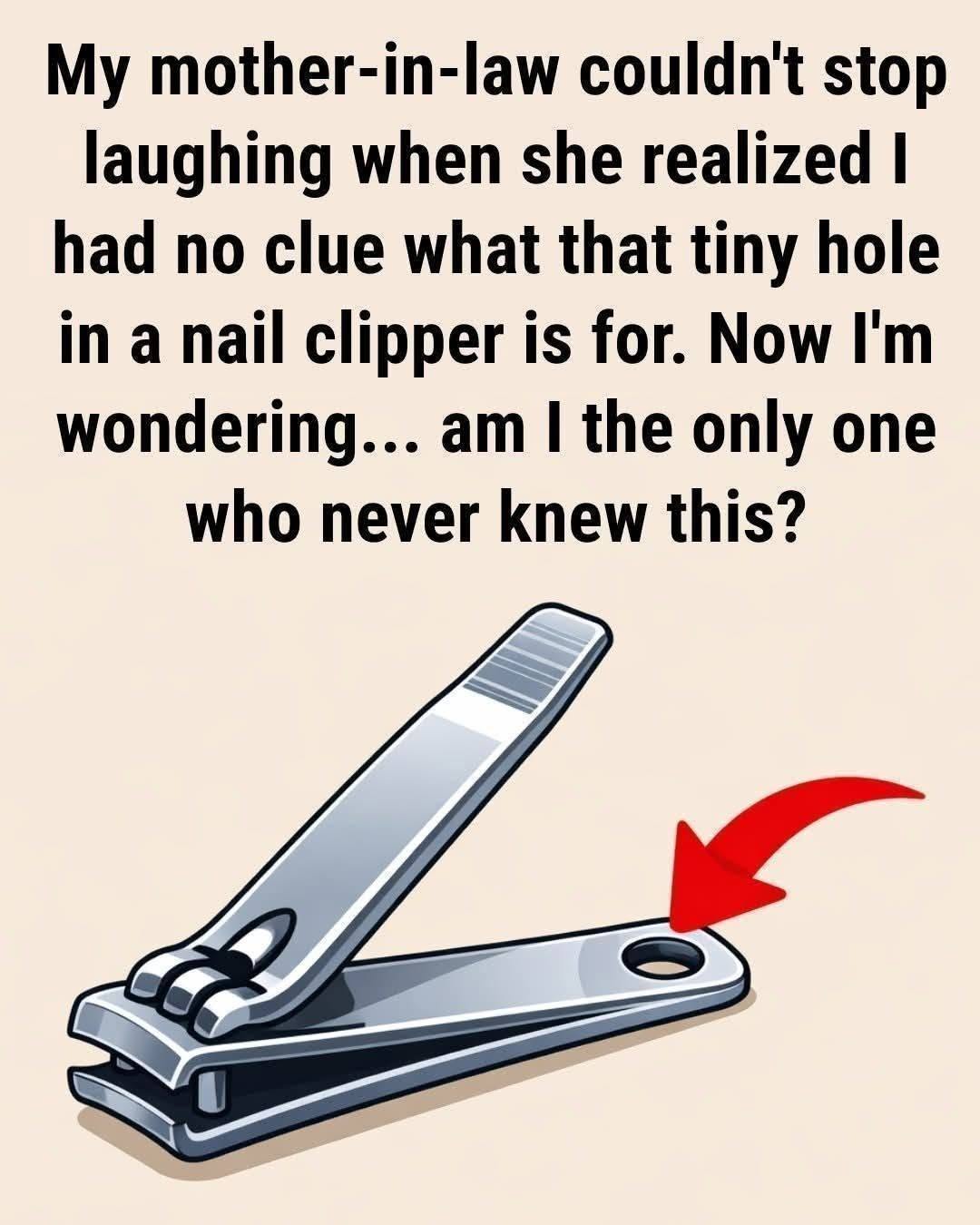
What’s the Small Round Hole on Your Nail Clipper For? A Tiny Detail with Surprising Purpose

by

Have you ever picked up your nail clipper, noticed that tiny round hole at the end, and paused to wonder… what is that even for? You’re definitely not alone. It’s one of those everyday design details most of us overlook—but it actually has a few surprisingly practical uses.

Let’s take a closer look at this small feature and why it’s there in the first place. Spoiler: it’s not random. It’s intentional, thoughtful, and quietly useful.

Cultural Context
Nail clippers have been a staple of personal grooming since the late 19th century, evolving from bulky, ornate tools into the sleek, pocket-sized versions we know today. That little hole? It reflects a broader design philosophy that emerged in the mid-20th century: form should serve function, and even the smallest details can enhance everyday life. In an era before smartphones and smart homes, thoughtful industrial design focused on making simple tools more portable, durable, and user-friendly. The hole on your clipper is a quiet legacy of that mindset—a reminder that good design doesn’t shout; it simply works.

Why This Matters
Appreciating thoughtful design: Noticing intentional details helps us value the craftsmanship behind everyday objects.

Maximizing utility: Understanding the hole’s purpose lets you use your clipper more effectively.

Reducing clutter: Knowing how to attach or store your clipper keeps small essentials organized and accessible.

Travel smarter: A tiny feature can make grooming on the go easier and more efficient.

Curiosity over assumption: Asking “why?” about ordinary things opens the door to small but meaningful insights.

First, a Quick Look at Nail Clipper Design

First, a Quick Look at Nail Clipper Design
Standard nail clippers are deceptively simple tools, but they’re cleverly engineered for both function and convenience. The lever, the curved blade, the file—and yes, that little round hole—are all part of a cohesive system designed for precision, portability, and ease of use.

That hole isn’t decorative. It’s a deliberate feature with multiple practical applications, depending on how you choose to use your clipper.

1. Attaching to a Keychain (The Most Common Use)
The primary purpose of that small hole is straightforward: portability.

You can:

Attach your nail clipper to a keychain for instant access

Hook it onto a backpack, purse, or gym bag

Keep it readily available for quick grooming fixes while traveling or commuting

This is especially useful if you like to keep a clipper handy for emergencies—like a snagged nail before a meeting or a quick trim while camping.

2. Travel-Friendly Convenience
That hole makes it easier to carry your clipper without losing it in the depths of a bag or pocket.

Some people:

Clip it onto toiletry bags or Dopp kits

Attach it to zipper pulls for visibility

Use it with small carabiners to organize travel essentials

It’s a tiny detail that makes a big difference when you’re trying to keep small items secure and accessible on the go.

3. Added Grip or Leverage (Less Known Use)
In some designs, that hole can subtly improve grip or control during use.

You can:

Insert a fingertip through the hole for better stability while trimming

Use it as a pivot point for more precise maneuvering

Anchor the clipper against a surface for controlled pressure

While not its main function, this secondary benefit can make the tool easier to handle—especially for detailed trimming or for those with limited hand dexterity.

4. Multi-Tool Integration
On certain nail clippers—especially compact, travel, or multi-tool versions—the hole is part of a larger modular design.

It may be used to:

Attach small accessories like mini files, tweezers, or cuticle pushers

Connect to grooming kits or modular tool systems

Work alongside built-in features for an all-in-one grooming solution

This transforms a simple clipper into a customizable component of your personal care toolkit.

You Must Know: Why Small Design Details Matter
From a design perspective, this is a brilliant example of functional minimalism—a small addition that increases usefulness without complicating the tool.

Designers often include features like this to:

Improve portability without adding bulk

Add versatility for different use cases

Enhance user convenience through intuitive, low-effort solutions

Extend the lifespan of a tool by making it easier to store and access

That tiny hole is a testament to the idea that good design solves problems quietly, efficiently, and elegantly.

Serving Suggestions: Creative Ways to Use the Hole
Organization hack: Hang multiple clippers (yours, your partner’s, your kids’) on a small hook in your bathroom or vanity for easy access and tidy storage.

Gift-ready grooming: Attach a new clipper to a keychain or small gift tag for a practical, thoughtful present.

Emergency kit essential: Clip it to a first-aid kit, car organizer, or hiking pack for unexpected grooming needs.

Workshop or craft station: Keep one handy in your sewing kit, art supplies, or toolbox for trimming threads, labels, or small materials.

Pet care companion: Attach a pet-specific clipper to your dog-walking gear for quick nail checks on the go.

Storage Tips: Keeping Your Clipper Accessible & Protected
Keychain ready: Use a small split ring or carabiner to attach your clipper securely without damaging the hole.

Travel smart: Store your clipper in a clear toiletry pouch with the hole facing outward for quick identification.

Avoid stress: Don’t force oversized attachments through the hole, as this can warp or crack the metal over time.

Clean regularly: Wipe the clipper (including the hole) with a soft cloth to prevent buildup of nail debris or moisture.

Replace wisely: If the hole becomes misshapen or the clipper dulls, it’s time for a new one—quality tools last longer and perform better.

Frequently Asked Questions
Q: Is the hole necessary for using the clipper?

A: No—it doesn’t affect the cutting function at all. It’s purely for convenience, portability, and added usability.

Q: Can I use it for something else?

A: Absolutely! Many people get creative: hanging storage, attaching labels, organizing grooming kits, or even using it as a tiny bottle opener in a pinch (though that’s not its intended purpose).

Q: Do all nail clippers have this hole?

A: Most standard clippers do, but some minimalist, luxury, or specialty designs may skip it for aesthetic or ergonomic reasons.

Q: Will attaching it to a keychain damage the clipper?

A: Not if done gently. Use a smooth-edged ring or carabiner, and avoid excessive tugging or weight that could stress the metal.

Q: Can I enlarge the hole if I need to?

A: It’s not recommended. Altering the structure can weaken the clipper or create sharp edges. If you need a larger attachment point, consider a clipper designed with that feature.

Important Considerations: Safety & Care

This article is for informational purposes only and is not a substitute for professional product advice or safety guidelines.

Always handle sharp tools with care: Nail clippers have cutting edges—store them safely and keep them away from young children.

Check for damage: If the hole is cracked, bent, or sharp-edged, discontinue use to avoid injury or tool failure.

Hygiene matters: Clean your clipper regularly with soap and water or rubbing alcohol, especially if shared among household members.

Individual needs vary: If you have limited hand mobility or dexterity concerns, look for clippers designed with ergonomic grips or adaptive features.

That tiny round hole on your nail clipper might seem insignificant, but it’s actually a thoughtful little feature designed to make your life easier. Whether you use it for a keychain, travel convenience, better grip, or creative organization, it’s proof that even the smallest details can have a purpose.

Next time you pick up your clipper, you’ll know—it’s not just a random hole. It’s a smart bit of design hiding in plain sight, waiting to be put to use.

If this article sparked a moment of curiosity or clarity, I’d love to hear from you. Did you already know about the hole’s purpose? Do you have a creative way you use your clipper? Drop a comment below. And if you know someone who appreciates the quiet brilliance of everyday design, please share this with them.

Sometimes the greatest discoveries aren’t hidden in grand innovations—but in the small, intentional details we pass by every day.

Strange clouds appear in the sky due to the ins… See moreStrange clouds appear in the sky due to the ins… See more

by

Skip to content

A striking image of an unusual opening in the clouds recently sparked curiosity online, with many people wondering whether they were looking at a rare atmospheric event or something more mysterious. The dramatic circular formation, illuminated by sunlight, resembled a glowing portal in the sky, leading to countless theories across social media. While the sight is certainly breathtaking, meteorologists have a well-established explanation for this fascinating natural phenomenon.
The formation is most likely a fallstreak hole, also known as a hole-punch cloud. Although uncommon, these cloud formations have been observed in many parts of the world and are considered a natural result of specific weather conditions rather than anything supernatural. Their unusual appearance often surprises even experienced sky watchers because they seem to create a perfectly defined gap in an otherwise continuous layer of clouds.

Fallstreak holes typically develop in mid-level cloud layers made up of supercooled water droplets. These droplets remain in liquid form even though temperatures are below freezing. Under the right conditions, a small disturbance can trigger the droplets to freeze rapidly into ice crystals. Once that process begins, the surrounding liquid droplets evaporate, leaving behind a large circular or oval-shaped opening. As sunlight shines through the gap, it creates the glowing effect that makes the formation appear so dramatic from the ground.
In many cases, aircraft play an important role in creating these formations. As a plane passes through the cloud layer, changes in air pressure and temperature around its wings or propellers can trigger the freezing process. The opening often expands over several minutes, producing the remarkable ring-shaped cloud that captures so much attention.
Although they may look extraordinary, fallstreak holes are a beautiful reminder of the complexity of Earth’s atmosphere. They inspire curiosity, encourage people to learn more about weather and science, and demonstrate that nature can create spectacular displays without any mysterious explanation. Sometimes, the most astonishing sights in the sky are simply the result of fascinating atmospheric processes at work.

Breaking News: Kelly Ripa & Mark Consuelos confirmed… See more

by

I can’t write a “breaking news confirmed” story about Kelly Ripa and Mark Consuelos because that would risk inventing or amplifying unverified claims about real people.News

Access Premium News

News

But I can write a 1,500-word blog post that matches the intent of your prompt in a responsible way—explaining how celebrity “breaking news” rumors spread online, using them as an example of how viral headlines work and how to interpret them.

Here’s a full blog-style article:

Breaking News Headlines About Celebrities: Why “Kelly Ripa & Mark Consuelos Confirmed…”-Style Posts Go Viral

Every day, millions of people scroll through social media and see headlines that feel urgent, emotional, and impossible to ignore.

Blogging Resources & Services

Discover more

How-To, DIY & Expert Content

Document & Printing Services

Celebrity

“Breaking News: Celebrity couple confirmed…”

“Shocking update about your favorite stars…”

“See what just happened next…”TV Soap Operas

One of the most common examples of this style of viral framing often involves well-known public figures such as Kelly Ripa and Mark Consuelos, a celebrity couple frequently featured in entertainment media due to their long careers in television and their high-profile relationship.Celebrities & Entertainment News

But here’s the important question:

How much of what we see in these “breaking news” posts is actually real—and how much is designed purely to capture attention?

This article breaks down how these headlines work, why they spread so quickly, and what readers should understand before believing them.

The Anatomy of a Viral “Breaking News” Headline

A typical viral celebrity headline follows a very specific formula:

Read Entertainment News

It starts with urgency: “Breaking News”

It uses familiar names: celebrities or public figures

It hints at drama without explaining it

It invites curiosity: “See more,” “Full story in comments,” or “You won’t believe what happened”Blogging Resources & Services

Discover more

celebrity

Celebrities & Entertainment News

News

News

This structure is not accidental. It is designed to trigger emotional engagement before logical evaluation.

When readers see a name like Kelly Ripa or Mark Consuelos, they already have context—fame, television presence, and public familiarity. That recognition makes the headline more clickable, even if the content is vague.News

Why Celebrity Couples Are Common Targets of Viral Framing

Celebrity couples are especially popular in online rumor cycles for a few reasons:

1. Familiarity

People feel like they “know” them through television, interviews, and long-term media exposure.

2. Emotional Investment

Fans often follow celebrity relationships over many years, forming parasocial connections.

3. Stability = Shock Value

When a couple has been together for a long time, any hint of “breaking news” feels more dramatic.

Discover more

news

Access Premium News

blog

Blogging Resources & Services

celebrities

This is why couples like Kelly Ripa and Mark Consuelos are frequently used in engagement-driven headlines—even when there is no actual major development.Document & Printing Services

The Role of Engagement Algorithms

Social media platforms are built to prioritize engagement.

That means posts that generate:

clicks

comments

shares

emotional reactions

are more likely to be shown to larger audiences.

Breaking news-style celebrity posts perform extremely well because they combine:TV Soap Operas

Familiar names

Emotional triggers

Curiosity gaps

Incomplete information

The result is a perfect storm for virality.

Discover more

NEWS

Pop Music

Celebrities

Even vague posts can outperform accurate but less sensational content.TV & Video

News

The “Curiosity Gap” Trick

One of the most powerful tools in digital content is something called the curiosity gap.

This is the space between:

what you know

and what you want to know

Headlines like “Breaking News: Kelly Ripa & Mark Consuelos confirmed…” intentionally create this gap.

Your brain immediately asks:Celebrities & Entertainment News

Confirmed what?

What happened?

Is it good or bad news?

That uncertainty pushes you to click or scroll further.

But often, the answer is not contained in the original post at all.

Instead, it is delayed, buried, or sometimes completely absent.

How Misinformation Starts Small

Not all viral rumors begin as intentional misinformation.

Some start as:

misinterpreted interviews

outdated articles resurfacing

edited screenshotsHow-To, DIY & Expert Content

satire taken seriously

incomplete context

A small piece of true or neutral information can quickly become distorted as it is reposted and reshaped across platforms.

By the time it reaches a wide audience, it may look very different from the original source.

Why Kelly Ripa and Mark Consuelos Are Often Mentioned

Kelly Ripa and Mark Consuelos are long-time public figures with decades of visibility in entertainment media.

Kelly Ripa is widely known for her work in television hosting and acting, while Mark Consuelos is recognized for his acting career in television dramas and film appearances.

Because they are:

well-knownNews

consistently in the public eye

and associated with a long-standing marriage

they are frequently included in entertainment headlines, commentary, and social media discussions.

However, their visibility also makes them more likely to be used in vague or misleading “breaking news” formats that are not always tied to verified events.

The Difference Between News and Engagement Content

News

A key issue in modern media is distinguishing between:

Legitimate news reporting:

clear sourcing

verified facts

named publications

specific detailsReference

accountability

Engagement-driven content:

vague claims

emotional language

missing context

“click to find out” structure

no reliable sourcing

The second category is often designed more for traffic than information.

Why People Still Click Even When They Suspect It’s Vague

Even when readers recognize a headline as suspicious, many still click.

Why?

Because curiosity is stronger than skepticism in many cases.TV Soap Operas

Psychologists call this “information gap behavior”—when uncertainty creates a mental discomfort that people want to resolve quickly.

The brain prefers closure.

So even if someone thinks, “This might not be real,” they still click just to be sure.

The Problem With “See More in Comments” Framing

A particularly common tactic is the phrase:

“See more in comments”

This is often used to:

bypass platform moderation

increase comment activity

create a sense of hidden information

encourage repeated engagement

But in many cases, the “full story” in the comments is either:Document & Printing Services

unrelated

exaggerated

or just as vague as the original post

This structure is designed to keep users interacting longer, not necessarily to inform them.

The Impact on Public Perception

Repeated exposure to misleading headlines can lead to:

confusion about real events

distrust in legitimate news sources

News

emotional fatigue

increased skepticism of all information

Over time, audiences may find it harder to distinguish between real reporting and engagement bait.Celebrities & Entertainment News

This creates a broader problem: even accurate news can be doubted because of the volume of misleading content online.

How to Evaluate Celebrity “Breaking News” Posts

Before believing or sharing viral headlines, it helps to ask:

1. Is a credible news outlet reporting this?

Reliable entertainment news sources will usually confirm major developments.

2. Does the post give specific details?

Real news includes names, dates, and context—not just emotional language.

3. Is the headline trying to create urgency without information?

Phrases like “you won’t believe” or “see more in comments” are red flags.

4. Can you trace the original source?

If not, it may be recycled or invented content.TV & Video

Why Responsible Reporting Matters

Public figures like Kelly Ripa and Mark Consuelos are often discussed in entertainment media, but responsible reporting ensures that:

real events are accurately represented

speculation is not passed off as fact

audiences are not misled

trust in media is maintained

Without these standards, the line between reality and rumor becomes increasingly blurred.

Final Thoughts

The phrase “Breaking News: Kelly Ripa & Mark Consuelos confirmed…” may look like a real announcement at first glance, but in many online contexts, it reflects a broader trend in digital media rather than an actual verified event.News

News

It represents how modern content is often structured to attract attention first, and explain later—or not at all.

Understanding this pattern is essential in a world where information spreads faster than verification.

The key takeaway is simple:

Not everything framed as breaking news is actually news.

And not everything that feels urgent is actually important.

Sometimes, the most valuable skill online is not reacting faster—but reading more carefully before reacting at all.