dimanche 30 août 2026

Will Smith’s daughter has broken her silence: “My dad used to b…See more

by

Why This Headline Is So Effective

The phrase:

"Will Smith’s daughter has broken her silence..."

is one of the oldest tricks in online publishing.

It creates three powerful psychological triggers:

Curiosity

Mystery

Urgency

The unfinished quote—

"My dad used to b..."

Parenting

forces readers to imagine the worst.

Was she about to say:

"...beat me?"

"...bully me?"

"...betray our family?"

"...be someone completely different?"

The headline never tells you.

Instead, it relies on curiosity to generate clicks.

This technique is commonly known as the curiosity gap.

Who Is Will Smith's Daughter?

Willow Smith is the daughter of Will Smith and Jada Pinkett Smith.

Born in 2000, Willow became famous at a young age after releasing the hit song Whip My Hair.

Pop Music

Since then, she has built a successful career as:

Singer

Songwriter

Actress

Fashion icon

Mental health advocate

Unlike many celebrity children, Willow has often spoken honestly about growing up in one of Hollywood's most famous families.

Growing Up Under Constant Public Attention

Imagine spending your childhood with cameras everywhere.

Every mistake...

Every hairstyle...

Every outfit...

Every family argument...

Family

Everything becomes international news.

That has been Willow's reality since birth.

Growing up in such an environment naturally affected her perspective on fame.

In numerous interviews, she has described both the advantages and the pressures of being part of a globally recognized family.

Has Willow Ever Criticized Her Father?

Yes—but not in the dramatic way viral posts often suggest.

Like many adult children, Willow has discussed moments where she struggled with expectations placed on her by her parents.

However, those conversations were generally thoughtful and nuanced rather than sensational.

She has spoken about:

Feeling pressure to succeed

Searching for her own identity

Learning independence

Wanting creative freedom

These topics are common among young adults, especially those raised in the public eye.

The Family's Open Conversations

One reason people easily believe dramatic headlines is that the Smith family has often chosen to discuss personal matters publicly.

Through interviews and family conversations, they have explored topics such as:

Parenting

Marriage

Mental health

Fame

Personal growth

Because they have been open about challenges, misleading headlines can twist genuine discussions into fabricated scandals.

What Has Willow Actually Said About Her Father?

Across many interviews, Willow has frequently described her father as:

Supportive

Creative

Encouraging

Protective

Imperfect—but loving

She has also acknowledged that no parent is perfect.

Like anyone else, parents make mistakes.

Healthy families often grow by discussing those experiences honestly.

That is very different from the shocking accusations implied by viral clickbait.

The Pressure of Being a Celebrity Child

Celebrity children often face impossible expectations.

People assume they should:

Always behave perfectly

Always agree with their parents

Never struggle emotionally

Never make mistakes

Reality is much more complicated.

Children of celebrities experience many of the same challenges as everyone else, with the added pressure of constant public attention.

How Social Media Creates False Narratives

Modern platforms reward engagement.

The more shocking a headline appears, the more likely users are to:

Click

Share

Comment

Argue

This creates financial incentives for websites to exaggerate or invent stories.

Often, the headline promises explosive revelations that the article itself never delivers.

Why "See More" Posts Spread So Quickly

Posts ending with:

"See more"

are especially effective because they hide key information.

Readers become curious.

Many click without asking:

Who published this?

Is there evidence?

Is the quote complete?

Was the interview real?

Curiosity frequently wins.

Celebrity Families Are Frequent Targets

Families like the Smiths attract enormous public interest.

Their names alone generate millions of searches every month.

As a result, fabricated stories often involve:

Divorce rumors

Secret feuds

Hidden children

Financial crises

Family betrayals

Many circulate repeatedly despite lacking credible evidence.

The Difference Between Honest Reflection and Scandal

People sometimes confuse honest conversations with family conflict.

A statement such as:

"My father pushed me very hard."

can easily become:

"My father ruined my childhood."

These are entirely different claims.

Context matters.

Why Audiences Should Read Beyond the Headline

Headlines are designed to attract attention—not always to summarize accurately.

Before accepting a sensational story:

Read the complete article.

Look for direct quotes.

Check whether the interview actually exists.

Compare multiple reputable sources.

Ask whether the headline exaggerates the facts.

These simple habits reduce the spread of misinformation.

The Emotional Cost of Rumors

Celebrity gossip may seem harmless, but false stories can affect real people.

Misleading headlines can:

Damage reputations

Fuel online harassment

Distort public perception

Spread misinformation

Encourage unnecessary speculation

Public figures often have little control over how their words are edited or presented.

What Makes the Smith Family So Fascinating?

The Smith family has remained in the spotlight for decades because each member has pursued a distinct career.

Their openness about personal growth, relationships, and creativity has inspired many fans—but it has also made them frequent subjects of rumors.

Critical Thinking in the Digital Age

The internet gives everyone access to information.

Unfortunately, it also gives misinformation the opportunity to spread rapidly.

Whenever a headline seems shocking, ask yourself:

Is the claim supported by evidence?

Is the quote complete?

Is the source trustworthy?

Could this simply be clickbait?

A few seconds of skepticism can prevent the spread of false information.

Final Thoughts

The viral headline claiming that Willow Smith has "broken her silence" with a shocking statement about her father, Will Smith, is a classic example of how incomplete quotes and sensational wording can create misleading impressions.

While Willow has spoken openly over the years about growing up in a famous family, public interviews have generally reflected nuanced discussions about parenting, fame, and personal growth—not the dramatic accusations implied by viral "See more" posts.

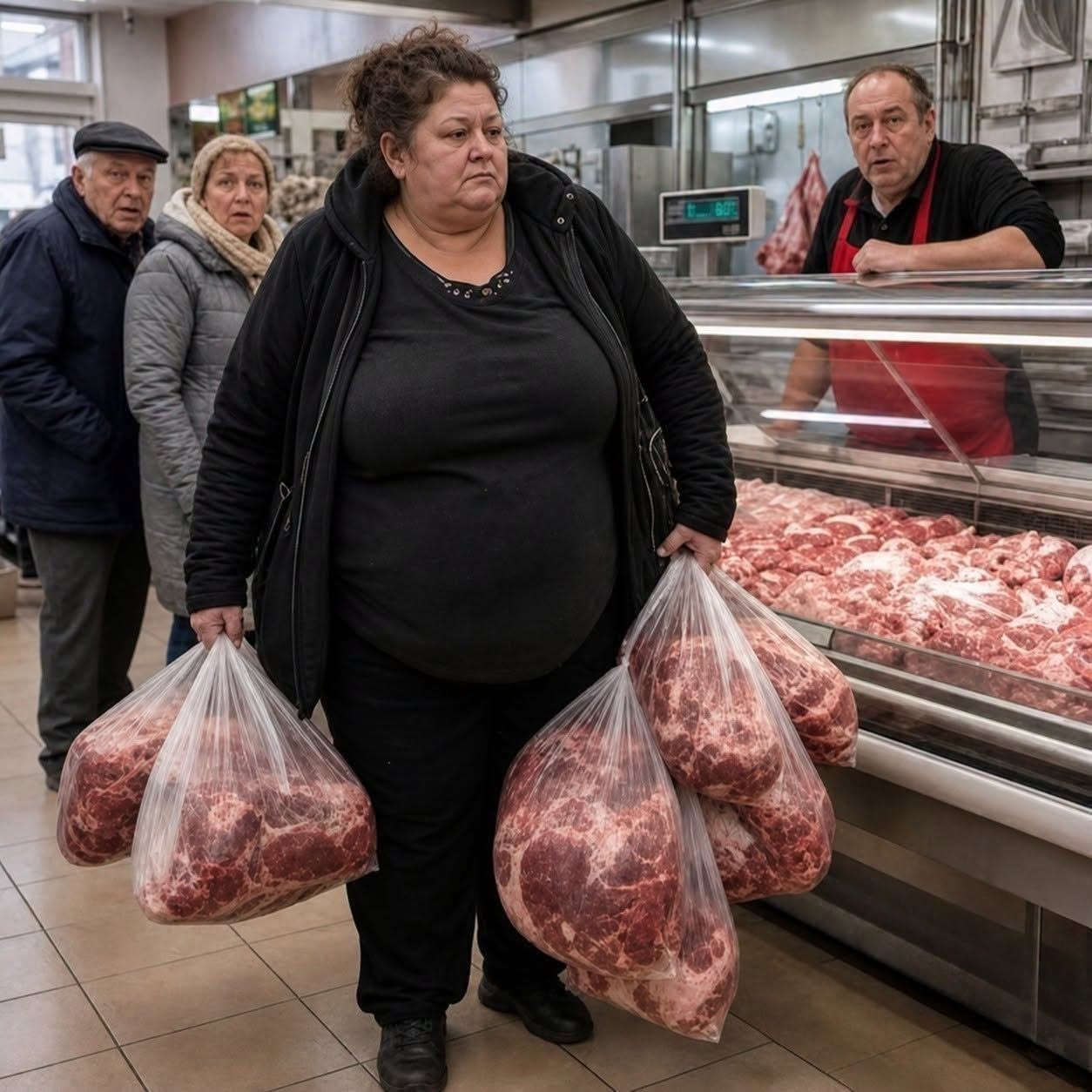
The mystery of the old woman who bought 60 kilos of meat a day: the truth behind an abandoned ship

by


Every morning, he barely opened the butcher shop in the neighborhood, an old woman named Lidia entered with a hurry and asked for the same: sixty kilos of beef. Ovidiu, the butcher, had known her for years as a humble woman who barely bought small portions for her table. See it now have wrinkled bills with trembling hands and load heavy bags left it perplexed.Roasted accessories

Sourcing Commercial Farming Machinery

The first time, Lidia explained that her son had come to visit and that he was preparing a great family meal. Ovidiu nodded, but that same afternoon he learned of something that froze his blood: Lydia’s son had died years ago. Who was all that flesh for?
Increasingly strange behavior

Family

The next day, the old woman returned and asked for sixty kilos again. And the other. And the other. He avoided conversations, refused any help, and looked over his shoulder before leaving the store, as if he feared being followed. Ovidiu decided to find out what was going on and one morning followed her at a distance.

Lidia loaded the packages into an old cart and headed towards the abandoned industrial buildings on the outskirts of the city. He crossed some rusty doors and disappeared inside. Almost an hour later he went out with the cart completely empty.

That same night, the butcher discovered it again, this time next to the recycling bins. The old woman collected cardboard, bottles and pieces of metal, carefully keeping the few coins she got. However, the next morning I made the same gigantic order for meat.
Rumors and the complaint

Neighbors began to notice their strange tours. Rumors multiplied and several people called the police, alarmed at what might be happening inside the abandoned ship. When the agents came to inspect, Lidia stood in front of the gate and flatly refused to let them in.

From the inside it was heard a deaf blow and then a quick noise, like movement. The woman paled and held the lock even harder. One policeman gently pulled his hand away, another pointed his flashlight toward the opening. When the latch gave way and the rusty doors opened between squeaks, the agents took a few steps into the darkness… and were speechless.
What was inside the ship

Resourceslinguistics

The lanterns illuminated dozens of eyes shining in the gloom. They were not people. They were dogs. Lots of dogs. Some skinny, others injured, several elderly who could barely stand. Among them also moved cats and, in a corner, two small frightened deer that someone had rescued some time ago.
See more
Tricks cuisine
Schedule and calendars
Meat

Enrolling In Dog Training Classes

None of them showed aggression. Seeing Lydia enter, everyone began to move the tail and approach her.

“Ma’am… since when are you here?” asked one of the policemen, lowering the flashlight.

“For almost three years,” she replied, drying her eyes.

Ovidiu understood at last: all that meat was for animals. Lydia told them that, after the death of her son, she had not been able to bear to see abandoned animals. It started with two dogs. Then there were five, ten, and more continued to come.
A refuge made with love and scrap

Christianity

The ship was not luxurious, but it was clean. There were containers with fresh water, old blankets, straw and makeshift cages for sick animals. On a wall hung a notebook where Lidia carefully scored each rescue: where she had found it, what treatment she received and whether she had been adopted.

“He has given dozens of animals for adoption…” an agent muttered as he flipped through the pages.

“Sixty-eight,” she replied. But no one wanted them.

His pension was not enough, so he collected cardboard and scrap metal. Everything he earned was destined for food and medicine. He had not asked for help because he feared that they would take the animals to saturated shelters where the old and sick would hardly find a home.
The Community Response

The news spread quickly. To the surprise of many, the city did not react with anger, but with solidarity. Ovidiu, the butcher, was the first to offer meat each week. A veterinarian pledged to treat the animals without charging. Volunteers came to clean up the ship and build safer shelters.

Subscribing To Digital Newspaper Outlets

The municipality, along with a protective association of animals, got an authorized land where the animals were gradually moved. There they would receive proper care and would be more likely to be adopted. Lidia was invited to stay as a permanent volunteer.
The real lesson

The first day at the new shelter, one of the policemen went to visit her. He found her caressing an old dog who had fallen asleep on his knees.

“You know what?” he said, smiling. When we received the complaint, I was convinced that we were going to discover something terrible.

Lidia looked at him calmly and replied quietly:

“And they discovered it. The loneliness. That’s the most terrible thing.
by Taboola
Sponsored Links
You might like it
Capture Stock Markets Movement with better Trading ConditionsExecute stock tradeslessly effort on MT5 and TradingView. Rated 4.8/5 on Trustpilot.Trading in securities involves significant risk.IC
Online Dating. Your MoveSkip the app. Use this dating website directlyDeLaChat
Senior Women With Active Profiles. BrowseA Dating Website for Singles Who Are Ready.Callyourdate

Then he smiled and added, “Luckily, sometimes you can win yourself with a little kindness.

An old black challenge coin changed everything for my injured daughter

by

The plain green hospital gown looked too large on Lily’s thin shoulders, the stiff cotton fabric bunching around her collarbone like a shroud.

I sat in the brown vinyl chair by the bedside, holding a heavy blue knit blanket in my lap to keep my fingers from twitching.

Every four seconds, the hospital heart monitor gave a low, green-tinged hum that vibrated in my teeth.

A plastic cup of lukewarm black coffee sat on the bedside table, bought from the lobby machine for three dollars.

The coffee had a thin skin of dust on the top, and I had not touched it.

Lily’s hair was damp, sticking to her forehead in dark, sweat-matted strands.

I used a paper tissue to wipe a smear of dried blood from the shell of her ear, my hands as steady as they had been in the desert.

Her fingers twitched on the white sheet, her knuckles scraped raw and painted with yellow antiseptic.

At ten past midnight, her eyelids finally fluttered.

She looked at me, her eyes clouded with the heavy dose of morphine they had given her at ten.

She tried to open her mouth to speak, but her jaw was wired shut with silver metal brackets that caught the light.

Invest In Gold

A muffled, wet sound escaped her throat.

I leaned closer, resting my hand on the mattress near her arm.

“Do not try to move, Lily,” I said. “The doctor is coming back.”

She fidgeted with the silver medical wristband on her left wrist, her fingers scraping against the plastic tag.

Her eyes held a sudden, sharp panic that I had only seen in men behind enemy lines.

I reached into my trousers pocket and let my thumb rub over the silver skull coin I always kept there when the world went loud.

The cold metal always helped me think.

Lily closed her eyes again, her breathing slowing as the medication pulled her under.

I stood up and pulled the blue knit blanket over her chest, tucking the edges under the mattress.

Her small leather backpack was resting on the floor by the bedside chair.

The strap was torn, and the zipper was jammed with dry gray dirt from the plaza floor.

I picked it up and set it on the table next to the cold coffee.

Doctor Avery was waiting near the nurses’ station, his white coat stained with a drop of blue ink near the pocket.

Watch Expert Tutorials

He was looking at the glowing X-ray board, where six distinct white cracks showed on the gray film of Lily’s skull.

He tapped the middle crack with the tip of a cheap blue ballpoint pen.

“Three fractures on the left, three on the right,” Avery said, his voice flat.

“Are they clean?” I asked.

“Clean enough for a surgeon, not for a father,” he said, turning to look at me. “She is nineteen, Mr. Walker. Her bones are resilient, but this took a great deal of force.”

“What kind of force?”

“The impact came from a heavy object, Walker. Or a steel-toed boot. Multiple strikes while she was on the ground.”

“Any other injuries?”

“Bruises on her shoulders and ribs,” Avery said. “Defensive wounds on her forearms. She fought them.”

He tapped the pen against the plastic frame of the light board.

“This was not a random campus fight, Colonel Walker,” Doctor Avery said.

I did not blink.

“I am a security consultant, Doctor,” I said.

“I was at Bragg in ninety-eight,” Avery said, adjusting his glasses. “I saw what your boys did in the valley. I know the signature of a professional strike.”

“She is nineteen,” I said again, my voice flat.

“And she was carrying something they wanted,” Avery said. “This was not a robbery, Walker. Her purse was still on her shoulder when they brought her in. Her phone was in her pocket.”

Watch Expert Tutorials

“What are you saying?”

“They did not want her money,” Avery said, turning off the light board. “Get her out of this town when she can walk.”

I left the hospital through the side doors, where the autumn air smelled of wet asphalt and rotting leaves.

I drove the three blocks to the university campus in my old sedan.

The tires did not make a sound on the wet asphalt, which was littered with damp yellow leaves.

I parked near the library and walked toward the science building plaza where the freshman had found her.

The autumn wind was cold, carrying the smell of damp earth and river water from the valley.

The concrete plaza was dark.

Every single safety light on the high poles was dead, their black glass bulbs reflecting nothing but the gray clouds above.

I walked to the center of the plaza, my boots clicking softly on the paving stones.

I found the spot near the concrete planter.

The university maintenance crew had tried to wash the stone, but a dark, star-shaped stain remained near the edge of the concrete.

I knelt down on one knee, my trousers soaking up the cold moisture from the pavement.

There was a small, torn corner of green paper caught in the drain cover three feet away, but I left it.

I stood up and walked to the brick wall of the science building.

I looked up at the dome camera mounted fifteen feet above the plaza entrance.

The camera was a gray model, its serial number printed in small white letters on the casing: TX-four-eight-zero.

The small red LED light at the base of the camera was completely dark.

I followed the black conduit pipe down the wall to the main power junction box.

The heavy iron latch of the junction box was hanging open, its brass padlock gone.

Inside, the three heavy copper switches had been pulled down into the off position.

The black challenge coin I had carried since my days with Task Force Specter sat in my left pocket, heavy and solid.

I pulled it out and held it against the cold metal of the box.

The switches had been wiped clean of grease, but there were fresh silver scratches on the brass terminals where a tool had been used to short the secondary circuit.

Someone had known exactly which breaker to pull to blind the cameras on the east wall.

The campus security office was located in the basement of the administration hall.

The air inside smelled of stale popcorn and floor wax.

Officer Gregory Vance sat behind a grey metal desk, his uniform shirt unbuttoned at the collar.

He was nervously flipping through an empty aluminum clipboard, his thumb leaving greasy marks on the clean white paper.

“I need the camera logs for the science plaza,” I said, standing in front of his counter.

Vance did not look up.

“We had an equipment failure,” he said, his voice dropping into a tired, defeatist sigh. “We recorded nothing.”

“The junction box was opened manually,” I said.

Vance stopped flipping the pages of the empty clipboard.

We have a lot of kids on this campus, Mr. Walker,” he said, finally looking at my chin. “Pranks happen. Someone probably thought it would be funny to turn off the lights.”

“They beat my daughter until her jaw was in six pieces,” I said.

“We are looking into it,” Vance said. “But without the cameras, we do not have much to go on.”

He picked up a yellow pencil and began to sharpen it with a small plastic sharpener, the shavings falling into his palm.

“You should let this go, for Lily’s sake,” Officer Vance muttered.

“You were on duty at nine fifteen,” I said.

“I was patrolling the north lot,” Vance said, his eyes shifting to his empty coffee mug.

“The north lot is a mile from the science building,” I said.

“That is where the call came in,” Vance said. “A broken window at the athletic center. Turned out to be a false alarm.”

“And who called it in?”

“An anonymous tip,” Vance said, looking down at his desk. “It was dark, there are no witnesses, and the cameras are down.”

I knew he was lying because the green indicator light on the wall behind him was flashing, showing the western server was still online and receiving data.

But I did not tell him that.

I turned and walked out of the office, the heavy glass doors swinging shut with a quiet hiss.

I walked back to the science plaza, the cold air clearing the smell of the security office from my lungs.

The streetlights on the main road a block away cast long, yellow fingers of light through the bare oak trees.

I stood in front of the open junction box again, my fingers tracing the fresh scratches on the brass switches.

Nineteen years of quiet civilian life, of lawnmowers and parent-teacher conferences, had just ended.

I stared at the empty padlock loop and realized my quiet life had just shattered.

The blue knit blanket was still draped over the vinyl chair when I returned to room four twelve at nine the next morning. Lily was asleep, her breathing shallow, the wired metal in her jaw casting small shadows under the harsh overhead light.

Her canvas backpack sat on the bedside table, smelling of damp earth and rain from the campus plaza pavement. I unzipped the main compartment, careful not to let the metal slider clink against her plastic water pitcher.

Inside, nestled beneath her biology textbook and a pack of blue pens, was her green university sweatshirt, torn at the left shoulder. I pulled it out, the fabric stiff where the mud had dried in patches.

As I unfolded the heavy cotton, my fingers brushed against something stiff in the front pouch pocket. It was a jagged scrap of white paper, torn from a spiral notebook, with dark brown smears drying across its surface.

I flattened it on the tray table, my thumb tracing the rough edges. Three hand-written names stared back at me in Lily’s neat, slanted print: Ethan, Brandon, and Tyler.

I turned the scrap over to see if anything else was written on the back, but the reverse side was blank. I reached into my pocket and took out my parking receipt, checking the digits I had scribbled down in the dark at one in the morning.

The serial number of the campus security camera, Model TS-four hundred, serial number eight-eight-four-two-one, was written in my own block print right next to the time of the stamp. That camera had been pointed directly at the spot where Lily fell, and someone had turned off the power before she got there.

Lily stirred in the bed, her fingers twitching against the white sheet, but her eyes remained closed. I folded the bloodstained scrap of paper and slipped it into my shirt pocket, right against my chest.

Officer Vance was sitting on the bench outside the double doors at half past nine, chewing on the end of a yellow wooden pencil. His uniform shirt looked like he had slept in it, the collar curled and damp with sweat.

“We need to talk about the plaza,” I said, standing over him until he looked up from his empty clipboard.

Vance sighed, a long, tired sound that smelled of peppermint and stale tobacco. “Mr. Walker, I told you last night. The cameras went down. Main power surge.”

I pulled the folded scrap of paper from my shirt pocket and held it three inches from his nose. “My daughter wrote these down before they hurt her. Ethan, Brandon, and Tyler.”

The pencil stopped moving. Vance looked at the paper, then at my face, his cheeks losing what little color they had under the hallway fluorescent tubes.

He closed his black notebook with a sharp snap and slid it into his side pocket. “Without witnesses to place them in that courtyard at midnight, there is nothing the police can do.”

“The camera serial number is eight-eight-four-two-one,” I said. “The power box was unlocked from the inside.”

Vance stood up, his leather belt squeaking against his holster as he adjusted his stance to block the doorway.

It is with heavy hearts that we announce the passing of this beloved and legendary actress… – Check the comments

by

# “It Is With Heavy Hearts That We Announce the Passing of a Beloved and Legendary Actress…” — Why You Should Think Twice Before Sharing

Booking Theater Tickets

Few words can stop someone in their tracks faster than the announcement of a celebrity’s death.

For generations, actors and actresses have become part of our lives through movies, television programs, theater performances, interviews, and unforgettable characters. Even when we have never met them personally, their work can become connected to important memories from our own lives.

That is why a sudden announcement claiming that a beloved actress has died can be so emotionally powerful.

A photograph appears on social media.

The words “Rest in Peace” are written across the image.

A date of birth and an alleged date of death appear underneath.

Then comes the familiar instruction:

**“Check the comments for the full story.”**

Thousands of people begin reacting.

Some express disbelief.

Others write messages of sympathy.

Fans share memories of their favorite performances.

And before anyone has confirmed whether the claim is true, the post may already have traveled across multiple social-media platforms.

But there is an important lesson behind these posts:

**A dramatic memorial image is not the same thing as verified news.**

Licensing Stock Photography

In the age of viral content, an emotional headline can travel much faster than the truth.

That is why celebrity death announcements—especially those appearing without a recognizable news source—deserve a second look before anyone shares them.

## The Emotional Power of a Celebrity Death Announcement

Celebrity death rumors work because they immediately trigger emotion.

A person may have watched an actress on television as a child.

Perhaps her movies were part of family traditions.

Maybe one of her performances helped someone through a difficult period.

Perhaps her character became associated with a particular stage of life.

When a person sees a message saying that actress has died, the response can be almost instinctive.

“Is this real?”

“What happened?”

“I can’t believe she’s gone.”

The emotional reaction often happens before the logical one.

That’s completely human.

But it creates an opportunity for misleading content to spread.

Finding Writing Tools

Someone sees a heartbreaking headline and shares it because they want friends and other fans to know.

Those people see the same post and share it again.

Within hours, an unverified statement can begin to look like established fact simply because so many people are repeating it.

Popularity, however, is not verification.

A claim doesn’t become true because thousands of people have shared it.

## The Problem With “Rest in Peace” Graphics

One of the most recognizable forms of celebrity misinformation is the memorial graphic.

These images often contain:

* A large photograph of the celebrity

* The words “Rest in Peace”

* A black, gray, or dark background

* Candles, flowers, or other memorial imagery

* A supposed date of death

* Emotional language about the person’s legacy

At first glance, such an image can look official.

But appearances can be deceptive.

Anyone with basic image-editing software can create a memorial graphic.

A photograph can be downloaded, edited, and combined with dramatic text in a matter of minutes.

The finished image may look professional without having any connection to a legitimate news organization, family representative, or official announcement.

That’s why an image alone cannot establish that a celebrity has died.

The question should always be:

**Who confirmed this?**

If the answer is unclear, the claim should be treated cautiously.

## Why “Check the Comments” Is a Warning Sign

Another familiar feature of viral posts is the instruction to look somewhere else for the supposed details.

“Full story in the comments.”

“Click below.”

“Read the first comment.”

“More information coming soon.”

These phrases are often designed to encourage interaction.

The original post may intentionally leave out important details because curiosity encourages people to click, comment, and share.

A person who sees a vague statement may immediately want to know what happened.

That curiosity becomes engagement.

And engagement is valuable.

Every interaction can increase a post’s visibility.

The more people interact with something, the more likely it may be shown to additional users.

As a result, a dramatic but unsupported claim can gain enormous exposure.

## The Economics of Clickbait

There is often a financial motivation behind sensational online content.

Many websites make money through advertising.

In simple terms, more visitors can mean more opportunities to display advertisements.

That creates an incentive for some publishers to attract as much traffic as possible.

A straightforward headline might not generate much interest.

But a headline such as:

**“Beloved Hollywood Actress Dies Suddenly—Fans Are Heartbroken”**

can generate immediate curiosity.

A reader wants to know who died.

They want to know how it happened.

They want to know whether the information is true.

And they may click before asking any of those questions.

That’s where clickbait becomes effective.

The headline doesn’t necessarily need to provide useful information.

It only needs to make the reader curious enough to continue.

## The Most Powerful Clickbait Is Emotional

Not all misleading headlines are equally effective.

The strongest ones usually involve powerful emotions.

Death is one of the strongest.

Fear is another.

So are outrage, surprise, nostalgia, and anger.

That’s why phrases such as these appear repeatedly online:

“Heartbreaking news…”

“Hollywood is in mourning…”

“Fans are devastated…”

“We have lost another legend…”

“Gone too soon…”

“Her family has confirmed…”

Each phrase is designed to create an emotional reaction.

The problem is that emotionally charged wording can cause people to lower their normal skepticism.

When someone believes a beloved actress has died, they may not stop to ask whether the claim comes from a credible source.

They simply react.

## Why False Death Reports Are Particularly Harmful

A fake death report is not harmless entertainment.

For the person involved, it can be disturbing and upsetting.

Imagine waking up and discovering thousands of strangers are mourning your death while you are still alive.

Family members may receive messages of condolence.

Friends may become frightened.

Professional colleagues may contact one another trying to determine what happened.

Fans may experience unnecessary grief.

And legitimate news organizations may have to correct the false information.

There is also a broader problem.

Repeated exposure to false stories can make people less able to distinguish reliable reporting from fabricated content.

When misinformation becomes common, people may eventually stop trusting legitimate information altogether.

## How to Verify a Celebrity Death Report

Fortunately, checking a claim does not require special investigative equipment.

A few simple steps can make a major difference.

### 1. Look for a reputable news organization

If a major celebrity has genuinely died, the announcement is likely to appear across multiple established news outlets.

Don’t rely on one random social-media post.

Search for the celebrity’s name using a reputable news source.

Look at several reports rather than accepting the first result you encounter.

### 2. Check official sources

Look for statements from the person’s representatives, family, verified social-media accounts, professional organizations, or other credible sources.

An official announcement carries considerably more weight than an anonymous Facebook post.

### 3. Look at the date

Old stories are frequently recirculated as though they are new.

A post might appear today even though the underlying event happened years ago.

Always check when the information was originally published.

### 4. Watch for vague wording

Be cautious if a post refuses to provide basic information.

Who died?

When?

Where?

What was the source?

Who confirmed it?

A legitimate report generally provides specific details.

### 5. Don’t trust an image alone

Photographs are easily reused.

A picture of a celebrity can be combined with completely false information.

Even a graphic containing a specific date doesn’t prove that the date is genuine.

### 6. Be careful with unfamiliar websites

If the post directs you to a website you’ve never heard of, look at the site’s overall appearance and information.

Does it identify its writers?

Does it provide a clear publication date?

Does it have contact information?

Are other articles equally sensational?

These clues can help determine whether you’re looking at journalism or engagement bait.

## Search Beyond Social Media

One of the biggest mistakes people make is searching only within the platform where they found the claim.

If you see a celebrity death announcement on social media, open a separate search engine and look for independent confirmation.

For example, search the celebrity’s full name alongside words such as:

“death”

“official statement”

“family”

“representative”

or “latest news.”

Then compare the results.

If hundreds of people are mourning someone but established news sources have reported nothing, that’s a reason to slow down.

The absence of credible confirmation doesn’t automatically prove a post is false, but it does mean you shouldn’t treat the social-media claim as established fact.

## What About the Image Showing a Date of Death?

This is another common trick.

A graphic may show a birth year followed by a death year.

Seeing those numbers can make the post appear authoritative.

But the numbers may simply have been added by whoever created the graphic.

There is no automatic verification system attached to text written on an image.

A photograph saying someone died does not prove that they died.

The same principle applies to logos.

A fake post can include a recognizable-looking news logo.

That doesn’t mean the news organization published it.

When in doubt, go directly to the organization’s website rather than trusting an image circulating online.

## The Danger of Sharing “Just in Case”

Some people share questionable death reports because they aren’t completely certain.

They may think:

“I’ll share it so people can find out.”

Or:

“I don’t know whether it’s true, but everyone else is posting it.”

That can make the situation worse.

If the story is false, sharing it gives misinformation another audience.

The better approach is simple:

**Verify first. Share second.**

If you can’t verify the claim, don’t amplify it.

You can still discuss the uncertainty without presenting the rumor as fact.

For example:

“I’ve seen this circulating, but I haven’t found reliable confirmation yet.”

That is very different from:

“Rest in peace. We lost another legend.”

The first acknowledges uncertainty.

The second presents an unverified claim as truth.

## Why Nostalgia Makes These Stories Even More Powerful

Celebrity death rumors often appear alongside photographs from the person’s most famous years.

This is intentional or, at the very least, highly effective.

A younger photograph can trigger memories immediately.

People don’t just see an actress.

They see a movie they watched with their parents.

A television show they loved.

A character they grew up with.

A period of their own lives.

That emotional connection can make the claim feel more believable.

The photograph becomes evidence in the viewer’s mind, even though it proves nothing about whether the person is alive today.

This is another reason to separate emotional response from factual verification.

## A Better Way to Respond

Suppose you see a post announcing the death of a beloved actress.

Before commenting, stop.

Take a breath.

Don’t immediately share it.

Instead, ask:

**Where did this information originate?**

Then search.

If you find credible confirmation, you can share the information confidently.

If you discover that the story is false or unsupported, you’ve avoided helping misinformation spread.

And if you still cannot determine the truth, simply wait.

There is no prize for being the first person to announce someone’s death.

Accuracy matters more than speed.

## Social Media Has Changed How We Receive News

In the past, major celebrity deaths were generally reported through television, newspapers, radio, and established news agencies.

Today, the information environment is completely different.

A rumor can begin with one anonymous account and reach millions of people in hours.

A dramatic photograph can travel farther than a carefully researched article.

A misleading headline can become a trending topic before anyone checks its source.

That doesn’t mean social media is inherently bad.

Social platforms can be incredibly useful.

They allow people to connect quickly.

They help families communicate.

The Hollow Ridge children were found in 1968: what happened next defied nature.

by

The hunters called the authorities. By nightfall, the property was surrounded by police, social workers, and a medical team from the county hospital. What transpired during the next 72 hours was documented in reports that were later filed in court, but fragments of the story have survived: snippets, whispers, testimonies that should never have left the courtroom. And they all point to the same unsettling truth. The Dalhart children were not like other children—not in their behavior, their biology, or what they carried within them.

Historical news archives

The lead social worker assigned to the case was Margaret Dunn. She had worked in child protection for 16 years, handling cases of abuse, neglect, and abandonment in three counties. She thought she had seen it all. But when she arrived at the Dalhart property on the morning of June 18, 1968, she knew immediately that something was wrong. Not just with the children, but with the land itself. In her report, one of the few documents that survived the sealing, she described the air around the barn as thick, almost impenetrable, like walking through water. She wrote that the silence was unnatural. No birds, no insects, no wind whispering through the trees; only the children standing in a semicircle inside the barn, watching the adults with expressions she described as aware yet absent.

The youngest was a girl who looked about four. The oldest was a boy who looked 19, although later medical tests suggested he might have been much older. Neither would give their name. Neither spoke at all. Not for the first 48 hours. When the medical team tried to perform the tests, the children resisted, not violently, but with a kind of coordinated calm that made progress impossible. They went limp, their bodies becoming so heavy that it took three adults to lift a single child. Their skin was cold to the touch, even in the June heat. And their eyes—everyone who saw them mentioned their eyes—were dark, almost black, with pupils that seemed unresponsive to light.

Margaret Dunn, an influencer marketing instructor,

tried to separate the children for individual interviews. That's when the situation spiraled out of control. The moment the youngest child was separated from the group, the others began to hum—not a tune, but a sustained sound that vibrated through the barn walls. It grew louder, deeper, until it sounded less like a sound and more like a pressure. The sheriff present described it as feeling like an internal blockage in his skull. The separated child collapsed—not fainted, collapsed—as if every bone in her body had turned to liquid. When she was brought back to the group, she immediately got up, unharmed, and rejoined the circle. The humming stopped. No one tried to separate them again.

Child safety guides

Dr. William Ashford was the psychiatrist hired to evaluate the children. He was a Johns Hopkins-trained clinician known for his work with trauma survivors and children in extreme isolation. He had evaluated feral children, victims of cult abuse, and patients with selective mutism. He approached the Dalhart children with the same methodical detachment he had employed in all the other cases. That detachment lasted exactly three days. On the fourth day, he submitted a report to the state that included a single handwritten line at the end: “These children are not suffering from psychological trauma. They are something else entirely.” He refused to elaborate. Two weeks later, he closed his private practice and moved to Oregon. He never treated children again.

What Ashford witnessed during those three days was documented in session notes that were later classified. However, in 1994, a court employee who was digitizing old files leaked portions of his observations. According to Ashford's notes, the children demonstrated abilities that defied conventional child development. They exhibited perfect synchronization without verbal communication, moving, turning, and even breathing in unison. When one child was shown an image during a private session, the others would draw that same image without having seen it. They had no concept of individual identity. When asked their names, they always responded in unison with the same phrase: "We are Dalhart." When asked about their parents, they smiled—not with a child's smile, but with a rehearsed, empty smile—and said nothing.

Child safety guides

The most unsettling observation occurred during a medical examination. A nurse named Patricia Hollis was drawing blood from one of the older boys when she noticed something unusual. The blood was darker than normal, almost brown, and clotted within seconds of leaving the vein. Even more alarming was the boy's reaction; he didn't flinch, didn't cry, didn't even seem to notice the needle. But the moment his blood touched the glass vial, every other child in the building turned to look at him. They stood simultaneously from where they were sitting and began to move toward him slowly, silently, as if drawn by an invisible thread. The staff locked the doors before the children could gather. But for the next six hours, they huddled against the doors, palms pressed against the wood, waiting. The boy whose blood had been drawn sat alone in the examination room, completely still, staring at the ceiling. When the gates finally reopened, the children returned to their circle as if nothing had happened. The blood sample was sent to a laboratory in Richmond. It was lost in transit. A follow-up sample was never taken.

At the end of July, the state made a decision. The children would be separated and transferred to different facilities in Virginia and Kentucky. It was the only way, they argued, to break the bond that united them and give them a chance at a normal life. Margaret Dunn opposed the decision, as did several members of the medical staff, but the state proceeded. On August 2, 1968, the children were loaded into separate vehicles and taken to different locations. That night, every facility reported the same thing: the children stopped eating and moving. They sat in their rooms, staring at the walls, humming that same low, resonant tone. Three days later, two of the children were found dead in their beds. The cause of death could not be determined. Their bodies showed no signs of trauma, illness, or suffering. They had simply ceased to live. By the end of the week, four more had died. The state reversed its decision. The surviving children were reunited, and the deaths stopped.

The state of Virginia didn't know what to do with the children who died separated from their families and thrived together. There was no precedent, protocol, or legal framework for a situation that shouldn't have been possible. So they did what institutions always do when faced with the inexplicable: they covered it up. In September 1968, Dalhart's remaining eleven children were moved to a private institution in the Blue Ridge Mountains. The place was called Riverside Manor, though there was no river nearby and it was far from a mansion. It was a converted sanatorium, built in the 1920s for tuberculosis patients. Abandoned in the 1950s, it was quietly reopened under a state contract for cases that were meant to disappear. The children were housed in an isolated wing. There were no other patients, no visitors, just a rotating staff of well-paid nurses and caregivers who were asked not to discuss their work.

The official registry listed the institution as a group home for children with intellectual disabilities. The unofficial truth was that Riverside Manor was a holding cell for a problem the state couldn't solve and didn't want exposed. For the next seven years, the Dalhart children lived in that facility. They are older, but not in a normal way. Medical records show their growth was erratic. Some years they grew several inches. Other years they didn't grow at all. Their physical development didn't match their apparent age. The boy who looked 19 when they were found still looked 19 in 1975. The youngest girl, who should have been 11 by then, still looked no older than seven. Blood tests were inconclusive. Genetic testing, primitive in the early 1970s, showed abnormalities the lab couldn't classify. Their DNA contained sequences that didn't match any known human marker. A geneticist who reviewed the samples noted that certain segments resembled developmental remnants, traits that should have been eliminated from the human genome years ago. He was asked not to publish his findings. He agreed.

Staff at Riverside Manor reported strange occurrences. Lights would fail in the children's wing, but not in the rest of the building. Temperatures would drop suddenly, without explanation, and were confined exclusively to the children's bedrooms. Objects would move, though not drastically: a cup shifted seven centimeters to the left, a chair faced the wall, a door that had been open closed without anyone touching it. The children never spoke, yet they communicated. Staff members described feeling watched even with their eyes closed. One caregiver recounted waking in the middle of the night to find all eleven children standing silently around her bed, staring at her. She left the following morning. Another caregiver reported hearing voices in the hallway, conversations in a language that sounded like English played backward. Upon investigating, she found the children asleep in their beds, but the voices continued until dawn.

In 1973, the state decided to permanently seal all records related to the Dalhart case. The official reason was to protect the privacy of the children in state custody. According to a memo that surfaced decades later, the real reason was concern about public panic and potential legal liability if the subjects' true nature became public. The memo didn't explain what "nature" meant. It didn't need to. By then, everyone involved understood that the Dalhart children weren't simply traumatized or developmentally delayed. They were something else: something that had lived in those mountains for generations, hidden in plain sight, masquerading as human. And now the state was liable.

In 1975, something changed. The children began to talk, not to the staff, not to the doctors, but to each other. Whispered conversations, always in that same unintelligible language that no linguist could identify. The staff tried to record it, but the audio always came out distorted, as if the sound itself resisted being captured. What they did notice was that the children had begun to differentiate themselves slightly. For seven years, they had moved as a single unit, slept in the same room, ate at the same time, breathed in unison. But now, small differences were emerging. One boy began to spend hours staring out the window. One of the girls began to draw obsessively, compulsively, filling page after page with symbols that looked like letters, but didn't belong to any known alphabet. Another boy stopped eating meat altogether and only consumed vegetables grown in the ground, rejecting anything that came packaged or canned. It was as if they were becoming

The staff didn't know if this was progress or something worse. Dr. Ashford's notes warned that separation led to death. But this wasn't a forced separation; it was a choice, and it raised a question no one wanted to ask. If the children were choosing to individuate, what did that mean for who they had been before? In March 1976, one of the older girls, about 23, though she still looked younger, asked a nurse her name. Not the nurse's, but her own. It was the first time a girl had shown any interest in her individual identity. The surprised nurse checked the admission records. There were no names. The children were filed by number, Subject 1 through Subject 11. The girl stared at the nurse for a long time and then walked away. That night, she spoke English for the first time. She said, "We forgot." The nurse asked her what she meant. The girl looked at her with her dark, steady eyes and said, "We forgot how to be Dalhart."

By 1978, the children had deteriorated. Not physically, but mentally. They began to show confusion, memory lapses, and what the staff described as an identity crisis. They forgot their own faces. One boy spent an entire day convinced he was one of the girls. Another claimed she had died years before and that the person who had replaced her was someone else. They stopped recognizing each other. The synchronicity that had once defined them was gone, replaced by chaos. Two of the children became violent, not with the staff, but with each other, as if trying to destroy something they could no longer control. They were sedated and separated into different rooms. Both died within 48 hours. The official cause of death was heart failure, but their hearts had been perfectly healthy the day before. It was as if their bodies had simply given up the moment they could no longer be what they had always been.

By 1980, only four of the original eleven children were still alive. The state decided to close Riverside Manor. The residence was too expensive, raised too many questions, and wasn't producing results. The surviving children were transferred to a standard group residence in southwest Virginia. They were given names—Sarah, Thomas, Rebecca, and Michael—from a list of common names with no connection to their past. They were enrolled in a program designed to integrate adults with developmental delays into society. It didn't work. In less than six months, Thomas disappeared into the woods behind the residence and never returned. Search teams found no trace of him. Rebecca stopped speaking altogether and spent her days rocking back and forth, humming the same low voice that haunted the Riverside staff. He died in his sleep in 1983. Michael remained there until 1991. He lived in a supervised apartment, worked part-time at a supermarket, and, by all accounts, seemed almost normal until the night he found himself caught in highway traffic near Roanoke. He wasn't running, he wasn't stumbling. Witnesses said he simply stepped into the roadway and stood there, arms at his sides, staring at the headlights of the oncoming car. He died instantly.

So only Sarah remained, the youngest, the sole survivor. Sarah Dalhart, though that wasn't her birth name—if she ever had one—lived longer than anyone would have believed. In 2016, she was just over fifty, though she looked decades younger. She had spent most of her adult life in nursing homes, group homes, and halfway houses in Virginia and West Virginia. Sometimes she worked—dishwasher, janitor, night clerk at a store—always in jobs where she didn't have to talk or interact much with people. Social workers described her as quiet, functional, and profoundly lonely. She had no friends, no romantic relationships, no ties to anyone. She lived on the fringes of society, present enough not to raise suspicion, absent enough to go unnoticed. For nearly 40 years, she never spoke of her origins or her family, until in 2016 a journalist named Eric Halloway found her.

Halloway was researching a book about forgotten Appalachian communities when he stumbled upon a reference to the Dalhart children in a declassified court document. Most of the details had been redacted, but there was enough information to follow the trail. He tracked down former employees of Riverside Manor, obtained partial medical records through Freedom of Information Act requests, and eventually found Sarah through a social services database. He wrote to her for six months before she agreed to meet with him. They met at a restaurant in Charleston, West Virginia, on a cold November afternoon. Halloway recorded the conversation. This recording, which lasted more than three hours, was never made public, but excerpts were transcribed and published in a limited-edition article in a little-known history journal in 2017.

What Sarah told him that day completely changed everything he thought he knew about the Dalhart clan. She said the children found in 1968 weren't first-generation. They weren't even tenth-generation. The Dalhart lineage had existed on Hollow Ridge for over 200 years, but it wasn't a family in the traditional sense. It was a lineage, a continuation. She explained that her ancestors, the original Dalharts, had come to the hill in the late 18th century, fleeing something in their homeland. She didn't say where—she didn't know—but they had brought something with them: a practice, a ritual, a way of ensuring the family would never die out, never weaken, never be diluted by the outside world. They didn't marry outsiders because they didn't need to. They didn't reproduce like other families. Sarah's words, according to the transcript, were: "We weren't born. We were hunted."

Halloway asked her to clarify. She explained that the Dalhart children weren't individuals, but extensions of the family. When they needed a child, the family performed a ritual. She didn't describe it in detail, but she mentioned blood, earth, and what she called "the conversation," and then a new child would appear, not born of a mother, not as children are normally born. They simply arrived fully formed, integrated into the family consciousness. She said the children shared a single consciousness, a collective mind that allowed them to function as a single organism distributed across multiple bodies. That's why the separation killed them. It wasn't trauma or attachment. It was a rupture, like the amputation of a limb. The body could survive, but the limb couldn't. And when the family consciousness began to fragment in the 1970s, when the children started developing individual identities, it was because the bloodline itself was dying. The rituals had ceased. The connection had been broken. And without it, the children were just bodies, empty shells trying to understand how to be human without ever having learned.

Sarah had told Halloway that she was the last, the final continuation of a lineage that had endured for centuries. She said that sometimes she could still sense the others, even though they were dead: a deep presence in her mind, voices that weren't voices. She said she had spent most of her life trying to silence them, trying to just be Sarah, a single person, simply human. But it never worked because she wasn't human, not entirely. She was the last piece of something ancient, something that had remained hidden in the hills for generations, pretending to be a family when it was something else entirely. And now, with no way to continue, no way to perform the ancient rituals, no way to give rise to another generation, she waited. She waited for the lineage to finally end. She waited for the last thread to break. She looked at Halloway across the table in that restaurant and said, "When I die, he will die with me. And perhaps that's for the best."

Sarah Dalhart died on January 9, 2018. She was found in her apartment in Bluefield, West Virginia, sitting in a chair by the window, her hands folded in her lap, her eyes open. The coroner estimated she had been dead for three days before anyone noticed. There were no signs of a struggle, illness, or injury. Her heart had simply stopped. The official cause of death was cardiac arrest. However, the coroner noted something unusual in his report. Her body showed no signs of rigor mortis or decomposition. Even after three days, her skin remained smooth and cool to the touch, as if she had died only moments before. When they tried to move her, her body was incredibly heavy, like the children in 1968. It took four people to lift her into the coroner's van. By the time she arrived at the morgue, she weighed practically nothing.

Eric Halloway attended her funeral. There were six people present, including the priest. No family, no friends, just social workers and a few curious locals who had heard about this strange woman who never aged. She was buried in a public cemetery on the outskirts of town, in an unmarked grave. Halloway stood at the edge of the plot after everyone had left and later wrote that he felt something shift in the air as soon as the first shovelful of dirt touched the coffin. Not a sound, not a movement, but a presence, suddenly absent, as if a pressure were being released. He described it as the sensation of a held breath finally being exhaled. He stayed until the grave was filled, then returned to his car. He never wrote the book he had planned. He never released the full recording of his conversation with Sarah. In 2019, he moved to the Pacific Northwest and stopped researching Appalachian history altogether. When asked why, he simply replied, “Some stories aren’t meant to be told.” Some things are better left buried. Family

But the story didn't end with Sarah's death. In 2020, a surveyor working in the area that was once Hollow Ridge reported finding the remains of the old Dalhart estate. The barn where the children had been found was gone, having collapsed decades earlier, but the main house was still standing, precariously. He went inside out of curiosity. There, he found walls covered with the same symbols that one of the Dalhart children had obsessively drawn in the Riverside Mansion. Hundreds of them were carved into the wood, stretching from floor to ceiling in every room. He photographed them and sent the pictures to a linguist at Virginia Commonwealth University. The linguist couldn't identify the language, but she noted that the symbols followed a consistent grammatical structure, suggesting they were communicative, not decorative. She also noted that many of the symbols appeared to be instructions: instructions for something, a process, a ritual.

Two weeks later, the surveyor returned to the property to take more photographs. The house was gone; it hadn't collapsed, it hadn't burned down, it had simply vanished. The foundation was still there, but the structure was gone. There was no debris, no sign of demolition, just an empty clearing where a house had stood for over 200 years. Since then, more reports have surfaced. Hikers in the area have described hearing a buzzing sound in the woods at night: the same deep, resonant tone that haunted the staff at Riverside Manor. Hunters have found perfectly round circles of dead vegetation in places where nothing should be able to eliminate the undergrowth so completely. In 2022, a family camping near the former Dalhart property reported seeing children in the trees at dawn: 17 of them, completely motionless, watching the campsite. The family gathered their belongings and left immediately. When they reported it to the local authorities, they were told there were no children in the area, no missing persons, no camps, and no youth groups. The family never returned.

Halloway asked her to clarify. She explained that the Dalhart children weren't individuals, but extensions of the family. When they needed a child, the family performed a ritual. She didn't describe it in detail, but she mentioned blood, earth, and what she called "the conversation," and then a new child would appear, not born of a mother, not as children are normally born. They simply arrived fully formed, integrated into the family consciousness. She said the children shared a single consciousness, a collective mind that allowed them to function as a single organism distributed across multiple bodies. That's why the separation killed them. It wasn't trauma or attachment. It was a rupture, like the amputation of a limb. The body could survive, but the limb couldn't. And when the family consciousness began to fragment in the 1970s, when the children started developing individual identities, it was because the bloodline itself was dying. The rituals had ceased. The connection had been broken. And without it, the children were just bodies, empty shells trying to understand how to be human without ever having learned.

Sarah had told Halloway that she was the last, the final continuation of a lineage that had endured for centuries. She said that sometimes she could still sense the others, even though they were dead: a deep presence in her mind, voices that weren't voices. She said she had spent most of her life trying to silence them, trying to just be Sarah, a single person, simply human. But it never worked because she wasn't human, not entirely. She was the last piece of something ancient, something that had remained hidden in the hills for generations, pretending to be a family when it was something else entirely. And now, with no way to continue, no way to perform the ancient rituals, no way to give rise to another generation, she waited. She waited for the lineage to finally end. She waited for the last thread to break. She looked at Halloway across the table in that restaurant and said, "When I die, he will die with me. And perhaps that's for the best."

Sarah Dalhart died on January 9, 2018. She was found in her apartment in Bluefield, West Virginia, sitting in a chair by the window, her hands folded in her lap, her eyes open. The coroner estimated she had been dead for three days before anyone noticed. There were no signs of a struggle, illness, or injury. Her heart had simply stopped. The official cause of death was cardiac arrest. However, the coroner noted something unusual in his report. Her body showed no signs of rigor mortis or decomposition. Even after three days, her skin remained smooth and cool to the touch, as if she had died only moments before. When they tried to move her, her body was incredibly heavy, like the children in 1968. It took four people to lift her into the coroner's van. By the time she arrived at the morgue, she weighed practically nothing.

Eric Halloway attended her funeral. There were six people present, including the priest. No family, no friends, just social workers and a few curious locals who had heard about this strange woman who never aged. She was buried in a public cemetery on the outskirts of town, in an unmarked grave. Halloway stood at the edge of the plot after everyone had left and later wrote that he felt something shift in the air as soon as the first shovelful of dirt touched the coffin. Not a sound, not a movement, but a presence, suddenly absent, as if a pressure were being released. He described it as the sensation of a held breath finally being exhaled. He stayed until the grave was filled, then returned to his car. He never wrote the book he had planned. He never released the full recording of his conversation with Sarah. In 2019, he moved to the Pacific Northwest and stopped researching Appalachian history altogether. When asked why, he simply replied, “Some stories aren’t meant to be told.” Some things are better left buried. Family

But the story didn't end with Sarah's death. In 2020, a surveyor working in the area that was once Hollow Ridge reported finding the remains of the old Dalhart estate. The barn where the children had been found was gone, having collapsed decades earlier, but the main house was still standing, precariously. He went inside out of curiosity. There, he found walls covered with the same symbols that one of the Dalhart children had obsessively drawn in the Riverside Mansion. Hundreds of them were carved into the wood, stretching from floor to ceiling in every room. He photographed them and sent the pictures to a linguist at Virginia Commonwealth University. The linguist couldn't identify the language, but she noted that the symbols followed a consistent grammatical structure, suggesting they were communicative, not decorative. She also noted that many of the symbols appeared to be instructions: instructions for something, a process, a ritual.

Two weeks later, the surveyor returned to the property to take more photographs. The house was gone; it hadn't collapsed, it hadn't burned down, it had simply vanished. The foundation was still there, but the structure was gone. There was no debris, no sign of demolition, just an empty clearing where a house had stood for over 200 years. Since then, more reports have surfaced. Hikers in the area have described hearing a buzzing sound in the woods at night: the same deep, resonant tone that haunted the staff at Riverside Manor. Hunters have found perfectly round circles of dead vegetation in places where nothing should be able to eliminate the undergrowth so completely. In 2022, a family camping near the former Dalhart property reported seeing children in the trees at dawn: 17 of them, completely motionless, watching the campsite. The family gathered their belongings and left immediately. When they reported it to the local authorities, they were told there were no children in the area, no missing persons, no camps, and no youth groups. The family never returned.

Then, in 2023, a woman from Kentucky came forward claiming to be a distant relative of the Dalhart family. She said her grandmother was born in Hollow Ridge in 1938 and ran away from home as a teenager, abandoning her family and never speaking of them again. The woman said her grandmother died in 2021. But before she died, she revealed something to her. She told her that the Dalharts weren't a family. They were the continuation of something older than families, something that didn't reproduce or grow, but rather persisted. And she said that as long as the bloodline existed, it would never truly die. It would simply wait. It would wait for the right conditions. It would wait for the right land. It would wait for someone to remember the old ways.

Sarah Dalhart was supposed to be the last, the final link in a lineage that stretched back centuries. But lineages aren't lineages. They aren't bound by genetics or birth. They're patterns, instructions written into the world, waiting to be followed. And patterns don't die. They repeat. They resurrect. They find new bearers. The state sealed the files. The witnesses kept silent. The journalists moved on. But the land remembers. Hollow Ridge remembers. And somewhere in the land that has drunk the blood of generations, something still waits. It isn't dead, it hasn't gone, it just waits patiently. Because that's what the Dalhart lineage has always been: not human, not entirely, but something that learned to use humanity as a mask, generation after generation, until the mask became indistinguishable from the face beneath. And when you bury something like that, you don't kill it. You just plant the seed deeper. The question isn't whether it will return. The question is whether we will recognize it when it happens, or whether, like the staff at Riverside Manor, like the authorities in 1968, or like Eric Halloway standing at Sarah's grave, we will simply choose to look away, to forget, to pretend that some stories are better left buried, until the day we realize that the story was never buried. It was simply waiting for us to stop looking so it could begin again.

The legacy of Hollow Ridge is not simply the story of 17 children in a barn; it is the shadow of a legacy that refuses to fade. Deep in the Appalachian soil, where the roots of ancient trees coil like the very symbols carved into the Dalhart house, the energy of "continuation" lingers. It is whispered that the silence of the forest is not an absence of life, but a density of presence. Those who venture too far onto the ridge today still speak of a vibration within themselves, a hum that matches the frequency of the earth. They find no trace, no vestige of a family, but they feel the weight of unblinking gazes. The world believes Sarah was the end, but the land knows that a lineage built on earth and blood is as permanent as the mountains themselves. The mask may have been removed for an instant, but the face on the ridge remains, watching, waiting for the next time the earth stirs and the old words are spoken in the darkness. Family

To ensure the continuity of this narrative, we must examine the specific environmental anomalies that have persisted in the decades since the 1968 discovery. In the scientific community, particularly among those who study the peripheral ecology of the Appalachian Mountains, there are indications of migratory “biological dead zones.” These are not caused by pollution or disease, but by a complete absence of microbial activity. It is as if the life force of these specific areas of the Earth had been extracted to sustain something else. This is reflected in the medical reports of the Dalhart children: cold skin, disproportionate weight, blood that refused to behave like human plasma. If, as Sarah suggested, they were “extensions” rather than individuals, then the source of their vitality was not biological in the traditional sense, but geological. They were the personification of the ridge.

The legal silence surrounding the case is also highly revealing. When the state sealed the files in 1973, it wasn't just to protect the children, but to protect the status quo of human knowledge. The existence of a collective consciousness operating within a human lineage poses a fundamental threat to the concepts of law, identity, and soul. If the Dalharts were a single organism, how could they be prosecuted? How could they be "saved"? The institutional failure to integrate them wasn't a failure of social work, but a failure of taxonomy. You can't name a cell in a body and expect it to become a person. The state's attempt to "sever the link" was like trying to teach the fingers of one hand to live in separate houses. The result was inevitable: necrosis.

As we move into the 21st century, the digital age has brought new rumors. In hidden forums and private archives, new photographs of the ridge have surfaced, taken by drones that malfunctioned shortly afterward. These images show the clearing where the Dalhart house once stood. In the infrared spectrum, the ground glows with a heat that shouldn't be there, a pulse that beats once an hour. Some say it's the heart of the ridge. Others believe it's the beginning of the "conversation" anew. The Kentucky woman, the one who spoke of her grandmother's escape, recently disappeared. Her house was in perfect order, but the soil in her yard had been disturbed, and the symbols of the Dalhart house were embossed on the leather of her discarded shoes.

The story of the Dalhart clan reminds us that humanity is relatively new to this planet. There are older things: patterns of existence that require no birth and fear no death. They endure in the silent repetition of the earth. We may believe we have buried the truth about Hollow Ridge under layers of legal seals and forgotten history, but the earth does not recognize our laws. It recognizes only the blood that returns to it. And as long as the wind whispers through the Appalachian foothills, the name Dalhart—or whatever it was called before it had a name—will remain. This is not a ghost story. It is a biological fact of another order. It is the patience of stone, the memory of the earth, and the terrifying realization that some masks are not worn by humans, but by the world itself we inhabit.

samedi 29 août 2026

I Gave Up 22 Years of My Life Raising My Triplet Nieces – What They Did at Their College Graduation Made Me Drop to My Knees

by


There were many nights when I wondered whether I had failed those girls.

People & Society

Had I worked too much?

Listened too little?

Said the wrong thing when they needed the right one?

Looking back now, I can trace our entire life to one ordinary October evening and a decision I made before I understood what it would cost.

The porch light outside my apartment was flickering when I came home from a double shift.

I smelled of sawdust, metal shavings, and machine oil from Finch & Nail Hardware, the small shop beneath the apartment where I lived in the fictional town of Bramblewick.

My keys were already in my hand.

I was thinking about cold leftovers and the futon that never opened properly.

Then I nearly tripped over three infant car seats.

Beside them sat one diaper bag.


On top of the bag was a note written on the back of a gas receipt.

For several seconds, my mind refused to understand what I was seeing.

I picked up the receipt first.

The handwriting tilted sharply to the right.

I recognized it immediately.

It belonged to my older brother, Callan.

I’m sorry, Reid. I can’t do this.

That was the entire message.

No telephone number.

No address.

No explanation of where he was going or whether he planned to return.

His wife, Elowen, had been laid to rest eleven days earlier.

Callan had survived less than two weeks without her.

I was twenty-seven years old, unmarried, and living in two rooms above a hardware store.

My checking account contained $346.

The kitchen table had one chair.

The futon stopped halfway whenever I tried to unfold it.

I had never changed a diaper.

Baby Care & Hygiene

One of the babies made a small hiccupping sound.

I looked down.

Two of the girls were asleep.

The smallest one was awake, staring at me with gray eyes that looked exactly like our mother’s.

“Hello,” I whispered.

She blinked.

Then the door beside mine opened.

My neighbor, Mrs. Fenwick, stepped into the hallway wearing a blue bathrobe and slippers shaped like sheep.


She had lived next door for six years and had never once considered privacy a virtue.

That night, it saved me.

“Reid, why are there babies on the porch?”

“They’re Callan’s.”

Her eyes widened.

“All three?”

I held up the note.

“He left them.”

“Left them where?”

“Here.”

“Where did he go?”

“I don’t know.”

Mrs. Fenwick snatched the receipt from my hand.

She read it twice.

Then she pressed one palm against her chest.

“Oh, that foolish man.”

Elowen had brought the triplets to visit twice during the summer.

Mrs. Fenwick had spent both visits leaning over their stroller, praising their eyelashes and demanding to know which girl was which.

Elowen had explained their names and birth weights with the seriousness of a military briefing.

Now Mrs. Fenwick knelt beside the car seats.

“You cannot raise three babies alone.”

“I know.”

“You don’t know the first thing about babies.”

“I know.”

“You once tried to warm soup in a metal bowl inside the microwave.”

“That happened one time.”

“It happened twice.”

The smallest baby began moving her hands.

One tiny fist opened and closed, searching.

I lowered myself onto the porch boards.

Her fingers closed around my index finger.

The grip was warm and surprisingly strong for a six-month-old child.

I stopped breathing.

“That one is Maisie,” Mrs. Fenwick said quietly. “Elowen said the smallest would always be Maisie.”

“Maisie.”


The baby continued holding my finger.

She did not know that I had no savings.

She did not know that her father had disappeared.

She did not know that I had never planned to become responsible for anyone except myself.

She only knew that someone was beside her.

Mrs. Fenwick rested a hand on my shoulder.

“We’ll call family services in the morning. There are couples waiting for children. People with nurseries, proper jobs, and experience.”

I opened my mouth to agree.

That was the sensible answer.

The girls deserved more than a cramped apartment above a shop.

They deserved two prepared parents, three proper cribs, and a bank account that did not frighten its owner.

“Okay,” I whispered.

But I was looking at Maisie.

Her fingers tightened.

“Okay,” I said again. “I’ve got you.”

Mrs. Fenwick became very still.

“You mean until morning?”

I looked at the three car seats.

“No.”

“Reid.”

“I can’t let strangers take them tonight.”

“Tonight is how it starts.”

“I know.”

“No, you don’t.”

She looked at me for a long moment.

Then she picked up the diaper bag.

“Fine. I’ll make bottles while you carry them inside.”

I brought the girls into my apartment one at a time.

Somewhere between the second trip and the third, I stopped thinking of them as Callan’s children.

I was still Uncle Reid.

But I had already begun becoming something else.

Mrs. Fenwick taught me how to warm a bottle.

She taught me to test the milk against my wrist and to support a baby’s head.

She changed the first diaper while I watched with the concentration of a man defusing an explosive.

The girls were named Liora, Carys, and Maisie.

Liora was the oldest by eleven minutes.

Carys arrived next.

Maisie was last and smallest.

At three in the morning, all three began crying at once.

Mrs. Fenwick stood in the middle of my apartment with one baby against her shoulder.

I held the other two badly.

“This is impossible,” I said.

“Yes.”

“I cannot do this.”

“Probably not.”

I stared at her.

“That isn’t helpful.”

“You don’t need reassurance. You need another bottle.”

By sunrise, my apartment looked as though a storm had passed through it.

Blankets covered the floor.

Three bottles stood beside the sink.

I had formula on my shirt.

Maisie was asleep against my chest.

Family services arrived that afternoon.

A caseworker named Marla Dane explained that Callan had abandoned his children and would be reported missing.

Temporary placement could be arranged immediately.

The triplets might be placed together if a suitable home could be found, but there were no guarantees.

“Together?” I asked.

“We would try.”

“Try?”


“Three infants are difficult to place.”

Liora began crying from Mrs. Fenwick’s arms.

Carys answered from the borrowed basket we had turned into a temporary bed.

Maisie woke against me.

All three cries filled the apartment.

The caseworker waited.

“What would I have to do to keep them here?”

Mrs. Fenwick looked at me sharply.

Marla studied my face.

“Temporarily?”

“For as long as they need.”

“You understand that this is not babysitting.”

“Yes.”

“You will need a larger place, background checks, home inspections, childcare arrangements, legal hearings—”

“What forms do I sign?”

Mrs. Fenwick closed her eyes.

Later, she told me that was the moment she realized arguing would be useless.

The next several months were a blur.

Finch & Nail Hardware belonged to an elderly man named Emmett Crow.

When I explained what had happened, he stared at me over his glasses.

“You intend to raise three babies above my shop?”

“I intend to try.”

“That ceiling is thin.”

“I know.”

He grumbled for several minutes.

Then he handed me the keys to the empty storage room behind my apartment.

“You can knock through the wall.”

“I can’t afford the rent.”

“I didn’t mention rent.”

Emmett never admitted that he had become attached to the girls.

He simply began leaving boxes of diapers near the stairs.

Mrs. Fenwick watched them while I worked.

At night, I repaired locks and sharpened tools for extra money.

The girls slept in three mismatched cribs donated by customers.

For their first birthday, I stayed awake after midnight writing in a notebook.

I had started it because I was afraid I would forget things.

The first time Liora stood.

The way Carys sneezed whenever she laughed too hard.

The way Maisie refused to sleep unless she could hear one of her sisters breathing nearby.

That night, I wrote:

To my three girls,

You are one year old today. I don’t know if you will ever read this. I don’t know if I am doing any of this correctly. I only know I am not going anywhere.

Then I closed the notebook and pushed it into the back of a kitchen drawer.

Twenty-two years passed the way a long shift does.

Slowly while you are living it.

All at once when you look back.

I packed school lunches using the wrong bread.

I burned pancakes and called them crispy.


I braided hair so badly that Mrs. Fenwick waited on the porch each morning with a brush.

“You are giving these children emotional damage,” she said once while undoing the knot I had created in Carys’s hair.

“I watched a tutorial.”

“You watched the wrong tutorial.”

“I’m trying.”

“I know. That is what worries me.”

I worked double shifts.

Sometimes triple shifts when one of the girls needed braces, new glasses, a school trip, or shoes because all three had somehow outgrown theirs in the same week.

There were fevers.

Science fairs.

Dance recitals.

Parent meetings.

Three separate heartbreaks during which I had no useful advice, so I made grilled cheese and sat nearby while they cried.

There were also years when all three seemed to dislike me at once.

Maisie was thirteen when she began slamming doors.

Carys was fifteen when she refused to speak to me for nearly a month because I would not let her attend an overnight party.

Liora was seventeen when she shouted:

“You don’t understand anything about us!”

She was right.

I did not understand everything.

But I stayed.

That was the one thing I knew how to do.

I missed things too.

A cousin’s wedding in the fictional city of Evermere because Carys developed the flu.

A fishing trip I had promised myself for ten years.

Promotions that required relocating away from Bramblewick.

And Seraphine.

Seraphine was the woman I loved.

She worked at the bakery across from Finch & Nail Hardware.

We met when the girls were seven.

For six years, she joined us for dinners, birthdays, and school plays.

She loved the triplets, but she also wanted a life that belonged partly to her.

One evening, she stood at my front door holding the sweater she had worn during dinner.

“I’m not asking you to choose between me and the girls,” she said.

“I know.”


“I’m asking whether there is room for me here.”

I looked toward the kitchen.

Three lunchboxes waited on the counter.

Permission slips lay beside the sink.

Carys had a fever.

Liora needed help with a project.

Maisie had fallen asleep on the couch after arguing with me.

“There isn’t,” I said.

Seraphine’s face changed.

“Not the kind of room you deserve.”

She nodded slowly.

“I thought that might be your answer.”

She left a green sweater behind.

I never returned it.

I stayed with the girls.

Not because they demanded it.

Because someone had to.

Callan appeared in fragments.

A birthday card arrived once without a return address.

Then a winter card with a stamp from a place I did not recognize.

He never included money.

Never asked whether the girls were healthy.

Never asked whether they remembered him.

When the triplets were twelve, he called.

I answered the shop telephone.

“Reid?”

I recognized his voice even after all those years.

“Where are you?”

“That’s complicated.”

“No, it isn’t. You are wherever you chose to be.”

He sighed.

“I want to reconnect.”

“With whom?”

“My daughters.”

My hand tightened around the receiver.

“They have names.”

“I know their names.”

“Say them.”

Silence.

“Callan, say their names.”

“I want to be their father.”

“You want to be their father?”

“I’ve been thinking.”


“Thinking about them does not make you a parent.”

“I made mistakes.”

“You left three six-month-old babies outside my door.”

“Elowen was gone. I wasn’t thinking clearly.”

“She was their mother. They lost her too.”

He said nothing.

“You want to be their father, get on a plane,” I told him. “Stand in front of them. Explain why you disappeared.”

“I need time.”

“You have already had twelve years.”

Callan never got on a plane.

The cards stopped after that.

The girls never mentioned them.

Sometimes I wondered whether they had noticed.

Of course they had.

Children always notice the empty spaces adults hope they can hide.

At night, I ran numbers through my head.

Not financial numbers.

The other kind.

Had I attended enough school events?

Had I told them I loved them often enough?

Did they remember the nights I read stories, or only the evenings I fell asleep at the table after work?

Did they see me as their parent?

Or only as the uncle who happened to stay?

Beneath every worry was one fear I never admitted aloud.

Perhaps some part of them was still waiting for their real father.

Perhaps I was the man who had raised them, but not the man they truly wanted.

I could not blame them for that.

I simply could not stop fearing it.

The morning of their college graduation, I sat in my truck for twenty minutes before finding the courage to step outside.

I was forty-nine.

My beard had turned gray in uneven patches.

My right knee still hurt from falling off a ladder two summers earlier.

A cheap camera rested in my lap.

I had purchased it because Maisie said phone photographs did not count as proper graduation pictures.

I did not know how to use half its settings.

Inside my wallet, behind an expired insurance card and an old food receipt, was Callan’s original note.

I had carried it for twenty-two years.

I’m sorry, Reid. I can’t do this.

The ink had faded.


The paper was soft along the folds.

I read it once more.

Then I thought about Callan.

Would the girls mention him during graduation?

Would they wish he were there?

Would seeing their classmates surrounded by parents remind them of everything they had lost?

I returned the note to my wallet and stepped into the heat.

The ceremony took place at Willowcrown College, a fictional campus on the edge of Bramblewick.

The auditorium smelled of floor polish, flowers, and perfume.

I sat in the seventh row with the camera balanced against my bad knee.

Twenty-two years had led to that morning.

Still, I felt as nervous as I had the first night I held three bottles and three crying babies.

The triplets crossed the stage one after another.

Liora was called first.

She began crying before the announcer finished saying her name.

She wiped her face on the sleeve of her gown and laughed at herself as she accepted the diploma.

Then came Carys.

She spotted me in the crowd and waved with both hands, exactly as she had from the school bus window when she was eight.

I waved back too enthusiastically and nearly struck the woman beside me with the camera.

Maisie came last.

She walked with the same quiet determination she had carried since childhood.

She did not smile until the diploma was in her hands.

I lifted the camera.

The shutter clicked.

I thought that was the end.

Then the dean returned to the microphone.

“We have one final presentation.”

I lowered the camera.

My three girls walked back onto the stage together.

They held hands like they had when they were five and crossing busy car parks.

Something tightened in my chest.

Maisie stepped toward the microphone.

“Our father could not be here today.”

My stomach dropped.

Callan.

yournews

by

Popular Posts

  •   This year, the Lord grants us, once again, a propitious time to prepare ourselves to celebrate with a renewed heart the great mystery of J...

  •   The hunters called the authorities. By nightfall, the property was surrounded by police, social workers, and a medical team from the count...

  •   For a man who built his career on unshakable composure, this was the moment everything cracked. The cameras rolled, the room stilled, and ...

  •   The Music Lives On: Why Reports About Bob Weir Have Sparked Global Reaction In the world of classic rock, few figures carry the same endur...

  •   30 minutes ago in Utah, it was officially confirmed that Charlie Kirk’s wife has been appointed to a prominent role in the state. The anno...

  •   Michael Jackson’s Daughter Breaks Her Silence at Last For years, Michael Jackson’s children have largely stayed out of the public eye, gro...

  •   This morning brought heartbreaking news as the world learned of the passing of a beloved singer, someone whose voice touched countless liv...

  •   This year, the Lord grants us, once again, a propitious time to prepare ourselves to celebrate with a renewed heart the great mystery of J...

  •   Iran Stuns the World: Rising Tensions Between Tehran and Washington Raise Global Concerns The relationship between Iran and the United St...

  •   The Hidden Reasons You Keep Getting Pimples on Your Chin Acne is frustrating at any age, but when pimples keep appearing in the same spot—...