dimanche 6 septembre 2026

Young woman marries millionaire and th -

by


She married a millionaire… and then walked straight past the life everyone expected her to choose.

Friends were stunned. Commenters online picked sides.

Was it na茂ve idealism—or the bravest decision a woman in her position could make? 

When she first stepped into his world, the shine was blinding: the cars, the trips, the restaurants where the bill never mattered.

People whispered that she’d “made it,” that love was just a pretty word for a very comfortable choice.

Yet in the quiet moments, away from the cameras and the envy, she began noticing what money couldn’t buy:

the way he listened, how he remembered small details, how his eyes softened when she spoke about her fears.

Over time, the luxury became background noise.

What stayed was his hand reaching for hers when no one was watching,

the shared laughter over burnt dinners, the long walks taken just to talk about nothing and everything.

She didn’t reject his wealth; she simply refused to let it define their story.

In choosing connection over image, she reminded everyone watching that the richest life is measured in presence, not possessions.


His final moment stunned millions.

A beloved legend, a 98-year-old icon, appeared one last time… and then was gone.

Fans watched in silence as Bill Hayes shared a heartbreaking farewell with the woman who loved him on and off the screen, Susan Seaforth Hayes. 

In his final appearance on LEGEND:

LOST, Bill Hayes didn’t just say goodbye to a character; he seemed to be saying goodbye to a lifetime.

Sharing the screen with Susan Seaforth Hayes, his real-life and on-screen partner, their last scene carried decades of shared history, love, and sacrifice.

Viewers could feel the weight of every glance, every pause, every whispered line between them.

Fans called it “the end of an era” because it was more than a scripted farewell.

It was a living tribute to a man who gave his life to storytelling, and to the woman who stood beside him through it all.

As the episode faded out, it left an ache that felt strangely beautiful—proof that some goodbyes aren’t meant to be tidy, only deeply, honestly remembered.


They never had a chance.


Two young pilots, a routine landing, and a fire truck that should not have been there.

In seconds, lives ended, an airport froze, and a quiet voice on the radio whispered, “I messed up.”

They were strangers to most of the people onboard, names printed on flight plans and ID

badges, but in the space of a few violent seconds they became the center of hundreds of lives.

Antoine Forest and Mackenzie Gunther carried very different stories into that cockpit — one

forged in bush strips and maintenance hangars, the other in classrooms and ramp work — yet

both were built on the same quiet belief that skill and discipline could hold chaos back.

When the systems around them faltered, that belief was all they had left.

Passengers remember not panic, but control: a sense that someone up front was still fighting for

them, even as metal twisted and the runway disappeared beneath the sliding jet.

Investigators will map vectors, procedures, and errors, but the people who walked away will

remember something else — that when everything failed, two men kept trying, right up to the end.


Mia kept saying it every night: her bed felt “too tight.”

Her mother brushed it off—until the camera caught something.

A shifting mattress. A silent movement.

A child asleep, inches above a secret no one was meant to find. 

Mia’s words stopped sounding like childish exaggeration the moment her mother saw the mattress move on the live feed.

It was a subtle rise, a soft distortion in the fabric, but enough to send her racing down the hallway.

The room seemed ordinary. Her daughter slept peacefully.

Yet the bed, that familiar safe place, suddenly felt like a stranger in the dark.

Peeling back the mattress, her fingers brushed cold plastic.

A tube, a cable, a device taped neatly out of sight—deliberate, hidden, waiting.

Fear turned instantly into a focused, shaking anger as she pulled Mia from the room and called the police.

When officers traced the timing back to the recent cable visit, the horror sharpened into betrayal.

What Mia had called “tight” was the pressure of someone else’s secret intrusion.

Her small discomfort had been the only warning that their trust, and their home, had already been quietly crossed.


The studio went silent before it exploded.

One spin. One puzzle. One life rewritten on live television.

Christina Derevjanik walked onto Wheel of Fortune with

student debt and a marketing job—and walked off with over a million dollars and history at her back.

Under the bright lights and roaring applause, Christina’s journey from anonymous contestant to

record-breaking champion felt almost unreal. She’d grabbed the Million Dollar Wedge early,

guarded it through each risky spin, then stood at the bonus round joking about quitting her job.

Seconds later, “Pack of coyotes” turned that joke into a very real possibility as the confetti rained down and her knees nearly gave way.

Her tearful embrace with Ryan Seacrest and Vanna White captured more than just a game show victory; it was the visible release of years of pressure, bills, and quiet hopes.

With $1,035,155 now hers—the largest prize in the show’s history—Christina plans to erase her

student loans, buy a home, and finally breathe without debt. For millions watching, her win wasn’t just historic; it was a rare, electric glimpse of everything going right at once.


Two pilots died in seconds.


Metal screamed, fuel burned, and LaGuardia’s runway became a war zone.


Yet somehow, a 26–year flight attendant was hurled over 100 meters, still strapped to her seat… and lived.

Her daughter calls it a miracle. Investigators call it “extraordinary.” 

When Air Canada Jazz Flight 8646 collided with a fire truck on LaGuardia’s Runway 4, it should have been the kind of impact no one walks away from.

The cockpit was destroyed, killing both pilots instantly and injuring dozens.

Amid the chaos, veteran flight attendant Solange Tremblay’s jump seat tore free and was blasted more than 100 meters from the aircraft, with her still strapped in.

Rescuers found her alone on the tarmac, broken but breathing.

Her daughter, Sarah, calls it nothing less than a miracle.

Surgeons worked to repair multiple fractures, including a shattered leg, while investigators struggled to understand how anyone in that part of the plane could survive.

Experts point to the heavily reinforced jump seat, designed to endure extreme crash forces so crew can lead evacuations.

This time, that engineering didn’t just protect passengers; it gave one mother a second chance at life.


Sylvester Stallone was so broke he sold his best friend.


So rejected he slept in bus stations.


So “unwanted” that studios tried to buy his dream without him.


They mocked his face, his voice, his chances.


But one brutal night, one boxing match, and one insane decision changed everything. 

He began life wounded and underestimated, marked by a birth injury that slurred his speech and froze half his face.

Those same traits that made him a target as a child became his signature as a man.

Between his parents’ violent arguments and constant school expulsions, he learned early that no one was coming to rescue him.

Acting wasn’t just a career idea; it was oxygen. Yet when he chased it, doors slammed shut.

Casting agents laughed. He was told to quit, to accept that he would never be more than background noise.

Desperation pushed him to sell his beloved dog just to eat.

But that same desperation hardened into resolve the night he watched an underdog boxer refuse to fall.

In three furious days he wrote Rocky, then turned down life‑changing money because they wanted anyone but him in the lead.

That reckless faith rewrote his destiny.

Rocky won Best Picture, he bought back his dog for a small fortune, and the man once deemed “too ugly” became the face of cinematic perseverance.

Stallone’s story endures because it proves that sometimes the world only believes in you after you’ve bet everything on yourself first.


Welcome to our IQ Challenge! Have you ever thought about whether you can notice small differences?

Today, we’re putting your observation skills to the test with a fun and tricky quiz that will check how smart you really are.

IQ, which stands for Intelligence Quotient, is a way to measure how good you are at thinking, solving problems, and reasoning.

This test looks at how well you can notice tiny differences between two pictures that look almost the same.

Do you think you can do it? Only people with an IQ of 140 or higher usually catch all the differences! Are you prepared to challenge your brain? Let’s get started!

How did you do?

Finding all five differences or just a couple is still a fun way to challenge your brain and see how well you pay attention to the little things.

popular posts


For years, Democrats thought the map was on their side.

Now, the ground is shifting under their feet. Population flight, redistricting wars, and hardball politics are quietly rewriting the rules of the Electoral College.

Once-safe blue fortresses are bleeding power, while red states are arming up with new seats, new maps, new leverage.

By 2032, the party that once counted on California and New York may be fighting for survival in Nevada, Arizona, and

New Hampshire—desperate to hold a collapsing blue wall as Republicans lock in gains through demographic momentum and legislative muscle.

The emerging electoral map suggests a future where Democrats can no longer depend on a handful of big blue states to carry them over 270.

As California, New York, and Illinois lose seats, their electoral clout erodes, forcing Democrats to run the table in almost every competitive battleground simply to stay viable.

States once treated as “nice to have” become must-win territory, and even a flawless performance in Pennsylvania, Michigan, and Wisconsin may not be enough.

Republicans, meanwhile, are converting population growth into structural advantage.

Texas and Florida are not only gaining seats but also engineering maps that harden GOP control for years.

Legal challenges over minority representation and partisan gerrymandering may slow, but likely won’t stop, this trend.

By 2032, the balance of power could reflect not just how Americans vote, but where they’ve moved—and which party was faster to redraw the lines.


For Scott McConnell, this isn’t about party loyalty anymore; it’s about stopping a president

he believes is marching America toward catastrophe on the back of “BS intelligence.”

His call for JD Vance to invoke the 25th Amendment is as radical as it is unprecedented:

persuade the cabinet that Trump is unfit, sign the declaration, and instantly assume the

powers of acting president. No resignation. No election. Just a constitutional earthquake in real time.

Yet the path he sketches is riddled with peril. Trump could contest the move, forcing Congress

into a brutal, history-defining vote while missiles still fly over the Middle East. Iran has already

signaled it prefers to deal with Vance, seeing in his combat scars a man wary of endless war.

But any step he takes would split the country, test the Constitution to its limits, and decide

whether this moment becomes a turning point—or a breaking point—for American democracy.

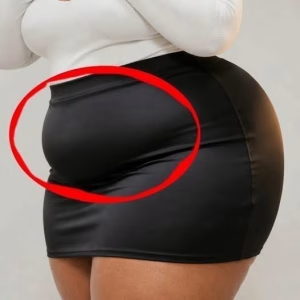
Real Bodies and Self-Esteem: Why Beauty Doesn’t Depend on a Perfect Belly

by


For decades, magazine covers, advertising campaigns, and, more recently, social media filters and algorithms have sold us a very specific idea of ​​what constitutes a “perfect body.” At the heart of that ideal is almost always the same requirement: a completely flat, firm stomach without a single mark.

However, from the perspective of self-image psychology, real anatomy, and emotional well-being, this standard is not only artificial but biologically unrealistic for the vast majority of people. The true beauty and value of a body have nothing to do with the absence of folds or textures, but rather with the acceptance of anatomical diversity and the functionality of our bodies.

Here we explain the scientific, anatomical, and psychological reasons why beauty and self-esteem should never depend on a perfect belly.

The biological reality: The abdomen is designed to protect and nurture life.
The obsession with a flat stomach clashes head-on with the way the human body, especially the female body, is designed. The abdomen is not a rigid concrete wall; it is a dynamic space that performs vital functions:

Protection of internal organs: The abdominal area contains the stomach, intestines, liver, and, in women, the uterus and ovaries. The body naturally and healthily stores a layer of subcutaneous fat in this area to protect these vital organs and regulate body temperature.

✨There is no such thing as a “perfect” body. There is only your body. The one that allows you to live, move, feel, laugh, hug, dance... And that body is valid, just as it is.

Normal daily fluctuations: A real belly changes throughout the day. It’s perfectly normal to wake up with a flat stomach and end the day with more volume due to digestion, gas buildup, or water intake.

Hormonal cycles: During the menstrual cycle, changes in estrogen and progesterone levels cause fluid retention and bloating in the lower abdomen. Demanding an unchanging abdomen is ignoring the natural and healthy rhythms of one’s own biology.

✨There is no such thing as a “perfect” body. There is only your body. The one that allows you to live, move, feel, laugh, hug, dance... And that body is valid, just as it is.

The digital mirage and the distortion of beauty
Much of the dissatisfaction we suffer when we look in the mirror comes from comparing ourselves to images that do not exist in the real world.

  • Staged angles and poses:  Many of the “perfect bodies” images seen online are achieved by holding your breath, tensing your abdomen, wearing shapewear, or using specific lighting that disguises the body’s natural shadows. Even high-performance athletes have folds in their stomachs when they sit or bend over.
Real bodies aren't perfect... and yet they're still beautiful. 馃挏
  • Digital editing and filters:  Photo retouching tools systematically remove normal skin textures such as stretch marks, postpartum sagging, scars, and fine lines. By consuming these images on a massive scale, our brains begin to process what is natural as if it were an “imperfection.”

 The impact on self-esteem: Moving from aesthetics to functionality

When self-esteem is based solely on achieving an unattainable aesthetic goal (such as a perfect stomach), the relationship with the body becomes punitive and generates frustration, anxiety, and insecurity. To break this cycle, the psychology of well-being proposes two key approaches:

1. Practice body neutrality

If the concept of “self-love” or “body positivity” is difficult for you to apply on days when you’re feeling low on yourself,  body neutrality  is an excellent alternative. It consists of ceasing to judge your body as “pretty” or “ugly” and starting to value it for what it does for you. Your abdomen moves, breathes, processes the nutrients that give you energy, and allows you to hug and move. Its value is functional, not decorative.

2. Redefining the concept of beauty

True beauty isn’t flawless symmetry or rigidity; it’s vitality, expression, diversity, and authenticity. A body that has experienced weight fluctuations, carried life, or simply bears the marks of time and genetics, tells a unique story. Stretch marks, scars, and wrinkles are evidence of a living body, not a blank canvas.

Real bodies aren't perfect... and yet they're still beautiful. 馃挏

 Tips for making peace with your image

  • Clean up your social media feed:  Unfollow accounts that make you feel inadequate, guilty, or that promote beauty standards based on extreme restriction. Fill your feed with creators who have diverse and realistic bodies.
  • Change your inner dialogue:  When you look in the mirror and judgment arises toward your belly, try reframing the thought. Instead of  “I hate how this looks ,” try connecting with self-compassion:  “This is my real body, it’s healthy, it protects me, and it deserves to be treated with respect . “
Beauty has never depended on a perfect body, but on the quality of your heart, your values, and the way you treat others.

Dress for the body you have today:  Don’t wait to “lose weight” or have a certain stomach shape to wear the clothes you love. Buy clothes in your current size that make you feel comfortable, free, and confident without feeling constricted.

If you have these two holes in your back, it means…See more

by


Have you ever noticed two small indentations on your lower back, just above the buttocks? If so, you may have what are commonly known as Venus dimples. These small, symmetrical depressions, often referred to as 芒€艙dimples of Venus,芒€ have been admired for centuries and are frequently associated with beauty, good health, and physical fitness. Named after Venus, the Roman goddess of love and beauty, these dimples are considered a sign of attractiveness in many cultures.

They are created by a ligament that connects the skin directly to the posterior superior iliac spine, a bony part of the pelvis, which results in the formation of slight indentations on the lower back. These natural features are typically more noticeable in individuals who have lower levels of body fat and well-defined muscles, but they are primarily determined by genetics. If your parents or grandparents have them, there芒€™s a higher likelihood that you might have them too.

While Venus dimples are more commonly talked about in relation to women, men can have similar indentations. In men, these are often called Apollo holes, named after Apollo, the Roman god of strength and athleticism. Apollo holes are thought to carry the same meanings as Venus dimples: signs of good health, strong circulation, and a well-maintained physique. Both Venus dimples and Apollo holes are typically more visible in people who lead active lifestyles, engage in regular physical exercise, and maintain a healthy weight. Although having these dimples is mostly genetic, keeping fit can enhance their appearance, making them stand out even more on a toned and lean body.

Many people view these dimples as aesthetically pleasing, and over time, they芒€™ve gained a reputation as an attractive and desirable physical trait. In today芒€™s fitness-focused world, these dimples are sometimes considered markers of a healthy, active lifestyle. Some fitness enthusiasts even aim to make them more prominent by reducing body fat and building strong core muscles. However, it芒€™s important to understand that while exercise and diet can enhance their visibility, Venus dimples and Apollo holes cannot be developed if the underlying ligament structure is not present. They are a natural part of your body芒€™s anatomy and cannot be created artificially through workouts or other physical training alone.

Beyond their visual appeal, there are also beliefs about the potential health benefits associated with Venus dimples. Some suggest that individuals with these dimples may experience better blood circulation, particularly in the pelvic region. This enhanced circulation is thought to contribute to increased sexual pleasure and potentially easier orgasms. While scientific evidence supporting these claims is limited, this idea has become a popular theory in discussions about human anatomy and wellness. Additionally, because Venus dimples are often visible in people who are physically fit and maintain a healthy weight, they are commonly viewed as indicators of vitality, good circulation, and overall well-being.

For centuries, both Venus dimples and Apollo holes have fascinated people and sparked curiosity about their significance. In modern times, they have become even more popular thanks to the influence of social media and the fitness industry, where they are often showcased as symbols of a toned and healthy body. Many people who have these dimples consider them a point of pride, while others see them as a physical characteristic that adds to their attractiveness. Even though they are small features, they hold a lot of cultural meaning and are frequently admired for what they represent芒€”youth, health, and fitness.

It芒€™s also important to remember that not having these dimples doesn芒€™t mean someone is unhealthy or less attractive. Everyone芒€™s body is unique, and these dimples are just one of many traits that some people have. Genetics plays a major role in their presence, and they don芒€™t determine your overall health or fitness level. That being said, for those who do have Venus dimples or Apollo holes, they can serve as a natural reminder of their body芒€™s unique structure and genetic makeup. Whether you have them or not, what matters most is embracing your body for its individuality and focusing on maintaining a healthy lifestyle that works for you.

In conclusion, Venus dimples and Apollo holes are fascinating features that continue to capture people芒€™s attention. Whether they are seen as a symbol of beauty, health, or vitality, these small indentations remind us of how diverse and intriguing the human body can be. If you have them, now you know a little more about what they mean and why they芒€™re often admired. And if you don芒€™t, it芒€™s just another example of how our bodies come in all shapes and forms, each one special in its own way.


Breaking New: 13 Countries Join Forces To Attack…See More

by


Is Europe Ready for War? Why Brussels Is Racing Against TimeAfter Russia’s full-scale invasion of Ukraine, rising pressure from the United States, and increasingly blunt warnings from military leaders, the European Union is being forced to confront a reality that once seemed unthinkable: its own defence readiness.For years, Europe relied on diplomacy, economic integration, and transatlantic security guarantees to maintain stability. Today, that confidence is fading. With the war in Ukraine showing no clear end, trust eroding between allies, and warnings of future escalation growing louder, the EU is moving—quickly—to shore up its military, industrial, and strategic foundations.A Continent Under Pressure
Brussels feels like a city preparing for war

The sense of urgency did not emerge overnight.
Russia’s invasion of Ukraine shattered long-standing assumptions about security on the European continent. At the same time, political signals from Washington have grown increasingly clear: Europe must take greater responsibility for its own defence.

European leaders now find themselves caught between two imperatives—deterring future aggression while maintaining unity at home.
EU leaders agreed last December on a new €90 billion loan package to support Ukraine. Meanwhile, European Commission President Ursula von der Leyen announced a series of defence initiatives aimed at strengthening Europe’s deterrence capacity by 2030.
These moves come amid stark rhetoric. On 2 December, Vladimir Putin stated that Russia was prepared to fight if necessary and warned there would be “no one left to negotiate with.”
Around the same time, NATO Secretary General Mark Rutte issued a blunt assessment: “We are Russia’s next target.” He warned that an attack on NATO territory could occur within the next five years.
Germany’s defence minister Boris Pistorius echoed these concerns, stating that Europe may have already experienced its “last summer of peace.”
The message from Europe’s security establishment is increasingly consistent: the risk is no longer theoretical.
Are Europeans Personally Ready for War?
Despite rising political urgency, public readiness tells a different story.
A recent Euronews poll asked a direct question: Would you fight for the EU’s borders?
Of nearly 10,000 respondents, 75% said no. Only 19% said they would be willing to fight, while 8% were unsure.
These results highlight a growing gap between government planning and public sentiment.
Additional surveys show that concern about Russian aggression is highest in countries closest to Russia. According to a YouGov poll, Russian military pressure is seen as one of the top threats by:
51% of respondents in Poland
57% in Lithuania
62% in Denmark
Across Europe, “armed conflict” now ranks among the top public concerns, alongside economic instability and energy security.
Why Eastern Europe Is Leading the Response
We are heading for a war Europe might lose’: Continent preparing public for possible conflict – The Irish Times
While EU leaders broadly agree on the threat, action has been most decisive in Europe’s east.
Countries such as Lithuania, Latvia, Estonia, Poland, Finland, and Sweden have taken visible steps to prepare their populations—both practically and psychologically.
Lithuania has begun developing so-called “drone walls” along its borders, while working with Latvia to restore wetlands as natural defensive barriers. National awareness campaigns, resilience exercises, and public drills are now common.
Lithuania’s Interior Ministry distributed shelter maps and emergency hotline information. Latvia introduced mandatory national defence education in schools.
Poland built physical barriers along its border with Belarus and expanded security education programs. Some secondary schools now include firearm safety instruction for teenagers.
Finland, Estonia, and Sweden have revived Cold War–era practices by publishing civil defence guides explaining how to respond during crises, power outages, or evacuations. Sweden even mailed updated “If Crisis or War Comes” brochures to every household in 2025.
Search data reflects rising concern. In countries closest to Russia, online searches such as “where is my nearest shelter?” and “what to pack for evacuation?” have surged—particularly in 2025.
What Brussels Is Doing Behind the Scenes
National governments are not acting alone.
At the EU level, Brussels has launched what may be the most ambitious defence coordination effort in its history.
European defence spending surpassed €300 billion in 2024. Under the proposed 2028–2034 EU budget, an additional €131 billion has been earmarked for aerospace and defence—five times more than in the previous budget cycle.
At the heart of the strategy is Readiness 2030, a roadmap endorsed by all 27 member states.
Its goals are practical and urgent:
Enable troop and equipment movement across EU borders within three days in peacetime
Reduce that to six hours during emergencies
Eliminate bureaucratic delays through a “Military Schengen” system
To achieve this, the EU is identifying and upgrading around 500 critical infrastructure points, including bridges, tunnels, ports, and railways capable of supporting heavy military equipment.
The estimated cost ranges between €70 and €100 billion, funded through a mix of national budgets and EU programs such as the Connecting Europe Facility.
ReArm Europe: The Financial Engine Behind the Push
NATO Should Start Preparing Troops For a Nuclear Battlefield – Defense One
In 2025, Brussels launched ReArm Europe, a central coordination platform designed to align national defence investments and accelerate industrial capacity.
Europe’s defence sector has long suffered from fragmentation—multiple national systems, incompatible equipment, and duplicated procurement. ReArm Europe aims to change that.
Under its umbrella are two key tools:
EDIP (European Defence Industry Programme)
€1.5 billion for joint research, development, and production
Projects must involve at least three EU countries (or two plus Ukraine)
SAFE (Strategic Armament Financing Envelope)
€150 billion EU-level loan facility
Enables joint weapons procurement at lower cost and faster speed
Together, these mechanisms encourage countries to pool resources, negotiate better contracts, and ensure new systems can work together seamlessly.
Why the United States Is Pushing Europe Harder Than Ever
Pressure from Washington has intensified.
The U.S. national security strategy published on December 4 described Europe as a weakened partner and reaffirmed an “America First” posture. The document echoed long-standing complaints from former President Donald Trump about European defence spending.
Washington expects Europe to assume most of NATO’s conventional defence responsibilities by 2027—a timeline many European officials privately call unrealistic.
At the 2025 NATO summit in The Hague, allies agreed to aim for 5% of GDP in defence spending by 2035. Most European countries remain well below that threshold.
The strategy also criticised Europe’s migration policies, demographic trends, and regulatory approach, while signalling Washington’s interest in eventually stabilising relations with Russia.
This has fuelled concerns in Brussels that Europe may no longer be able to rely on unconditional U.S. security guarantees.
Europe Pushes Back
Can Europe defend itself without America?
European officials responded swiftly.
EU Commissioner Valdis Dombrovskis rejected the U.S. assessment, calling for greater European assertiveness. Council President Ant贸nio Costa and foreign policy chief Kaja Kallas dismissed suggestions that Washington should influence Europe’s internal political choices.
They emphasized a core principle: allies do not interfere in each other’s democratic decisions.
The exchange underscored a growing transatlantic divide—not just over Ukraine, but over Europe’s long-term strategic autonomy.
A Race Against Structural Limits
Despite rising budgets and political momentum, experts warn that money alone will not solve Europe’s defence problem.
S茅amus Boland of the European Economic and Social Committee described Europe as an attractive target precisely because of its democratic constraints. EU defence officials acknowledge deep structural challenges: regulatory bottlenecks, slow procurement cycles, and fragmented industrial capacity.
According to Thomas Regnier, spokesperson for EU defence and technology policy, early findings from the Defence Industrial Readiness Survey confirm long-standing problems: delays, incompatible systems, and production limits.
Brussels has begun fast-tracking regulatory reforms, introducing flexible funding rules and simplifying approval processes. But decades of underinvestment cannot be undone overnight.
What Happens Next
Early signs show strong demand. SAFE has already received requests covering nearly 700 projects, with close to €50 billion sought for air defence, ammunition, missiles, drones, and maritime systems. Up to €22.5 billion in pre-financing could be released by early 2026.
Timelines are tight. Europe must modernise its defence industry, sustain support for Ukraine, and respond to increasingly explicit warnings from NATO and Washington.
As EU officials increasingly acknowledge, the central question has changed.
Europe is no longer asking whether it should act—but whether it can act fast enough

Why Peeing After Sex Is a Simple Habit That Helps Protect Your Urinary Tract

by


ometimes you just want to relax, cuddle a little longer, or you simply forget. Then a few hours—or a few days—later, the burning feeling when you pee, the constant urge to go to the bathroom, or a dull discomfort in the lower belly shows up. Those symptoms can interrupt daily life and turn an intimate moment into a source of stress.

The good news? There’s a simple, fast, expert-recommended habit that supports your body’s natural defenses. And once you understand why it helps, you might wonder why you didn’t make it routine sooner.


How sexual activity can affect the urinary tract

During sex, physical contact and friction can make it easier for bacteria from the skin, genital area, or anus to move toward the urethra—the tube that carries urine out of the body. This happens more easily than many people realize because the urinary and reproductive systems sit very close together.

  • In women, the urethra is short (about 4 cm), so bacteria have a shorter path to travel.
  • In men, the urethra is longer (about 20 cm), which offers more distance, but the risk isn’t zero.

The bottom line: if bacteria stay there, they can multiply and cause irritation or infection.


What post-sex irritation is—and why it happens

One common discomfort after sex is irritation of the bladder or urethra, sometimes called “honeymoon cystitis.” It’s often linked to bacteria like E. coli reaching places they shouldn’t be.

Symptoms can appear soon after and may include:

  • Burning or stinging when urinating
  • A sudden, frequent urge to use the toilet
  • Mild lower-abdominal pain
  • A lingering uncomfortable feeling

Health guidelines often mention that emptying the bladder after sex can help flush out bacteria before they have a chance to stick and cause trouble.


The natural cleansing effect of urine

Think of peeing after sex as your body’s built-in rinse cycle. The flow of urine helps carry away microorganisms that may have entered the urethra during intimacy.

This simple habit can also:

  • Reduce pressure building up in the bladder
  • Support a healthier balance in the intimate area
  • Ease mild irritation caused by friction

It’s an easy way to let your body do what it does best: get rid of what it doesn’t need.


Why hygiene matters too

Good hygiene before and after sex works hand-in-hand with this habit to boost comfort.

Simple tips:

  • Gently wash the genital area with water and mild, unscented soap
  • Avoid strongly scented products or vaginal douches
  • For uncircumcised men, clean under the foreskin properly

Combined with peeing after sex, these steps help keep the environment healthier and more comfortable.


What can happen if you skip this step

Staying in bed a little longer feels harmless in the moment. But if this “rinse” is skipped often, the risk of repeated discomfort can go up.

Common complaints include:

  • Burning and urgent trips to the bathroom
  • Ongoing lower-abdominal discomfort
  • In rarer cases, issues that move higher up the urinary tract

Mild symptoms are your body asking for attention. Preventing them with a simple habit is usually easier than dealing with recurring discomfort.


Anatomy: why women hear this advice more often

Anatomy explains why this habit is emphasized more for women: a shorter urethra means fewer natural barriers. That’s why women experience urinary tract issues more frequently.

That said, men benefit too. Peeing after sex can help clear away leftover fluids, lubricant, or other residue, improving overall comfort.

In practice, it’s good self-care for everyone.


Extra benefits you might notice

Beyond the cleansing effect, many people also report:

  • Less pressure in the pelvic area
  • Feeling lighter and more comfortable sooner
  • Clearing away lubricant or condom residue
  • A fresher overall feeling

Small step, noticeable difference.


How to make it an easy habit

You don’t have to sprint to the bathroom immediately. Ideally, try to pee within 10 to 30 minutes after sex.

Helpful tips:

  • Drink a little water before or after
  • Take a few deep breaths to help your body relax
  • A warm shower can naturally trigger the urge

Over time, your body gets used to it, and it becomes automatic.


When to see a healthcare professional

If you still have strong or persistent symptoms—such as intense pain, fever, severe discomfort, or blood in the urine—see a doctor. These can be signs of something that needs proper evaluation.

Avoid self-treating, especially with antibiotics. The right diagnosis and treatment matter.


The takeaway: a small action for bigger comfort

Peeing after sex is a simple, free, and effective habit that supports your urinary tract’s natural defenses. It takes only a few minutes, but it can save you days of discomfort and worry.

Knowing your body helps you make smarter choices. Next time, try this small step—you may feel the difference.


Frequently Asked Questions (FAQ)

1. How soon after sex should I pee?
Ideally within 10 to 30 minutes for the best flushing effect.

2. Does it work the same for men and women?
It helps both, but it’s usually more beneficial for women because their urethra is shorter.

3. Does this prevent all urinary problems?
No habit guarantees 100% prevention, but this is strongly recommended as part of good care, along with hydration and hygiene.


⚠️ Note: This article is for informational purposes only and does not replace professional medical advice, diagnosis, or treatment. Always consult a healthcare professional for guidance that fits your situation.

If your dog is sniffing your genital area, it means you have…See more

by


WHY DO DOGS SNIFF YOUR PRIVATE AREA?

As an animal owner, it is your responsibility to feed and take care of them. Part of being a good hooman to your pet is knowing ways to communicate with them and knowing why your pet behaves in a particular way.
There are people who know reasons why their dogs smell their private areas, but also some people aren’t yet aware what this behaviour pertains.
The reason behind dogs sniffing behaviour according to a site named Master Bowie,
“is gathering information and saying hello. We have sweat glands, apocrine glands to be precise, which release pheromones that convey all different types of information (eg. age, sex, mood, health). These glands are heavily concentrated in the armpits and genitals. Well… since they can’t reach the armpits, so crotch it is…”.
Dogs cannot speak so they have their own ways. Your dog is just trying to know you, but if you’re embarrassed with this innate behaviour, you can redirect it by training your dog; giving treats and saying basic commands such as sit, stay, etc.

Their sniffing is equivalent to asking your name, where you live, as well as shaking hands. As non-verbal species, this is their way.

BREAKING: At least 300 homes estimated damaged or destroyed after large fire…See more

by


BREAKING: At least 300 homes are estimated to have been damaged or completely destroyed following a massive fire that tore through the area, leaving scenes of devastation in its wake. Flames spread rapidly as strong winds and dry conditions fueled the blaze, overwhelming neighborhoods in a matter of hours. Emergency crews worked through the night, battling intense heat and thick smoke as residents were forced to evacuate with little warning. Authorities say the full scale of the destruction is still being assessed, but early estimates suggest the damage could be extensive.

Witnesses described terrifying moments as walls of fire moved from house to house, consuming everything in their path. Many residents reported seeing flames leap across streets, making it nearly impossible for firefighters to contain the spread. Sirens echoed throughout the area as emergency responders rushed to protect lives, while families scrambled to save what they could before fleeing. Shelters have since been set up to accommodate displaced residents, with community members stepping in to offer food, clothing, and support.Family games

Fire officials say dozens of crews were deployed, along with aerial support, but challenging conditions made containment difficult. Some firefighters sustained minor injuries, though no fatalities have been confirmed at this time. Investigators are now working to determine the cause of the fire, while officials urge the public to remain cautious and follow evacuation orders. Power outages and road closures remain in effect, further complicating recovery efforts for those affected.

As daylight reveals the full extent of the destruction, residents are returning to find their neighborhoods reduced to ashes and debris. For many, the loss is not just property, but a lifetime of memories. Local and state leaders have promised assistance, calling the situation a major disaster that will require long-term recovery. While the road ahead will be difficult, communities are already coming together, showing resilience and solidarity in the face of overwhelming loss.