mercredi 14 octobre 2026

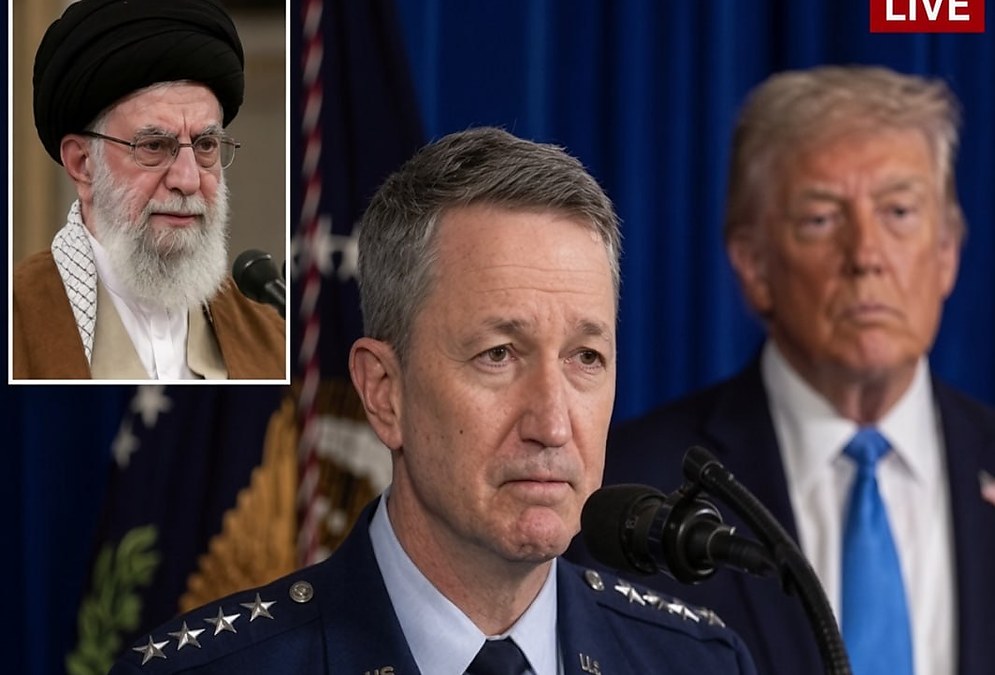
U.S. and Saudi Forces Respond After Reported Iranian Missile Attack in Middle East

by

WASHINGTON — Tensions between the United States and Iran escalated Tuesday after Iran’s Islamic Revolutionary Guard Corps reportedly launched multiple ballistic missiles toward U.S. forces in the Middle East, prompting a rapid defensive response followed by American and Saudi military strikes against Iran-backed militant infrastructure in Iraq.

According to the supplied account, the missiles were launched at approximately 5:45 p.m. Eastern time. U.S.

Central Command reportedly said all of the incoming missiles were successfully intercepted and that American forces remained on heightened alert.

The reported exchange illustrates the increasingly direct confrontation between Washington and Tehran, with Iranian forces targeting American positions while the United States and its regional partners continue conducting operations against Iran-aligned groups. U.S. Forces Intercept Incoming Missiles

CENTCOM reportedly issued statements confirming that U.S. forces successfully defended against the Iranian missile barrage.Officials emphasized that American troops remained vigilant and prepared for additional attacks as tensions continued to rise across the region.

The reported interception was followed by retaliatory operations involving U.S. and Saudi fighter aircraft. According to the supplied account, the aircraft conducted precision strikes against locations in eastern Iraq associated with IRGC-directed militant logistics and weapons operations.

Those facilities were reportedly linked to more than 30 drone attacks carried out during the previous 72 hours.Saudi Arabia Joins Military ResponseSaudi Arabia’s reported participation represents a significant development in the escalating confrontation.

Riyadh has long viewed Iranian influence and the activities of Tehran-backed armed

groups as major regional security concerns. Saudi forces joining American aircraft in strikes against Iranian-linked infrastructure would demonstrate a deeper level of military coordination between Washington and Riyadh.

The development also underscores the increasingly regional character of the conflict. Rather than remaining limited to direct U.S.-Iran confrontation, military operations are increasingly involving partner governments and armed groups operating across Iraq and the broader Middle East.

Growing Concerns Over Proxy AttacksThe supplied account claims that Iran-aligned militias in Iraq attempted more than 600 attacks against U.S. citizens and facilities between February and April 2026.If accurate, that figure would underscore the scale of the security challenge facing American forces in the region.

U.S. officials have repeatedly accused Iran of supporting armed groups capable of conducting drone, rocket and missile attacks against American personnel and facilities. Tehran, however, has historically rejected accusations that it directly controls every operation conducted by regional groups aligned with its interests.

The reported missile launch marks a potentially significant escalation because it would represent a direct attack from Iranian territory rather than an operation carried out solely through regional proxies.Military Pressure and DiplomacyThe latest developments also highlight the difficult balance between military pressure and diplomacy.

U.S. officials have continued to emphasize the possibility of negotiations with Tehran, while the Trump administration has simultaneously warned that attacks against American forces or critical infrastructure could trigger a strong military response.

The reported sequence—an Iranian missile launch followed by interception and retaliatory strikes—could reinforce Washington’s stated strategy of responding forcefully to attacks while maintaining diplomatic channels.A Region on EdgeThe latest exchange comes amid already heightened tensions involving U.S. forces, Iran and armed groups across the Middle East.

For Washington and its regional partners, the immediate priority will be protecting military personnel and preventing further attacks. For Tehran, continued military pressure carries the risk of expanding the conflict and drawing additional countries into direct confrontation.

Whether the latest strikes deter further attacks or instead trigger another cycle of retaliation remains uncertain.What is clear is that the confrontation has entered a dangerous phase in which military action and diplomacy are unfolding simultaneously, leaving regional governments and international observers watching closely for the next move.

U.S. and Saudi Forces Respond After Reported Iranian Missile Attack in Middle East

by


WASHINGTON — Tensions between the United States and Iran escalated Tuesday after Iran’s Islamic Revolutionary Guard Corps reportedly launched multiple ballistic missiles toward U.S. forces in the Middle East, prompting a rapid defensive response followed by American and Saudi military strikes against Iran-backed militant infrastructure in Iraq.

According to the supplied account, the missiles were launched at approximately 5:45 p.m. Eastern time. U.S.

Central Command reportedly said all of the incoming missiles were successfully intercepted and that American forces remained on heightened alert.

The reported exchange illustrates the increasingly direct confrontation between Washington and Tehran, with Iranian forces targeting American positions while the United States and its regional partners continue conducting operations against Iran-aligned groups. U.S. Forces Intercept Incoming Missiles

CENTCOM reportedly issued statements confirming that U.S. forces successfully defended against the Iranian missile barrage.Officials emphasized that American troops remained vigilant and prepared for additional attacks as tensions continued to rise across the region.

The reported interception was followed by retaliatory operations involving U.S. and Saudi fighter aircraft. According to the supplied account, the aircraft conducted precision strikes against locations in eastern Iraq associated with IRGC-directed militant logistics and weapons operations.

Those facilities were reportedly linked to more than 30 drone attacks carried out during the previous 72 hours.Saudi Arabia Joins Military ResponseSaudi Arabia’s reported participation represents a significant development in the escalating confrontation.

Riyadh has long viewed Iranian influence and the activities of Tehran-backed armed

groups as major regional security concerns. Saudi forces joining American aircraft in strikes against Iranian-linked infrastructure would demonstrate a deeper level of military coordination between Washington and Riyadh.

The development also underscores the increasingly regional character of the conflict. Rather than remaining limited to direct U.S.-Iran confrontation, military operations are increasingly involving partner governments and armed groups operating across Iraq and the broader Middle East.

Growing Concerns Over Proxy AttacksThe supplied account claims that Iran-aligned militias in Iraq attempted more than 600 attacks against U.S. citizens and facilities between February and April 2026.If accurate, that figure would underscore the scale of the security challenge facing American forces in the region.

U.S. officials have repeatedly accused Iran of supporting armed groups capable of conducting drone, rocket and missile attacks against American personnel and facilities. Tehran, however, has historically rejected accusations that it directly controls every operation conducted by regional groups aligned with its interests.

The reported missile launch marks a potentially significant escalation because it would represent a direct attack from Iranian territory rather than an operation carried out solely through regional proxies.Military Pressure and DiplomacyThe latest developments also highlight the difficult balance between military pressure and diplomacy.

U.S. officials have continued to emphasize the possibility of negotiations with Tehran, while the Trump administration has simultaneously warned that attacks against American forces or critical infrastructure could trigger a strong military response.

The reported sequence—an Iranian missile launch followed by interception and retaliatory strikes—could reinforce Washington’s stated strategy of responding forcefully to attacks while maintaining diplomatic channels.A Region on EdgeThe latest exchange comes amid already heightened tensions involving U.S. forces, Iran and armed groups across the Middle East.

For Washington and its regional partners, the immediate priority will be protecting military personnel and preventing further attacks. For Tehran, continued military pressure carries the risk of expanding the conflict and drawing additional countries into direct confrontation.

Whether the latest strikes deter further attacks or instead trigger another cycle of retaliation remains uncertain.What is clear is that the confrontation has entered a dangerous phase in which military action and diplomacy are unfolding simultaneously, leaving regional governments and international observers watching closely for the next move.

Mexican president states that Trump is not…See more

by


The world woke up to a nightmare. Three Iranian nuclear sites hit. A U.S. president declaring “historic” victory. Allies cheer, rivals rage, and neutral powers plead for calm as the Middle East trembles and nuclear fears explode. In Tehran, “all options” are on the table. In New York, the U.N. warns of cat… Continues…

In the hours after Trump’s announcement, the map of alliances and anxieties

lit up at once. Iran denounced the strikes as a criminal assault on “peaceful nuclear installations” and vowed it “reserves all options,” signaling potential retaliation under the banner of self‑defense. Israel framed the attack as a decisive turning point, with Netanyahu hailing Trump’s “strength” as the only path to eventual peace. Yet from Beijing to Brussels, the dominant language was fear: a grave violation of the U.N. Charter, a dangerous escalation, a step toward chaos in an already burning region.

Across Europe, the Middle East, Asia, and Latin America, leaders pleaded for

restraint, diplomacy, and a return—if ever there was one—to the negotiating table. The U.N. secretary‑general warned of catastrophe; the pope spoke of an “irreparable abyss.” Between those urging talks and those preparing for the next strike, the world now waits, suspended between war and a peace that feels more fragile than ever

Donald Trump criticizes the Kennedy family hours after the dies of JFK’s granddaughter

by


Despite the family’s public grieving, Trump took to Truth Social to repost

The focus from the family remained firmly on remembrance, unity…

critical comments about the Kennedys, continuing a feud that has escalated in recent weeks. Tensions intensified after Trump formally renamed Washington, D.C.’s historic Kennedy Center to the Trump-Kennedy Center, a move widely criticized by members of the Kennedy family. Joe Kennedy III argued that the venue, established as a memorial to JFK after his assassination in 1963, cannot be renamed under federal law.

On Tuesday, Trump reshared posts from supporters accusing the Kennedys of neglecting

the Kennedy Center while praising Trump’s support for the arts. Although he did not mention Tatiana directly, many social media users criticized the timing of the posts as insensitive given the family’s loss.

The Kennedy family has not publicly responded to Trump’s remarks. Instead, relatives continued to share tributes honoring Tatiana’s life. Maria Shriver described her as courageous and full of love, praising Caroline Kennedy’s strength and urging others to cherish life.

The focus from the family remained firmly on remembrance, unity, and honoring Tatiana’s legacy.

Trump HUMBLED As MAGA SENATOR Gets LAUGHED OUT OF CONGRESS…

by

WASHINGTON — A contentious Senate Judiciary Committee hearing involving former special counsel Jack Smith took an unexpected turn after Republican Sen. Eric Schmitt of Missouri challenged Smith over an alleged trip to an Atlanta Hawks basketball game. The confrontation, intended to raise questions about Smith’s conduct during his investigations of President Donald Trump, quickly became a widely discussed moment after a possible mix-up between two basketball teams undermined the senator’s claim.

During the September 29, 2026, hearing, Schmitt questioned whether Smith had attended an NBA game in Atlanta in February 2024. He suggested the trip might have provided an opportunity for Smith to meet with Fulton County District Attorney Fani Willis, who was leading a separate Georgia prosecution involving Trump’s efforts to challenge the 2020 presidential election results.

Schmitt presented what he described as text messages from members of Smith’s team and pressed the former special counsel about his whereabouts. But Smith denied attending an Atlanta Hawks game and offered a different explanation: he recalled attending a women’s college basketball game featuring the University of Iowa and the University of Maryland in College Park, Maryland.

The distinction became central to the exchange. Iowa’s team is known as the Hawkeyes, not the Hawks, and the game Smith described was played in Maryland rather than Atlanta. The apparent confusion quickly shifted attention away from Schmitt’s intended line of questioning.

A Question About Atlanta Becomes a Basketball Mix-Up

Schmitt’s questioning centered on February 2024, when Willis was facing public scrutiny over her relationship with Nathan Wade, a special prosecutor she had hired for the Georgia election-interference case against Trump.

The senator appeared to suggest that Smith’s alleged presence at an Atlanta Hawks game could raise questions about whether he had met with Willis while both investigations involving Trump were underway.

Smith rejected the premise that he had attended the NBA game or traveled to Atlanta for such a meeting. He said he remembered attending a college basketball game involving Iowa, whose star player at the time was Caitlin Clark.

Sen. Amy Klobuchar, a Minnesota Democrat on the committee, highlighted the likely source of the confusion, pointing out the difference between the Atlanta Hawks and the Iowa Hawkeyes. Her intervention drew attention to the possibility that a reference to the college team had been misinterpreted as identifying the NBA team.

The exchange weakened the factual basis for Schmitt’s suggestion that Smith had been in Atlanta. The available reporting did not establish that Smith met with Willis at the game or that the basketball outing supported the allegation implied during the questioning.

Perjury Allegation Draws Additional Scrutiny

The exchange became more contentious when Schmitt suggested that Smith had not been truthful about his whereabouts and raised the possibility of perjury.

Such an accusation carries significant weight in a congressional hearing, particularly when directed at a former federal prosecutor under oath. However, the apparent confusion over the teams and locations complicated Schmitt’s effort to establish that Smith’s account was false.

The episode quickly circulated across news coverage and social media, where commentators focused on the discrepancy between the senator’s claim and Smith’s explanation. The incident became one of the most memorable moments of a hearing otherwise devoted to serious disputes over federal investigations, prosecutorial authority and political accountability.

Schmitt later appeared to downplay the controversy, maintaining that his role was to ask questions and that Smith had provided an answer. His defense did not eliminate the central problem: the distinction between the Hawks and the Hawkeyes had become essential to evaluating the original allegation.

Broader Dispute Over Trump Investigations Continues

The hearing took place amid continuing Republican scrutiny of Smith’s work as special counsel. Smith led the federal investigations into Trump’s efforts to overturn the 2020 election results and his retention of classified documents after leaving office.

Both federal cases ended without a trial after Trump won the 2024 presidential election and the Justice Department abandoned the prosecutions in accordance with its longstanding policy against prosecuting a sitting president. Trump and his allies have continued to criticize Smith’s investigations, arguing that they were politically motivated. Smith has defended his work, saying his decisions were based on evidence and Justice Department procedures rather than partisan considerations.

Republican lawmakers have used congressional hearings to examine Smith’s investigative methods, including the collection of records belonging to lawmakers and other individuals. Democrats, meanwhile, have defended the investigations and challenged what they describe as efforts to discredit the former special counsel.

Against that backdrop, the basketball exchange became a distraction from the larger legal and institutional questions under discussion. It also illustrated the risks lawmakers face when making serious allegations based on information that has not been carefully verified.

A Reminder of the Importance of Accuracy

The incident does not, by itself, resolve the broader political dispute over Smith’s investigations or establish any wider consequences for Trump or the Republican Party. Instead, it highlights how a factual error during a highly publicized hearing can overshadow the intended message and redirect public attention.

Congressional oversight depends on lawmakers’ ability to question witnesses, examine records and test competing accounts. But when allegations involve possible misconduct or dishonesty, the underlying evidence must be accurate and interpreted in context.

In this case, the distinction between an NBA game in Atlanta and a college basketball game in Maryland became the defining detail of the exchange.

The hearing continued amid sharp partisan disagreement over Smith’s prosecutorial decisions. Yet the Hawks-Hawkeyes mix-up demonstrated that even in a politically charged investigation, a seemingly small factual distinction can have an outsized effect on the credibility of a public accusation.

Trump HUMBLED As MAGA SENATOR Gets LAUGHED OUT OF CONGRESS…

by


WASHINGTON — A contentious Senate Judiciary Committee hearing involving former special counsel Jack Smith took an unexpected turn after Republican Sen. Eric Schmitt of Missouri challenged Smith over an alleged trip to an Atlanta Hawks basketball game. The confrontation, intended to raise questions about Smith’s conduct during his investigations of President Donald Trump, quickly became a widely discussed moment after a possible mix-up between two basketball teams undermined the senator’s claim.

During the September 29, 2026, hearing, Schmitt questioned whether Smith had attended an NBA game in Atlanta in February 2024. He suggested the trip might have provided an opportunity for Smith to meet with Fulton County District Attorney Fani Willis, who was leading a separate Georgia prosecution involving Trump’s efforts to challenge the 2020 presidential election results.

Schmitt presented what he described as text messages from members of Smith’s team and pressed the former special counsel about his whereabouts. But Smith denied attending an Atlanta Hawks game and offered a different explanation: he recalled attending a women’s college basketball game featuring the University of Iowa and the University of Maryland in College Park, Maryland.

The distinction became central to the exchange. Iowa’s team is known as the Hawkeyes, not the Hawks, and the game Smith described was played in Maryland rather than Atlanta. The apparent confusion quickly shifted attention away from Schmitt’s intended line of questioning.

A Question About Atlanta Becomes a Basketball Mix-Up

Schmitt’s questioning centered on February 2024, when Willis was facing public scrutiny over her relationship with Nathan Wade, a special prosecutor she had hired for the Georgia election-interference case against Trump.

The senator appeared to suggest that Smith’s alleged presence at an Atlanta Hawks game could raise questions about whether he had met with Willis while both investigations involving Trump were underway.

Smith rejected the premise that he had attended the NBA game or traveled to Atlanta for such a meeting. He said he remembered attending a college basketball game involving Iowa, whose star player at the time was Caitlin Clark.

Sen. Amy Klobuchar, a Minnesota Democrat on the committee, highlighted the likely source of the confusion, pointing out the difference between the Atlanta Hawks and the Iowa Hawkeyes. Her intervention drew attention to the possibility that a reference to the college team had been misinterpreted as identifying the NBA team.

The exchange weakened the factual basis for Schmitt’s suggestion that Smith had been in Atlanta. The available reporting did not establish that Smith met with Willis at the game or that the basketball outing supported the allegation implied during the questioning.

Perjury Allegation Draws Additional Scrutiny

The exchange became more contentious when Schmitt suggested that Smith had not been truthful about his whereabouts and raised the possibility of perjury.

Such an accusation carries significant weight in a congressional hearing, particularly when directed at a former federal prosecutor under oath. However, the apparent confusion over the teams and locations complicated Schmitt’s effort to establish that Smith’s account was false.

The episode quickly circulated across news coverage and social media, where commentators focused on the discrepancy between the senator’s claim and Smith’s explanation. The incident became one of the most memorable moments of a hearing otherwise devoted to serious disputes over federal investigations, prosecutorial authority and political accountability.

Schmitt later appeared to downplay the controversy, maintaining that his role was to ask questions and that Smith had provided an answer. His defense did not eliminate the central problem: the distinction between the Hawks and the Hawkeyes had become essential to evaluating the original allegation.

Broader Dispute Over Trump Investigations Continues

The hearing took place amid continuing Republican scrutiny of Smith’s work as special counsel. Smith led the federal investigations into Trump’s efforts to overturn the 2020 election results and his retention of classified documents after leaving office.

Both federal cases ended without a trial after Trump won the 2024 presidential election and the Justice Department abandoned the prosecutions in accordance with its longstanding policy against prosecuting a sitting president. Trump and his allies have continued to criticize Smith’s investigations, arguing that they were politically motivated. Smith has defended his work, saying his decisions were based on evidence and Justice Department procedures rather than partisan considerations.

Republican lawmakers have used congressional hearings to examine Smith’s investigative methods, including the collection of records belonging to lawmakers and other individuals. Democrats, meanwhile, have defended the investigations and challenged what they describe as efforts to discredit the former special counsel.

Against that backdrop, the basketball exchange became a distraction from the larger legal and institutional questions under discussion. It also illustrated the risks lawmakers face when making serious allegations based on information that has not been carefully verified.

A Reminder of the Importance of Accuracy

The incident does not, by itself, resolve the broader political dispute over Smith’s investigations or establish any wider consequences for Trump or the Republican Party. Instead, it highlights how a factual error during a highly publicized hearing can overshadow the intended message and redirect public attention.

Congressional oversight depends on lawmakers’ ability to question witnesses, examine records and test competing accounts. But when allegations involve possible misconduct or dishonesty, the underlying evidence must be accurate and interpreted in context.

In this case, the distinction between an NBA game in Atlanta and a college basketball game in Maryland became the defining detail of the exchange.

The hearing continued amid sharp partisan disagreement over Smith’s prosecutorial decisions. Yet the Hawks-Hawkeyes mix-up demonstrated that even in a politically charged investigation, a seemingly small factual distinction can have an outsized effect on the credibility of a public accusation.

lundi 12 octobre 2026

Optical Illusion Leaves People Baffled As They ‘Take Way Too Long To See It’

by


 An optical illusion is leaving the internet baffled as people are taking ‘way too long to see it.’

The viral image has sparked confusion, arguments, and even frustration online, with many people admitting they found it near-impossible to understand what they were actually seeing.

At first glance, the photo appears incredibly simple. But within seconds, people start second-guessing themselves.

And once your brain locks onto the wrong interpretation, it becomes strangely difficult to see anything else.

The image has now racked up tens of millions of views online as social media users continue trying, and often failing, to figure it out.

The internet has become obsessed with optical illusions

Optical illusions have fascinated people for decades because they reveal just how easily the human brain can be tricked.

Some of the most famous examples include the ‘dress’ debate that divided the internet over whether a garment was blue and black or white and gold, as well as the classic rabbit-duck illusion that can appear as two completely different animals depending on how you look at it.

What makes these illusions so addictive is the sudden moment when the brain finally ‘clicks’ and sees the image differently.

And the latest viral photo appears to have triggered that exact reaction in millions of people online.

The image originally resurfaced on X earlier this year, quickly exploding across social media after users admitted they genuinely could not work out what they were looking at.

One person shared the image alongside the caption: “Thought this was a scarily skinny and hairy neck.”

That comment instantly shaped how thousands of other viewers interpreted the photo.

And from there, confusion spread rapidly.

Social media users admitted they were completely stumped

As more people saw the image, reactions quickly flooded the comments section.

Many viewers said they spent several minutes staring at the picture without getting any closer to understanding it.

One user admitted: “I literally had to stare at this for a solid minute to realise it wasn’t a neck.”

Another wrote: “Bro, I still have no idea what I’m looking at.”

Others begged people in the replies to explain the image because they simply couldn’t process it themselves.

“I still have a hard time knowing what this is! Can anyone help?” one person asked.

Another commented: “This is the weirdest non-weird pic ever.”

Some viewers even became convinced the image had been edited or created using artificial intelligence because their brains refused to accept the real answer.

“Bro, wtf is wrong with your neck?” another user joked.

Even after the image was eventually explained, many people admitted they still kept accidentally seeing the original illusion anyway.

One viewer hilariously summed up the frustration by writing: “I’ve seen the explanation. My eyes still refuse to believe it.”

The bizarre reaction helped push the image to more than 24 million views online.

And once people finally understood what they were actually seeing, many admitted they felt ridiculous for not noticing it sooner.

The photo is actually something far more ordinary

Despite the endless confusion online, the real answer turned out to be surprisingly simple.

The viral image does not show a neck at all.

It’s actually a close-up photo of a man’s arm with his hand tucked casually into the pocket of a pair of trousers.

What people believed was a long, skinny neck is actually the man’s forearm.

The object mistaken for an Adam’s apple is simply his wrist bone.

And the black ‘necklace’ around the supposed throat is actually a braided bracelet wrapped around his wrist.

Once another user posted a zoomed-out version of the original image, the illusion suddenly became obvious to many viewers.

But interestingly, others admitted the cropped version continued tricking them even after learning the truth.

Every time they looked back at the photo, their brains reverted straight back to seeing the fake neck again.

That inability to “unsee” the illusion is exactly why the image became such a viral sensation.

Because even when people knew the answer intellectually, their brains often still interpreted the image incorrectly on instinct.

Why the illusion works so well

The image is an example of what’s known as a bistable optical illusion.

That means the brain can interpret the same picture in two completely different ways — but usually not both at the same time.

Once the brain chooses one interpretation, it becomes extremely difficult to switch perspectives.

In this case, several visual details accidentally mimic familiar human features.

The forearm resembles the shape of a neck. The wrist bone looks strikingly similar to an Adam’s apple. The bracelet appears like a necklace or choker. And the beige trousers resemble the collar of a cream-colored shirt.

Because the brain constantly tries to identify familiar patterns as quickly as possible, many people instantly interpret the image as a neck without consciously analyzing the details.

Once that assumption forms, the brain essentially ‘locks in’ to that interpretation.

That’s why so many people online admitted they could understand the explanation logically while still continuing to see the original illusion anyway.

It’s also why optical illusions remain so fascinating