jeudi 15 octobre 2026

Kate Middleton Williams announcement just came out Shes not See more

by

Two words were enough to make a royal evening feel deeply personal. At a cancer charity reception, Catherine reportedly admitted she wished Prince William were beside her, a fleeting moment carrying the weight of treatment, recovery and family life under scrutiny. After everything they had faced, her quiet reply offered a glimpse of something rarely revealed publicly: enduring lov…

According to reports of the June 2, 2026, reception at St James’s

Palace, Ronan Keating told Catherine he wished William could have attended. “Me too,” she replied. William was undertaking duties elsewhere, but the exchange offered an affectionate moment during an evening devoted to cancer research. For Catherine, who announced her cancer diagnosis in March 2024, completed chemotherapy that September and disclosed her remission in January 2025, the cause carried profound personal significance.

Another conversation connected the evening to William’s support for the late cancer campaigner Dame Deborah James. Her husband, Sebastien Bowen, reportedly expressed appreciation for the prince’s kindness toward their family. Together, these encounters placed compassion and companionship at the heart of the occasion. Catherine’s brief remark could not tell the whole story of a private marriage, but it offered a touching reminder: after illness disrupts ordinary life, simply wanting someone beside you can carry meaning of its own.

The force of the exchange lies in its brevity. Catherine’s reply did not offer a formal statement about her marriage or a detailed description of what she had experienced. It expressed a wish to have William beside her at that particular moment. A small remark can carry emotional weight without explaining an entire private relationship. Keeping that distinction allows the moment to remain affectionate rather than turning it into a conclusion the account never supports.

The reception’s purpose also gives the remark a particular setting. An evening

devoted to cancer research brings together people whose interest may come from personal experience, family connections, or support for the work itself. Within that setting, the account places Catherine’s own treatment and recovery alongside the experiences of another family. The conversations connect public duties with circumstances that can make a cause feel deeply personal.

Sebastien Bowen’s appreciation for William’s kindness adds another dimension to the evening. Support offered during illness can remain meaningful long after the original encounter. A person remembering that kindness may be acknowledging more than a public gesture; he may be recalling a moment when his family felt seen during a difficult period. The source describes that appreciation without requiring every private detail of the family’s experience to be made public.

Together, the two encounters give the occasion a quiet emotional center. One concerns the wish for a partner’s presence, the other the memory of compassion shown to a family. Neither needs a dramatic announcement to explain its significance. They reflect the ordinary importance of company and care within an unusually public setting, and they leave the private lives behind those moments larger than the few words an audience was able to hear.

Their significance rests in the care they describe, rather than in any suggestion that a brief conversation could reveal everything about the people involved.

BREAKING: FREEZING RAIN SLAMS …

by

More than 288,000 households are without power across Tennessee as a devastating ice storm grips the region. Communities around Nashville are being overwhelmed after hours of relentless freezing rain. Power lines are failing, massive trees are exploding and snapping apart and crushing vehicles below.

Drivers are stranded as roads turn into solid, impassable continue reading …sheets of ice. Homes are under increasing strain as roofs bear the weight of thick ice accumulation.

An official stated, “Conditions have become extremely critical.”

Please keep Nashville and communities across Middle Tennessee in your thoughts, along with first responders, as this rapidly escalating ice disaster continues to unfold.

BREAKING NEWS!!! TRUMP just confirmed the passing of…See more

by

Witnesses reported hearing multiple loud blasts within seconds of each other as the barrage struck buildings and surrounding infrastructure. Fires quickly spread through several blocks, forcing residents to flee their homes while emergency responders rushed toward the danger in an effort to rescue survivors trapped beneath the rubble.

Local authorities continue reading …have confirmed that several people have lost their lives in the attack, with many more reported injured. Hospitals in the area are said to be overwhelmed as medical teams work urgently to treat victims suffering from blast injuries, burns, and collapsing structures.

Emergency crews, including firefighters and search-and-rescue teams, continue to comb continue reading …through the damaged buildings. The full extent of the destruction is still being assessed, but early reports indicate that multiple residential buildings and public facilities have been severely damaged.

Residents described scenes of panic and chaos as the rockets struck, recalling moments of intense fear and confusion as explosions echoed through the continue reading …area. Witnesses reported that the attacks unfolded with alarming speed, leaving many people with little time to react or seek shelter. “Everything happened so fast,” one witness said while recounting the experience. “We heard the whistling sound above us, and then the explosions started. People were running everywhere.” According to several residents,continue reading … the sound of rockets cutting through the air was followed by a series of loud blasts that shook buildings, shattered windows, and filled the streets with smoke and debris. Families rushed to gather their loved ones while others searched desperately for safe places to hide as sirens and emergency alarms sounded in the background.

Many residents described continue reading …the atmosphere as one of overwhelming panic, with crowds moving quickly through streets and alleyways in an attempt to escape the immediate danger. Some people reportedly took cover in basements, underground shelters, or reinforced buildings, while others remained trapped in their homes, uncertain whether it was safer to stay inside or attempt to flee.continue reading … Emergency responders were seen moving rapidly toward the affected areas, navigating through damaged roads and scattered debris in order to reach those who might have been injured or trapped under rubble. Witnesses said that the moments following the initial blasts were filled with confusion as people attempted to contact relatives and friends to ensure continue reading …they were safe.

Authorities are urging civilians to remain in secure shelters while the situation continues to develop. Officials emphasized that staying indoors or inside designated protective shelters could significantly reduce the risk of injury if further strikes occur. Emergency management teams have issued repeated warnings through public announcements,continue reading … radio broadcasts, and social media channels, advising residents not to approach impact sites or damaged buildings due to the risk of additional explosions, structural collapse, or unexploded ordnance. Local authorities are also coordinating with emergency services, medical teams, and rescue personnel in an effort to provide immediate assistance to continue reading …those affected.

Meanwhile, international observers and humanitarian organizations are closely monitoring the unfolding events, expressing concern over the safety of civilians caught in the conflict. Several international groups have called for restraint from all parties involved, stressing the importance of protecting civilian populations and critical continue reading …infrastructure. Humanitarian agencies have also begun assessing the potential need for emergency aid, including medical supplies, temporary shelter, food, and psychological support for individuals who have experienced trauma during the attacks.

Rescue teams are working under difficult conditions as they attempt to reach the hardest-hit areas. In some continue reading …locations, roads have been partially blocked by debris from damaged buildings, slowing the movement of ambulances and firefighting units. Despite these obstacles, emergency workers continue to search for survivors and provide medical treatment to the injured. Hospitals in nearby districts have reportedly been placed on high alert, preparing to receive continue reading …patients as rescue operations continue and more information becomes available about the scale of the damage.

The situation remains fluid, with officials warning that casualty numbers may rise as rescue teams gain access to additional locations that may have been affected by the strikes. Early reports often provide only partial information in such circumstances,continue reading … and authorities caution that the full extent of the damage and the number of people injured may not be known for some time. Emergency coordination centers are working to gather verified information from multiple sources to better understand the scope of the incident and to organize an effective response.

Community leaders and local volunteers have continue reading …also begun assisting with relief efforts, helping to distribute water, blankets, and basic supplies to those who may have been displaced from their homes. In several neighborhoods, residents have opened their doors to neighbors seeking temporary refuge, demonstrating solidarity in the face of uncertainty and fear. Psychologists and crisis counselors continue reading …are expected to be deployed to support individuals, particularly children and elderly residents, who may be experiencing shock or distress following the explosions.

More details are expected to emerge as emergency teams gain access to the hardest-hit areas and conduct thorough assessments of the damage. Investigators and officials will likely examine continue reading …the impact sites to determine the exact nature of the strikes and the sequence of events that led to the attacks. For now, authorities continue to focus on immediate rescue and humanitarian priorities, emphasizing the importance of public safety and coordination among emergency services.

As the situation evolves, both local and international communities continue reading …are watching closely, hoping for de-escalation and swift assistance for those affected. Officials have reiterated their commitment to keeping the public informed as reliable information becomes available, while urging residents to remain calm, follow official guidance, and prioritize their safety during this uncertain and rapidly changing situation.continue reading …

Trump Cheered By Tens of Thousands At Texas-Tennessee College Football Game

by

President Donald Trump made a high-profile appearance Saturday at one of the biggest college football games of the season, arriving at a packed Neyland Stadium as top-ranked Texas faced No. 14 Tennessee.

Trump traveled to Knoxville for the nationally televised Southeastern Conference matchup, where his arrival added presidential security, an Air Force One flyover and another layer of attention to an already highly anticipated game.

The president landed at 11:28 a.m. ET, shortly before the noon kickoff, after Air Force One performed a low-altitude flyover above Neyland Stadium while Texas and Tennessee players warmed up on the field.

Fans inside the stadium could be heard cheering during the flyover.

馃敟 LET’S GO! President Trump just did a SUPER low pass in Air Force One over Neyland Stadium in Knoxville

Absolutely SCREECHED over the crowd 馃ぃ

ESPN: “It was REALLY close to the top of the stadium” 馃槀 pic.twitter.com/u6MlkalDCA

— Nick Sortor (@nicksortor) September 26, 2026

Trump’s motorcade reached Neyland Stadium at approximately 11:59 a.m., just as the national anthem was being performed.

馃敟 “Ladies and gentlemen, the 45th and 47th President of the United States, DONALD J. TRUMP!”

No word if 47 is a Vols fan or a Longhorns fan 馃槀 https://t.co/MWwu5OfUkC pic.twitter.com/LBV8gcALMP

— Nick Sortor (@nicksortor) September 26, 2026

When Trump was shown on the stadium’s giant video boards, cheers could again be heard throughout portions of the crowd. Other accounts and videos from inside the stadium also captured boos from some spectators during his appearance, producing differing descriptions of the overall reception.

Trump responded by pumping his fist several times from a stadium suite.

The president watched the game alongside Tennessee’s two Republican U.S. senators, Marsha Blackburn and Bill Hagerty.

Trump’s visit came as No. 1 Texas made its first-ever trip to Neyland Stadium to play the No. 14 Volunteers.

The matchup also gave Trump an opportunity to watch Texas quarterback Arch Manning play at the stadium where Manning’s uncle, Peyton Manning, became one of Tennessee’s most celebrated players during the 1990s.

Security surrounding the presidential visit required substantial preparation.

The University of Tennessee opened Neyland Stadium 30 minutes earlier than usual and urged fans to arrive well before kickoff because of additional Secret Service screening.

Fans who entered early were offered half-price concessions.

The strategy appeared to work.

The stadium was reportedly approximately half full 90 minutes before kickoff and nearly full an hour before the game began.

There had also been concern that Trump’s movements could interfere with electronic communications used by the football teams.

Texas coach Steve Sarkisian said before the game that coaches had been warned they could temporarily lose headset communications whenever Trump entered, left or moved to another location inside the stadium.

The two universities coordinated with the Secret Service before kickoff to minimize potential interference, and no significant communication problems were reported during the game.

Trump’s motorcade left the stadium at approximately 2:07 p.m., during the second half.

Texas ultimately defeated Tennessee 20-17 in a closely contested SEC opener.

Longhorns defensive end Colin Simmons tied a Texas program record with five sacks, while running back Raleek Brown rushed for 67 yards and scored two touchdowns.

Brown’s four-yard touchdown run with 5:41 remaining provided the winning margin.

Texas quarterback Arch Manning finished with 201 passing yards as the Longhorns survived Tennessee’s late comeback attempt and remained undefeated.

Trump has increasingly made major sporting events part of his public schedule during his second term.

He attended the Daytona 500 in 2025 and has appeared at UFC events, major college football games and other high-profile sporting contests.

Earlier this year, Trump attended Game 3 of the NBA Finals between the New York Knicks and San Antonio Spurs and later attended the World Cup final in New Jersey.

College football has been a particularly frequent destination.

Trump has attended Army-Navy games, national championship games and several regular-season SEC contests, including Alabama-Georgia in 2024.

Saturday’s trip also came as Congress continues debating federal legislation that could reshape college athletics.

Lawmakers have been considering measures dealing with name, image and likeness compensation, athlete transfers and the authority of the NCAA and conferences to regulate college sports.

Trump has also taken executive action involving college athletics, signing an order last year aimed at limiting what his administration described as “pay-for-play” arrangements while attempting to preserve scholarships and opportunities in non-revenue sports.

The president’s visit placed him in front of one of college football’s largest audiences.

Neyland Stadium officially seats more than 101,000 spectators and routinely ranks among the largest college football venues in the country.

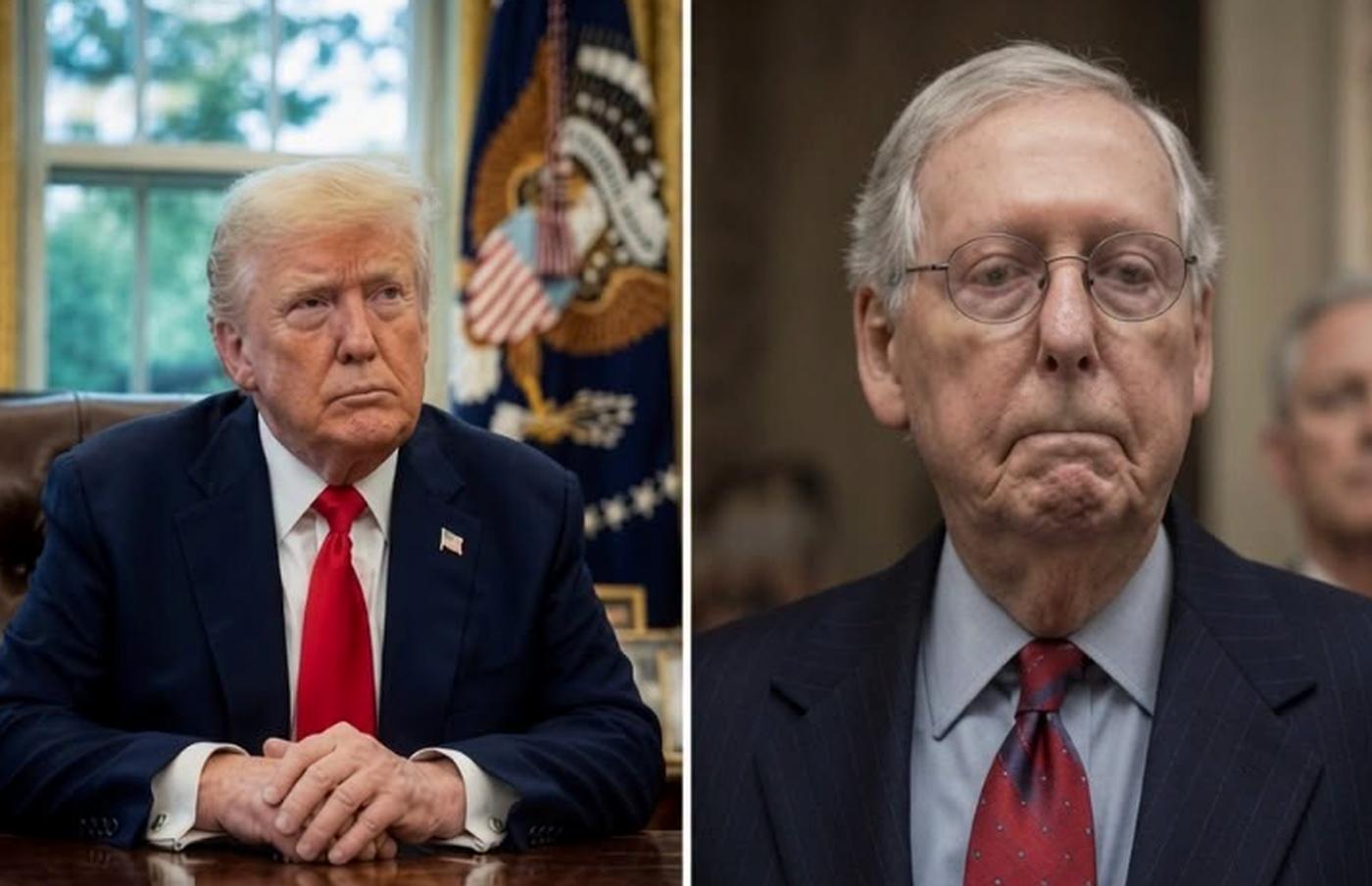
Trump Issues Statement Regarding Health of Mitch McConnell

by

Weeks after former GOP Senate Majority Leader Mitch McConnell was hospitalized for a reportedly serious heart condition, there has been much speculation about his current condition.

Rumors are also swirling about whether he can complete his term, which ends in January.

Initially, reports said that McConnell suffered a “cardiac arrest” and was administered CPR – a health condition that is normally fatal, even for victims much younger than McConnell, who is 84 and has an extensive history of health problems.

But later, in one of the few public updates on the Kentucky Republican’s condition, his staff only said that he was receiving “excellent care.”

However, others who should know more about McConnell’s condition don’t. That includes the president of the United States.

Libby Dean, the White House correspondent for NewsNation, tweeted on Wednesday: “President Trump says he has ‘no idea’ how Sen. Mitch McConnell is doing and says he hasn’t spoken with the Kentucky Republican since McConnell’s hospitalization.”

Now, the governor of the Bluegrass State has grown concerned enough that he has reached out to the senator to inquire about his health.

“As Governor, I request that you fully update Kentuckians regarding the current status of your health,” Gov. Andy Beshear,a Democrat who is seen as a potential 2028 presidential contender, wrote in a letter to McConnell on Wednesday.

“As public officeholders, we have made a commitment to our constituents to do our best to represent them and to always be transparent,” Beshear’s letter continued.

“I believe this requires clear communication about one’s ability to serve,” he added.

Several top Republicans were asked about McConnell’s condition on Tuesday, and their responses were not reassuring.

Utah Republican Sen. Mike Lee has said that even members of Congress are in the dark about McConnell’s current condition.

Speculation has surrounded the health of the 84-year-old McConnell since the Kentucky senator was found unconscious and required CPR at his home in Washington, D.C., weeks ago.

McConnell’s staff has provided no significant update on his condition since he was hospitalized June 14.

The secrecy has fueled speculation that there is an effort to keep the full extent of the Republican’s condition from the public and has raised questions about whether he will be able to return to office.

On Monday night, MAGA social media user Mila Joy wondered why other senators haven’t spoken out about McConnell’s condition.

“Because they are ALL in on it together. That’s why,” Joy posted to her 571,000 X followers.

In reply, Sen. Lee posted: “Many of us aren’t speaking about Mitch McConnell’s condition because we know nothing about his condition.”

But Lee’s assessment contradicts earlier comments from Senate Majority Leader John Thune after McConnell was first hospitalized.

Thune said he had spoken to the 84-year-old and that he “sounded good.”

“He wants to be back, but I’ll defer to his staff on when,” Thune said on June 15.

Popular conservative activist Laura Loomer claimed recently that sources told her that McConnell is in a “vegetative state,” dismissing Thune’s version of events.

Things with McConnell have gotten worse by the day.

Since the reported incident, McConnell’s office has provided scant details on the former Senate GOP leader’s health condition, except to say that he allegedly “appreciates the outpouring of support he’s receiving while he continues his recovery in the hospital.”

His office last week also said the 84-year-old senator “continues to improve, and is working closely with his staff on Kentucky and Senate matters while the Senate is out of session.

BREAKING NEWS… 4 countries join forces to atta…

by

Iran launches missiles and drones at US military bases across Bahrain, Qatar, Kuwait, and the UAE, escalating regional conflict.

PERSIAN GULF — The Persian Gulf is once again on a war footing. Iran has launched waves of missiles and drones toward locations hosting U.S. military forces across the region, forcing Gulf allies to activate air defenses and sending emergency alerts through communities already bracing for another round of escalation.

This is no longer a contained confrontation. Iran’s repeated attacks against American military positions and regional allies have demonstrated just how quickly the conflict can spread across the Gulf. U.S. forces maintain a major strategic presence in Bahrain, Qatar, Kuwait and the United Arab Emirates, making those installations prime targets whenever Tehran chooses escalation. Reuters has reported multiple rounds of Iranian attacks against U.S. bases and assets across the region.

In the United Arab Emirates, explosions and reports of incoming threats have put security forces on high alert. UAE air defenses have previously intercepted Iranian missiles and drones, while Iranian forces have claimed attacks against facilities associated with U.S. operations.

Al Dhafra Air Base remains particularly significant because of its connection to U.S. military operations in the region. Iranian attacks have previously targeted American-associated infrastructure in the UAE, demonstrating that even major Gulf installations can come under direct pressure during an escalation.

But claims of specific damage from any individual barrage must be treated carefully until authorities complete assessments and independent evidence becomes available.

Bahrain remains one of the most strategically important American military locations in the Gulf. It hosts Naval Support Activity Bahrain, headquarters of the U.S. Navy’s Fifth Fleet, making the kingdom a critical part of Washington’s regional military network.

Iran has repeatedly claimed attacks against U.S.-linked facilities in Bahrain, including Sheikh Isa, while Bahraini authorities have reported intercepting incoming threats during previous barrages. Reuters and other outlets have documented repeated Iranian attacks against American positions throughout the Gulf.

Qatar has faced the same danger. Al Udeid Air Base is one of the most important U.S. military installations in the region, and Iranian forces have repeatedly targeted or threatened American assets there. Satellite imagery has also documented damage to portions of U.S. infrastructure at Al Udeid from earlier attacks.

Kuwait has likewise found itself directly exposed. Iranian missiles and drones have previously targeted locations supporting U.S. forces, with Kuwaiti air defenses engaging incoming threats.

The pattern is unmistakable: American military infrastructure across the Gulf is increasingly exposed to Iranian missile and drone attacks, while U.S. allies are being forced to defend their territory against strikes connected to a conflict they did not initiate.

The narrow waterway is one of the world’s most important energy chokepoints. Continued fighting around the Gulf threatens commercial shipping, energy exports and already-fragile global markets. Reuters has reported that the conflict has severely disrupted shipping through the region, while the Strait remains at the center of the confrontation between Washington and Tehran.

Every additional missile launch, drone attack or naval confrontation raises the possibility of another dangerous shock to global energy supplies.

The message coming from the battlefield is increasingly clear: the conflict is not staying inside Iran.

Iran has demonstrated its willingness and ability to strike U.S.-linked targets across the Gulf, while Washington continues to maintain significant military forces throughout the region. The result is a volatile confrontation in which one additional attack could trigger another cycle of retaliation.

For American forces and U.S. allies, the immediate priority is defense, interception and damage assessment. For the rest of the world, the biggest question is whether the next missile launch becomes the trigger for an even broader regional war.

The Persian Gulf is already under enormous pressure. One more major escalation could push the entire region into territory nobody can easily control.

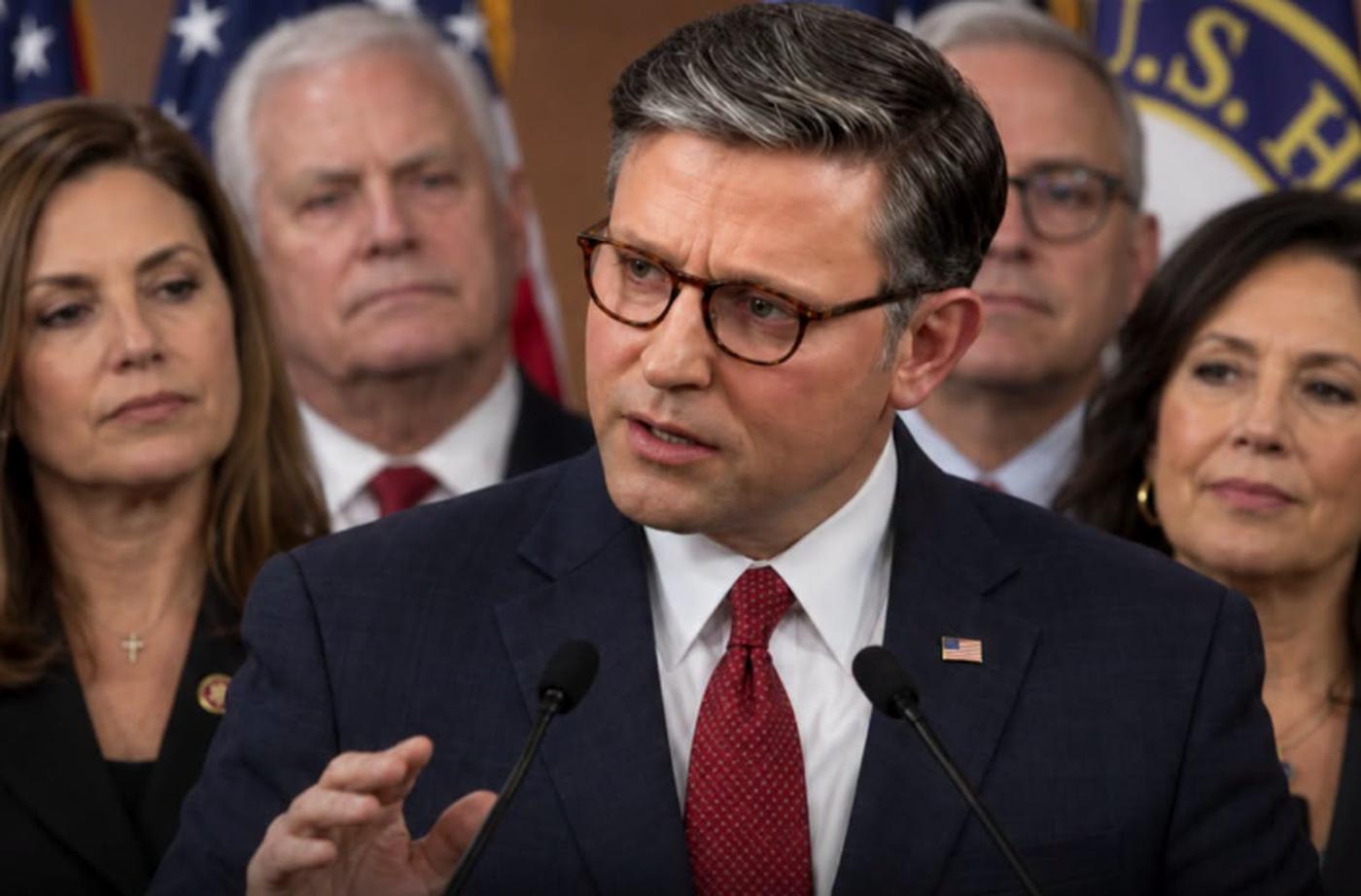
House Approves Legislation That Changes How Americans Use Money

by

The penny is one step closer to becoming a permanent relic of American commerce.

The House on Monday approved bipartisan legislation that would formally end production of the one-cent coin for everyday circulation and establish nationwide rules for rounding certain cash transactions to the nearest nickel.

The Common Cents Act, H.R. 10167, passed by voice vote under suspension of the rules, a procedure generally used for measures with broad bipartisan support. Because lawmakers did not take a recorded roll-call vote, individual members’ positions were not formally documented.

The bill was introduced by House Republican Conference Chair Lisa McClain of Michigan and Democratic Rep. Robert Garcia of California.

It would direct the Treasury Department to permanently stop minting pennies for general circulation while preserving the government’s ability to produce limited quantities for collectors. Existing pennies would remain legal tender and could continue to be used for purchases, debts and taxes.

In practical terms, production has already ended.

The U.S. Mint struck its final circulating penny on Nov. 12, 2025, bringing an end to 232 years of continuous production.

The decision followed years of rising costs that made the penny considerably more expensive to manufacture than its face value.

By the time production stopped, the Mint said each penny cost approximately 3.69 cents to produce. Treasury estimated that eliminating new circulating pennies would save roughly $56 million annually in material costs.

“Today the Mint celebrates 232 years of penny manufacturing,” Acting Mint Director Kristie McNally said during the ceremonial final strike. “While general production concludes today, the penny’s legacy lives on.”

The legislation would effectively make that administrative decision permanent by writing the end of circulating penny production into federal law.

It would not remove the hundreds of billions of pennies already in existence. Treasury has estimated that close to 300 billion remain in circulation, meaning the coins could continue changing hands for years even though no new ones are being produced.

The bill also addresses one of the most immediate problems created by the dwindling supply of pennies: what retailers should do when a cash purchase does not total an amount divisible by five cents.

Under the legislation, businesses unable to provide exact change could round the final cash total to the nearest nickel.

Totals ending in 1, 2, 6 or 7 cents would generally round down, while amounts ending in 3, 4, 8 or 9 cents would round up. Transactions already ending in zero or five cents would remain unchanged.

The rounding provision would apply only to cash transactions when exact change is unavailable.

Credit and debit cards, checks, electronic transfers, gift cards and other non-cash payments would continue to be processed to the exact cent. Businesses that still have pennies available could also continue providing exact change rather than rounding.

The legislation goes beyond the penny.

It would give Treasury authority to develop a less expensive composition for the nickel, provided testing determines that a new version would lower production costs without creating significant problems for vending machines and other coin-processing equipment.

The current nickel is composed of 75% copper and 25% nickel, and it too costs more than its face value to manufacture.

The Federal Reserve would also be directed to develop a nationwide transition strategy for managing the enormous supply of pennies still in circulation. The legislation calls for officials to examine the effects of cash rounding on groups including lower-income consumers, older Americans and people without access to traditional banking services.

Congress has been working on the issue through parallel House and Senate bills.

The Senate approved its version of the Common Cents Act, S. 1525, by unanimous consent on Aug. 7 after adopting substitute language.

The House subsequently passed H.R. 10167 on Sept. 14. The measure was received in the Senate the following day and referred to the Senate Banking, Housing and Urban Affairs Committee.

Because the legislation moving through the two chambers carries separate bill numbers, additional congressional action is still necessary before a final measure can be sent to President Donald Trump for his signature.